

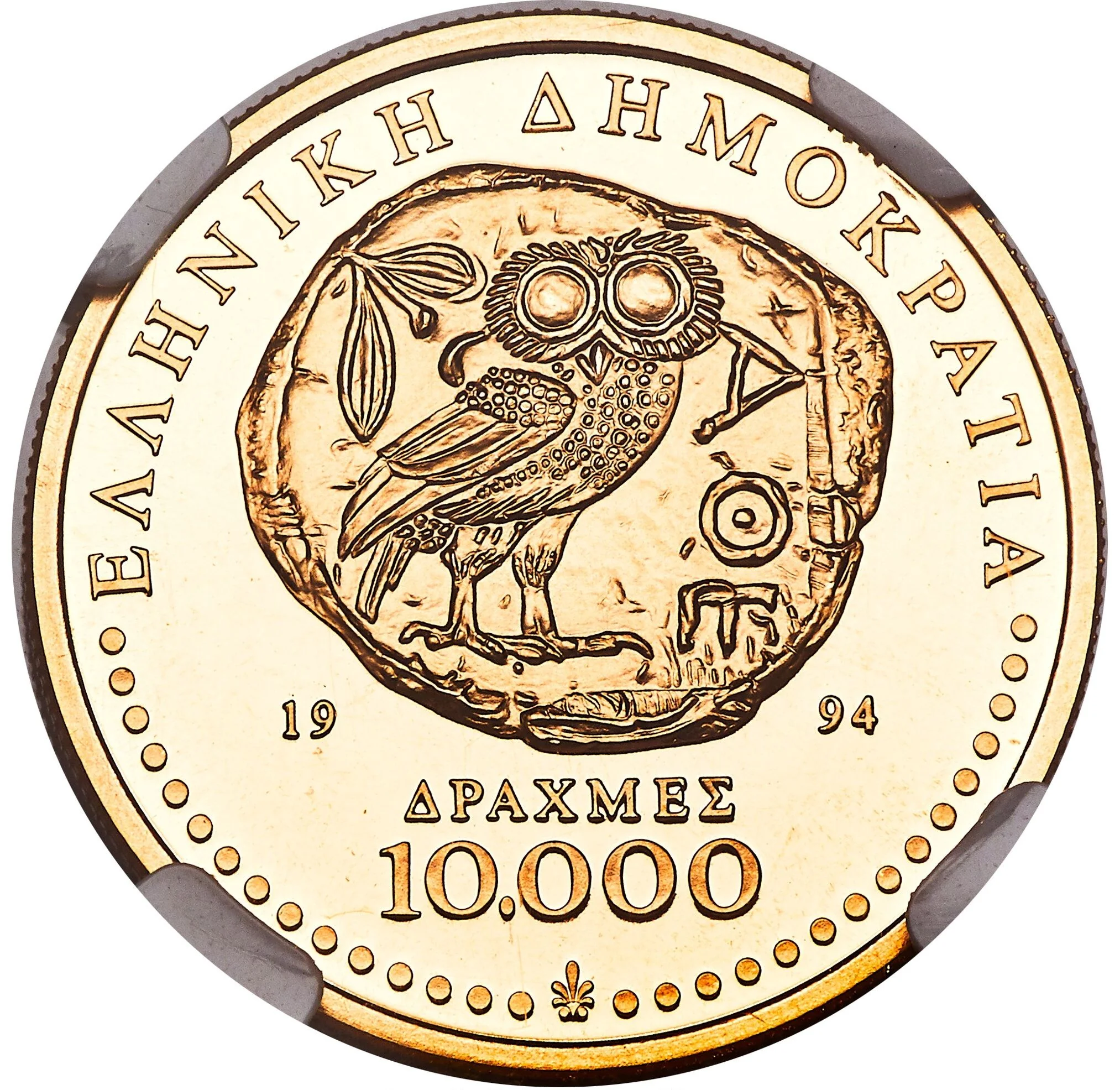
10000 Drachmai – Greece
Non-circulating coins
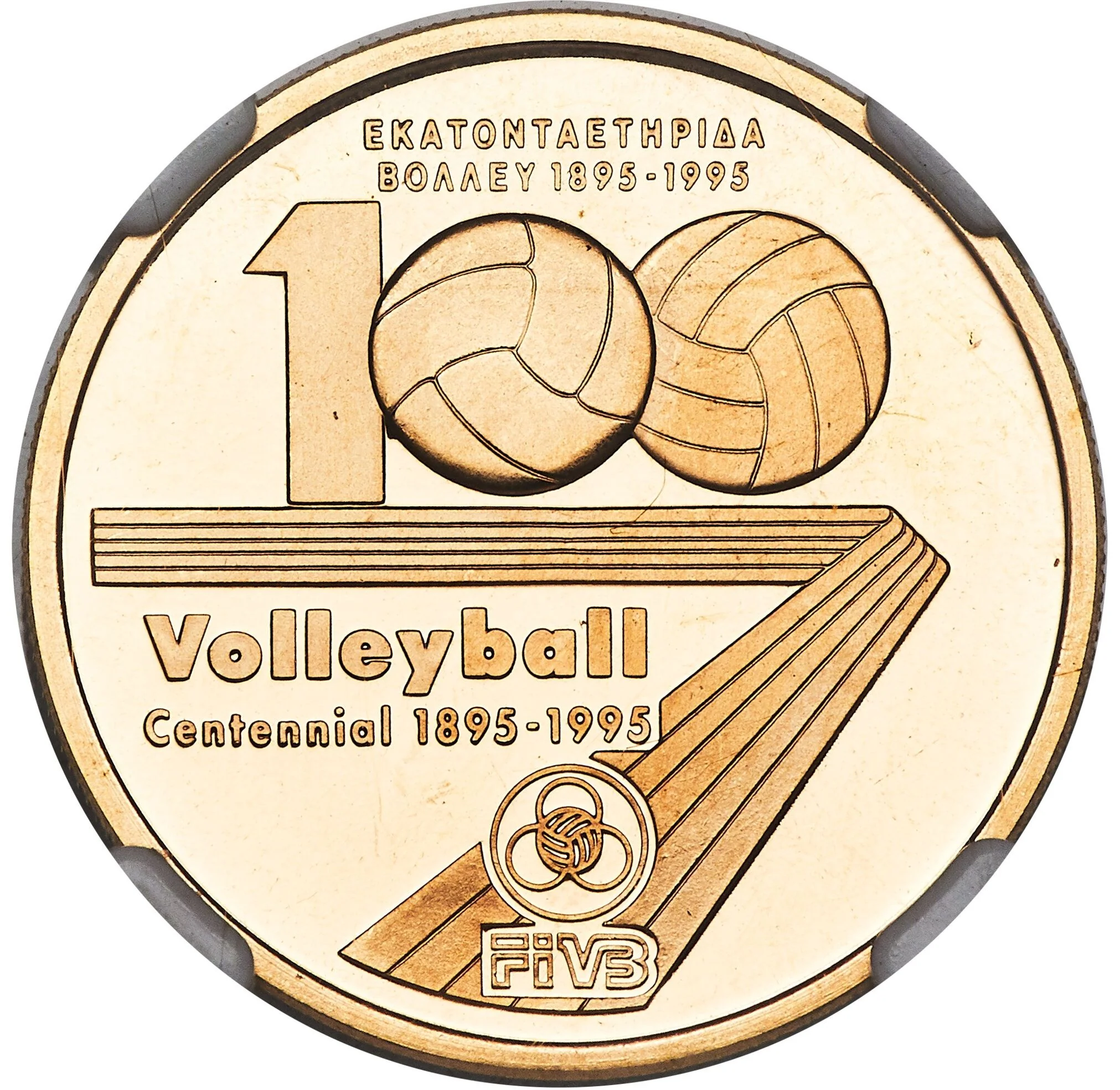
Commemoration: Volleyball Centennial
Greece
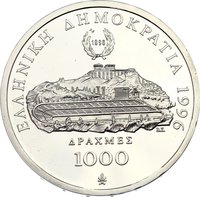
Obverse
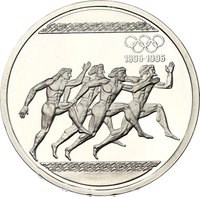
Reverse
Edge
Categories
| Currency> Coin depiction |
| Sport> Volleyball |
Mints
| Name | Mark |
|---|---|
| National Mint of the Bank of Greece | — |
Mintings
| Year | Mint Mark | Mintage | Quality | Collection |
|---|---|---|---|---|
| 1994 | — | 669 | Proof |
Historical background
In 1994, Greece's currency situation was defined by its ongoing and challenging journey toward European Monetary Union (EMU) membership. The country was a member of the European Union's Exchange Rate Mechanism (ERM), but its participation was under a "wide band" of ±15%, a concession granted due to its economic instability. The core objective was to stabilize the drachma and bring Greece's high inflation and public debt under control to meet the strict Maastricht Treaty convergence criteria, which included limits on budget deficits, public debt, inflation, and interest rates.
The domestic economic landscape, however, presented significant hurdles. Greece struggled with chronically high inflation (around 10.6% in 1994, down from over 20% in the early 1990s but still far above the Maastricht target) and a public debt-to-GDP ratio exceeding 110%. Successive governments implemented austerity measures and a tight monetary policy to rein in prices and defend the drachma's parity within the ERM. This period was marked by a conscious policy choice to prioritize disinflation and convergence over growth, leading to a recession in 1993-1994.
Consequently, 1994 was a year of cautious stabilization within a long-term strategy. The drachma was managed with relative success within its wide ERM band, building credibility for future stricter adherence. While the Maastricht targets still seemed distant, the year represented a transitional phase where Greece, having secured its ERM membership in March 1998, was laying the painful groundwork for eventual Eurozone accession, a goal that would not be realized until 2001.
The domestic economic landscape, however, presented significant hurdles. Greece struggled with chronically high inflation (around 10.6% in 1994, down from over 20% in the early 1990s but still far above the Maastricht target) and a public debt-to-GDP ratio exceeding 110%. Successive governments implemented austerity measures and a tight monetary policy to rein in prices and defend the drachma's parity within the ERM. This period was marked by a conscious policy choice to prioritize disinflation and convergence over growth, leading to a recession in 1993-1994.
Consequently, 1994 was a year of cautious stabilization within a long-term strategy. The drachma was managed with relative success within its wide ERM band, building credibility for future stricter adherence. While the Maastricht targets still seemed distant, the year represented a transitional phase where Greece, having secured its ERM membership in March 1998, was laying the painful groundwork for eventual Eurozone accession, a goal that would not be realized until 2001.

✨ Legendary