

10 centavos (slavery abolition in Peru) – Peru
Add to wishlist
Circulating commemorative coins
Commemoration: 100 years of slavery abolition in Peru by President Ramón Castilla
Peru
Obverse
Description:
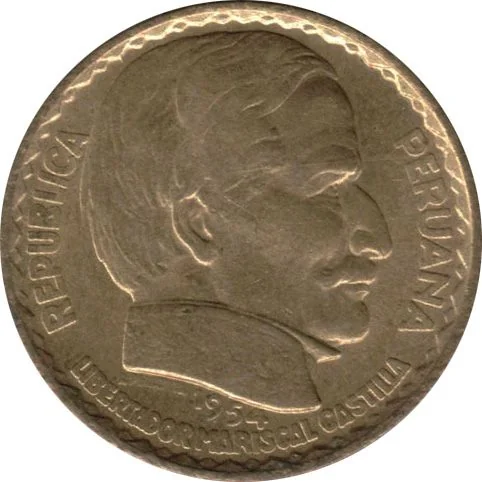
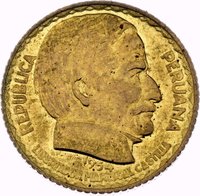
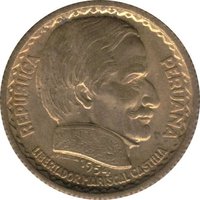
Ramon Castilla, facing right, year on his collar.
Inscription:
REPUBLICA PERUANA
R. Pelletier 1954
LIBERTADOR MARISCAL CASTILLA
R. Pelletier 1954
LIBERTADOR MARISCAL CASTILLA
Translation:
PERUVIAN REPUBLIC
R. Pelletier 1954
LIBERATOR MARSHAL CASTILLA
R. Pelletier 1954
LIBERATOR MARSHAL CASTILLA
Script: Latin
Language: Spanish
Engraver: Raymond Pelletier
Reverse
Description:
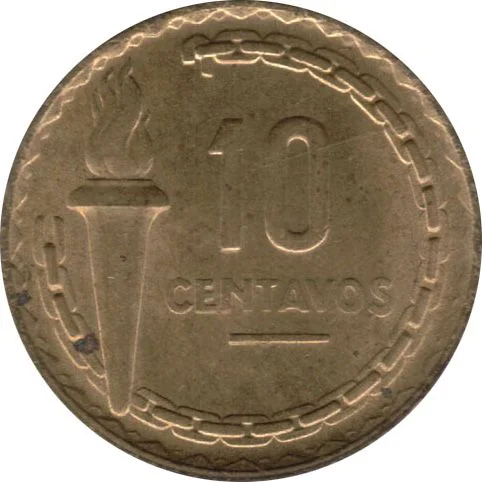
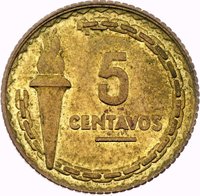
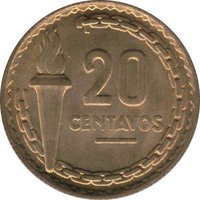
Torch value inside chain circle.
Inscription:
10
CENTAVOS
CENTAVOS
Script: Latin
Engraver: Raymond Pelletier
Edge
Reeded
Categories
| Person> Politician |
| History> Slavery |
Mintings
| Year | Mint Mark | Mintage | Quality | Collection |
|---|---|---|---|---|
| 1954 | — | 1,818,000 |
Historical background
In 1954, Peru's currency situation was characterized by a managed exchange rate system under the authority of the Central Reserve Bank of Peru (BCRP), established just six years prior. The country operated with a fixed, but adjustable, peg for the sol, which was officially tied to the U.S. dollar. This system was part of a broader post-World War II global monetary order centered on the Bretton Woods system, which aimed to provide stability by linking currencies to the dollar, itself convertible to gold. The Peruvian government and the BCRP maintained strict controls over foreign exchange transactions to defend this parity and manage the balance of payments.
Economically, the period was one of relative stability and growth, largely fueled by strong exports of primary commodities. Key exports like copper, cotton, sugar, and lead generated vital U.S. dollar inflows, which helped support the fixed exchange rate and build international reserves. This export-led model, however, also made the currency's stability vulnerable to fluctuations in global commodity prices. The government of General Manuel A. Odría, focused on public works and industrialization, generally fostered a climate of fiscal discipline during this time, which contributed to monetary stability and low inflation by the decade's standards.
Nevertheless, underlying vulnerabilities were present. The economy's heavy dependence on a few primary exports created a structural fragility. Furthermore, the fixed exchange rate, while promoting stability for trade and investment, could mask inflationary pressures and affect competitiveness over time. The managed system of 1954, therefore, represented a period of calm before the more turbulent economic challenges Peru would face in the later 1950s and 1960s, when declining terms of trade and fiscal pressures would eventually lead to significant devaluations and a move towards a more flexible exchange rate regime.
Economically, the period was one of relative stability and growth, largely fueled by strong exports of primary commodities. Key exports like copper, cotton, sugar, and lead generated vital U.S. dollar inflows, which helped support the fixed exchange rate and build international reserves. This export-led model, however, also made the currency's stability vulnerable to fluctuations in global commodity prices. The government of General Manuel A. Odría, focused on public works and industrialization, generally fostered a climate of fiscal discipline during this time, which contributed to monetary stability and low inflation by the decade's standards.
Nevertheless, underlying vulnerabilities were present. The economy's heavy dependence on a few primary exports created a structural fragility. Furthermore, the fixed exchange rate, while promoting stability for trade and investment, could mask inflationary pressures and affect competitiveness over time. The managed system of 1954, therefore, represented a period of calm before the more turbulent economic challenges Peru would face in the later 1950s and 1960s, when declining terms of trade and fiscal pressures would eventually lead to significant devaluations and a move towards a more flexible exchange rate regime.
🌱 Common