

6 pence – United Kingdom
Add to wishlist
United Kingdom
Context
Years: 1880–1887
Issuer: United Kingdom
Ruler: Victoria
Currency:
(1158—1970)
Demonetized: Yes
Total mintage: 26,464,700
Material
References
KM: #
Numista: #8477
Value
Bullion value: $6.64
Obverse
Description:
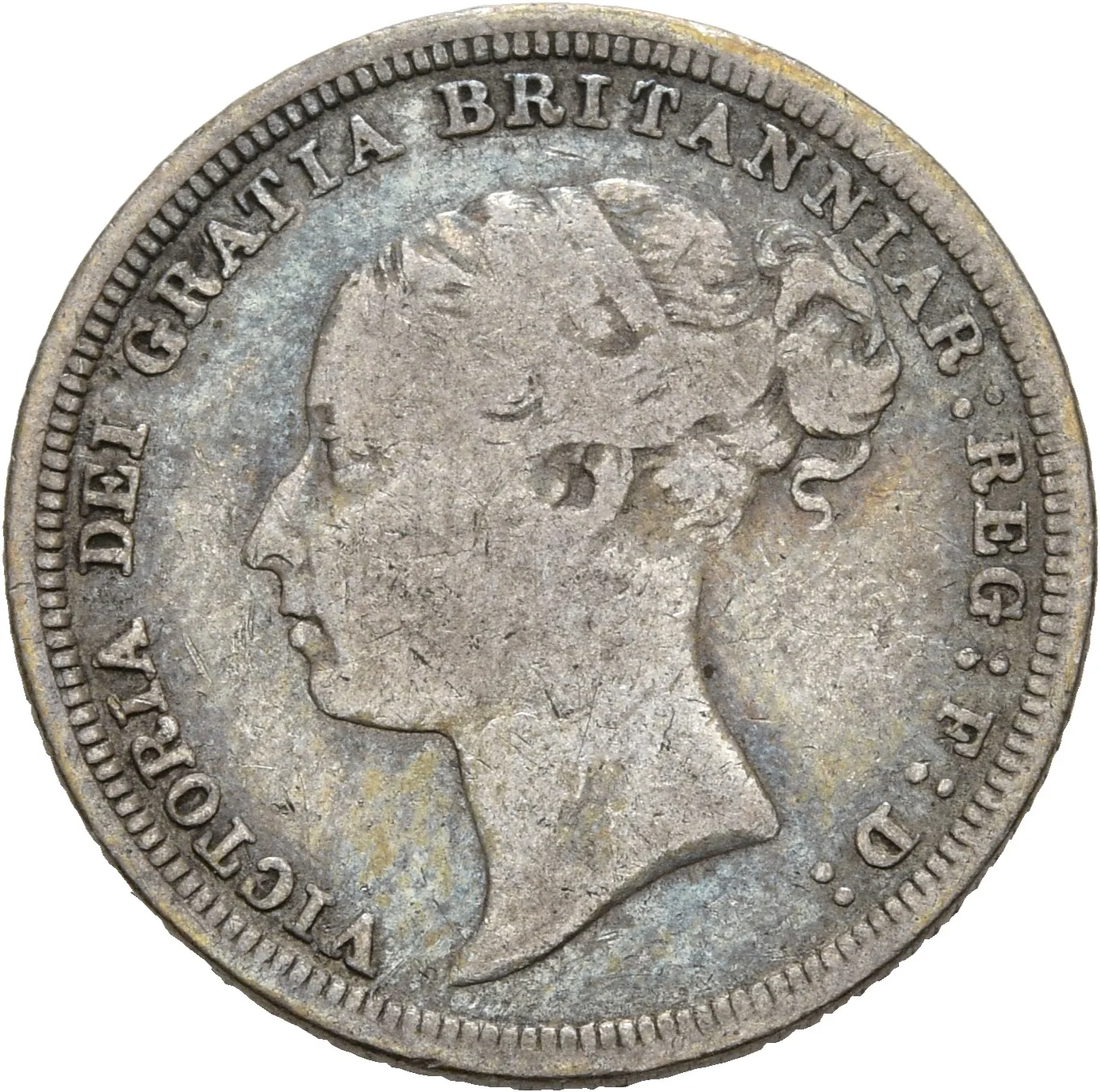
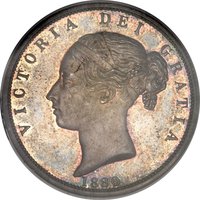
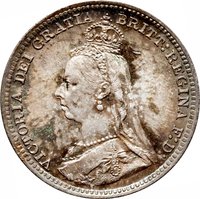
Young Head Victoria left, legend around. New, longer hair.
Inscription:
VICTORIA DEI GRATIA BRITANNIAR: REG: F: D:
Translation:
Victoria by the Grace of God Queen of the Britains Defender of the Faith
Script: Latin
Language: Latin
Engraver: William Wyon
Reverse
Description:
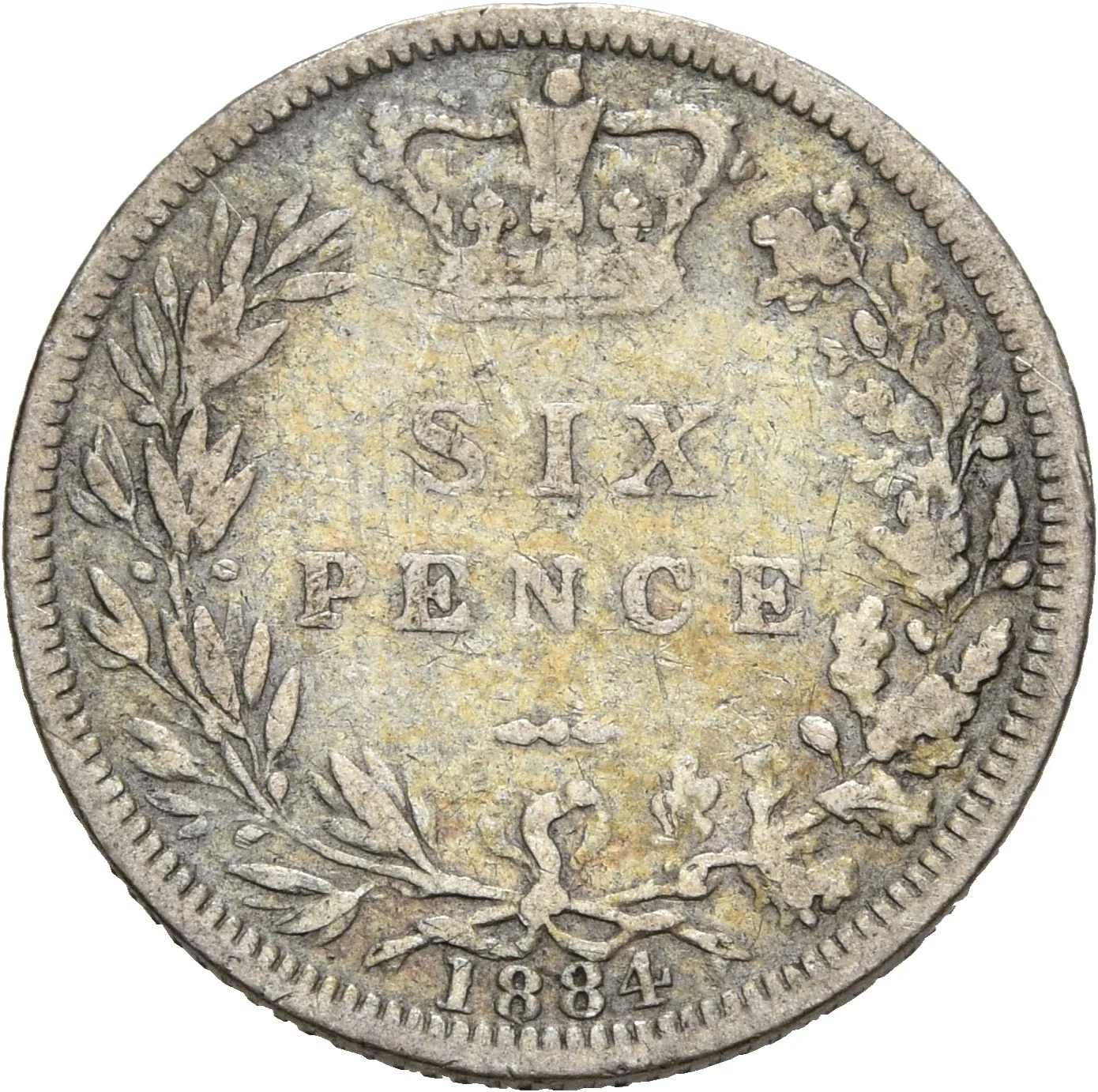
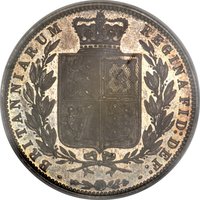
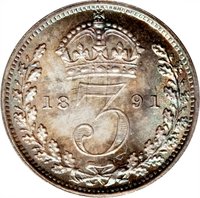
Denomination crowned in wreath, date beneath.
Inscription:
SIX
PENCE
1883
PENCE
1883
Script: Latin
Engraver: Jean Baptiste Merlen
Edge
Milled
Mints
| Name | Mark |
|---|---|
| Royal Mint (Tower Hill) | — |
Mintings
| Year | Mint Mark | Mintage | Quality | Collection |
|---|---|---|---|---|
| 1880 | — | — | Proof | |
| 1880 | — | — | ||
| 1881 | — | 6,239,400 | ||
| 1881 | — | — | Proof | |
| 1882 | — | 759,800 | ||
| 1883 | — | 4,986,500 | ||
| 1884 | — | 3,422,500 | ||
| 1885 | — | 4,652,700 | ||
| 1885 | — | — | Proof | |
| 1886 | — | 2,728,200 | ||
| 1886 | — | — | Proof | |
| 1887 | — | 3,675,600 | ||
| 1887 | — | — | Proof |
Historical background
In 1880, the United Kingdom operated under the classical Gold Standard, a system it had effectively pioneered. The pound sterling was legally defined as a specific weight of gold (123.274 grains of standard gold), and Bank of England notes were freely convertible into gold coin upon demand. This system, seen as the bedrock of Victorian financial stability and a key facilitator of global trade, ensured that the value of currency was anchored to a tangible, scarce commodity. London was the undisputed centre of world finance, and the gold-backed pound served as the primary reserve currency for international commerce, lending immense prestige and economic influence to the British Empire.
However, this era was not without its monetary debates and pressures. The period following the 1870s was known as the "Great Depression" (a prolonged price deflation, not a catastrophic collapse), which created social and political strain, particularly for debtors and agricultural interests. While the Gold Standard was sacrosanct in official circles, there was persistent discussion, often led by bimetallists, about whether the scarcity of gold was exacerbating deflation. They argued for a return to a bimetallic standard incorporating silver to expand the money supply and raise prices. Despite significant political agitation, especially from industrial and farming regions, the government and the financial establishment in London remained firmly committed to monometallic gold.
Consequently, the currency situation in 1880 was one of formal rigidity but underlying tension. The system was robust, guaranteeing fixed exchange rates with other gold-standard nations and fostering immense confidence in London's markets. Yet, the deflationary environment exposed the standard's inflexibility in responding to domestic economic hardship. The debate set the staunch defenders of orthodox gold finance, centred on the City of London and the Bank of England, against a growing chorus calling for monetary reform to address falling prices and economic distress, a prelude to the financial controversies that would intensify in the decades to follow.
However, this era was not without its monetary debates and pressures. The period following the 1870s was known as the "Great Depression" (a prolonged price deflation, not a catastrophic collapse), which created social and political strain, particularly for debtors and agricultural interests. While the Gold Standard was sacrosanct in official circles, there was persistent discussion, often led by bimetallists, about whether the scarcity of gold was exacerbating deflation. They argued for a return to a bimetallic standard incorporating silver to expand the money supply and raise prices. Despite significant political agitation, especially from industrial and farming regions, the government and the financial establishment in London remained firmly committed to monometallic gold.
Consequently, the currency situation in 1880 was one of formal rigidity but underlying tension. The system was robust, guaranteeing fixed exchange rates with other gold-standard nations and fostering immense confidence in London's markets. Yet, the deflationary environment exposed the standard's inflexibility in responding to domestic economic hardship. The debate set the staunch defenders of orthodox gold finance, centred on the City of London and the Bank of England, against a growing chorus calling for monetary reform to address falling prices and economic distress, a prelude to the financial controversies that would intensify in the decades to follow.
🌱 Common