

20 Pence (Lighthouse at La Corbière) – Jersey
Non-circulating coins
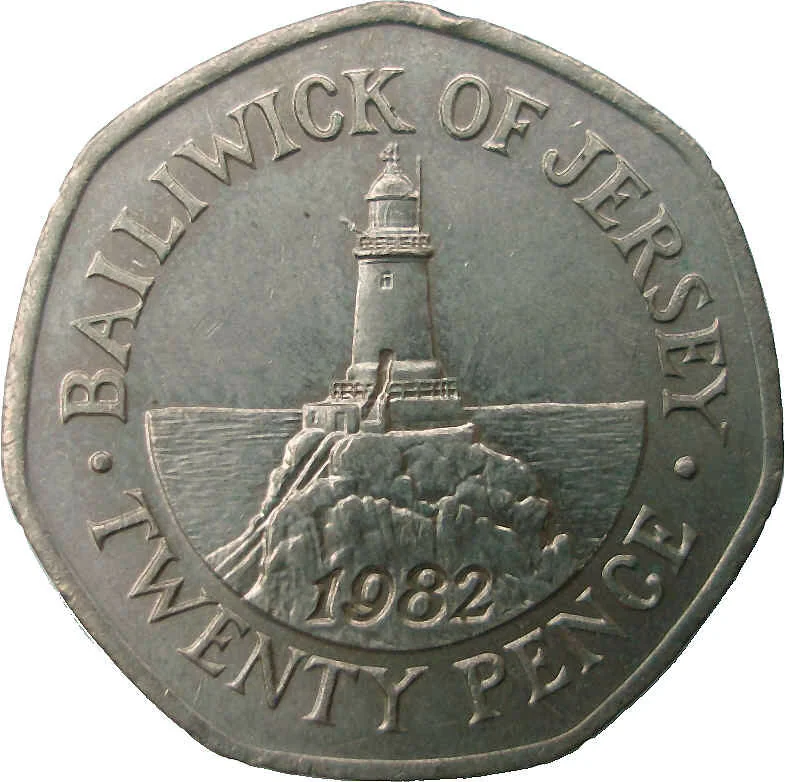
Commemoration: 100th anniversary of the Lighthouse at La Corbière
Context
Year: 1982
Country: British Crown dependencies
Issuer: Jersey 
Ruler: Elizabeth II
Currency:
(since 1971)
Total mintage: 1,500
Material
Diameter: 21.4 mm
Weight: 5.83 g
Silver weight: 5.39 g
Shape: Equilateral curve heptagon
Composition: 92.5% Silver
Magnetic: No
Technique: Milled
Alignment: Medal alignment
flip
References
KM: #Click to copy to clipboard53a
Numista: #8458
Value
Exchange value: 0.20 JEP
Bullion value: $15.67
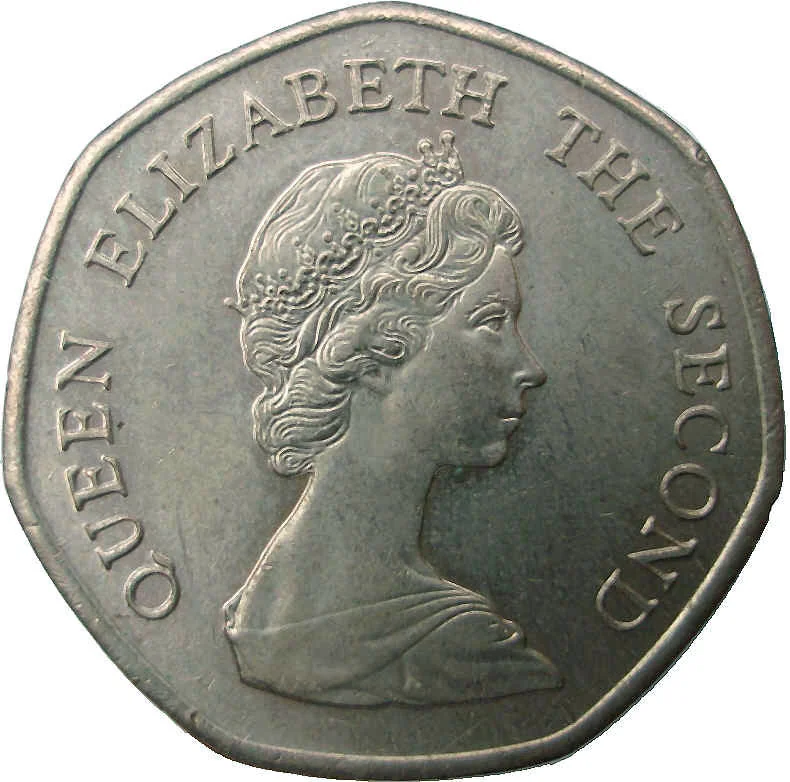
Obverse
Description:
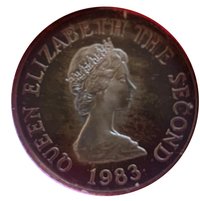
Queen Elizabeth II in profile, wearing the Girls of Great Britain tiara.
Inscription:
QUEEN ELIZABETH THE SECOND
Script: Latin
Engraver: Arnold Machin
Reverse
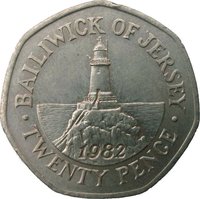
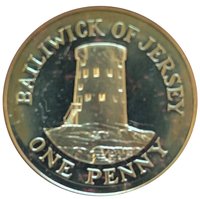
Description:
La Corbière Lighthouse
Inscription:
BAILIWICK OF JERSEY
1982
· TWENTY PENCE ·
1982
· TWENTY PENCE ·
Script: Latin
Engraver: Robert Lowe
Edge
Plain
Mintings
| Year | Mint Mark | Mintage | Quality | Collection |
|---|---|---|---|---|
| 1982 | — | 1,500 | Proof |
Historical background
In 1982, Jersey's currency situation was defined by its unique and dual-currency system, a legacy of its historical ties. The island officially used the Jersey pound, which was at parity with the British pound sterling. However, sterling banknotes from UK banks also circulated freely and were accepted as legal tender alongside distinct notes issued by the States of Jersey. This system provided stability and was underpinned by the island's substantial sterling reserves, held primarily in UK government securities, which fully backed the local note issue.
The period was, however, one of quiet transition and modernisation within this stable framework. The early 1980s saw the gradual withdrawal of the one-pound note, replaced by a circular one-pound coin following the UK's lead. Furthermore, the States of Jersey were in the process of assuming greater control over the design and issuance of currency. This move aimed to enhance the security and distinct identity of Jersey's notes, reducing reliance on commercial UK banknotes in daily circulation, a process that would culminate in the following years.
Economically, the system served Jersey well, supporting its growing finance sector and tourism industry. There was no currency crisis or devaluation; the peg to sterling provided monetary stability and certainty for business. The primary "currency situation" was therefore one of managed evolution, ensuring that the island's monetary arrangements continued to reflect its political autonomy as a Crown Dependency while maintaining the crucial economic link to the United Kingdom.
The period was, however, one of quiet transition and modernisation within this stable framework. The early 1980s saw the gradual withdrawal of the one-pound note, replaced by a circular one-pound coin following the UK's lead. Furthermore, the States of Jersey were in the process of assuming greater control over the design and issuance of currency. This move aimed to enhance the security and distinct identity of Jersey's notes, reducing reliance on commercial UK banknotes in daily circulation, a process that would culminate in the following years.
Economically, the system served Jersey well, supporting its growing finance sector and tourism industry. There was no currency crisis or devaluation; the peg to sterling provided monetary stability and certainty for business. The primary "currency situation" was therefore one of managed evolution, ensuring that the island's monetary arrangements continued to reflect its political autonomy as a Crown Dependency while maintaining the crucial economic link to the United Kingdom.
💎 Very Rare