

6 pence – South Africa
Add to wishlist
South Africa
Context
Years: 1925–1930
Issuer: South Africa
Ruler: George V
Currency:
(1825—1961)
Demonetization: 31 March 1961
Total mintage: 3,580,807
Material
References
KM: #
Numista: #8448
Value
Bullion value: $5.79
Obverse
Description:
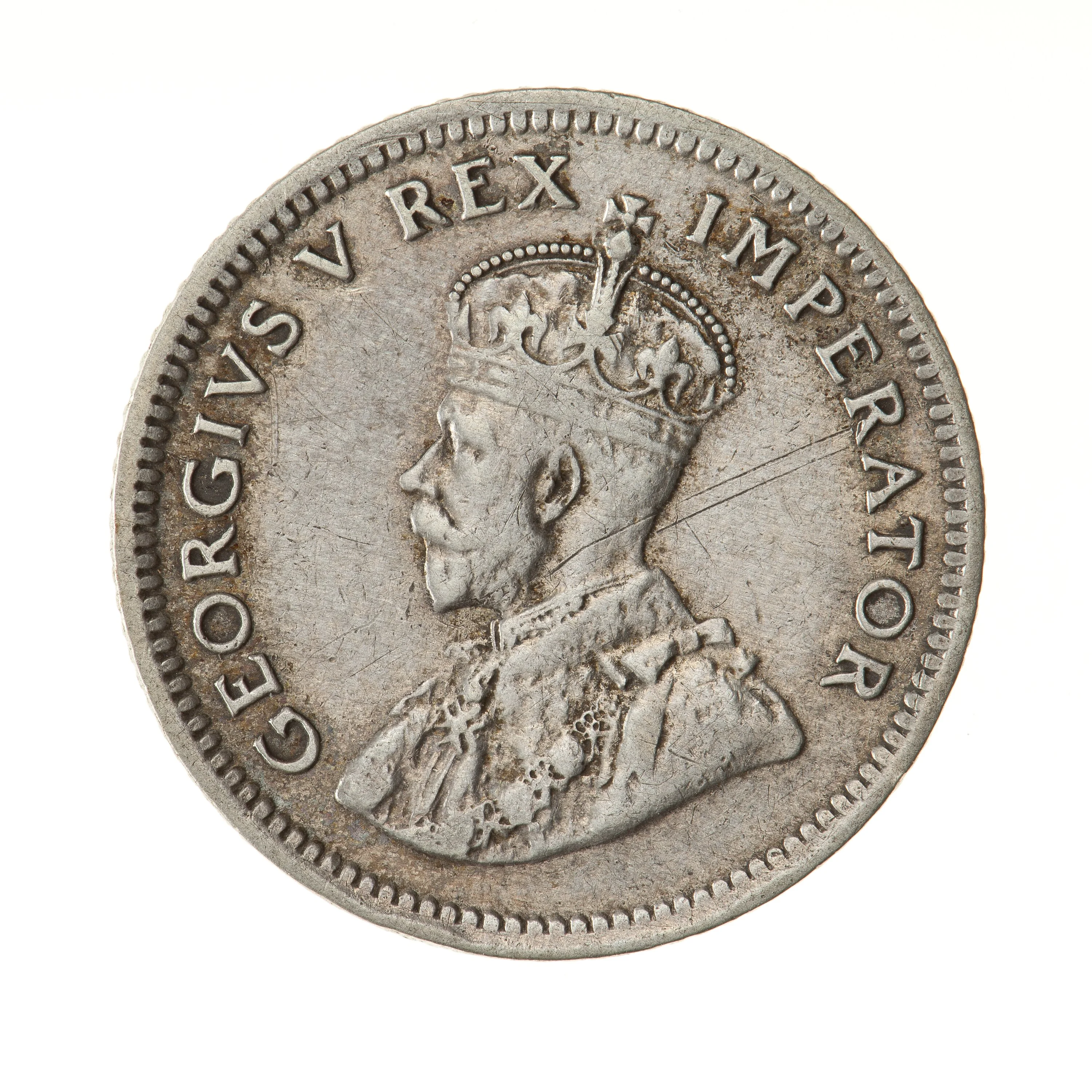
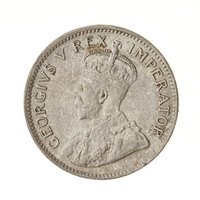
King George V crowned bust left, legend around, engraver's initials on truncation.
Inscription:
GEORGIVS V REX IMPERATOR
B.M.
B.M.
Translation:
George V, King and Emperor.
By the Grace of God.
By the Grace of God.
Script: Latin
Language: Latin
Engraver: Edgar Bertram MacKennal
Reverse
Description:
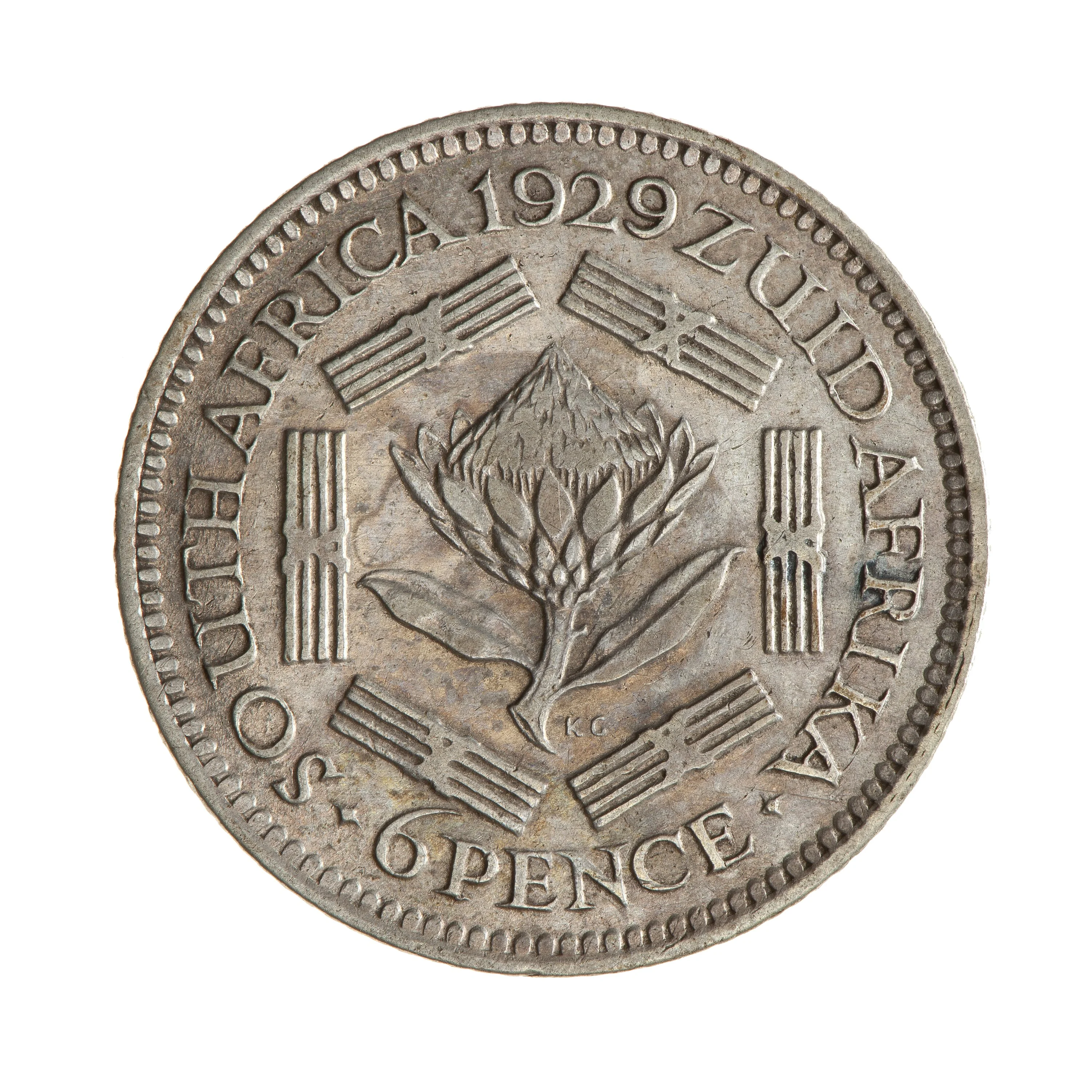
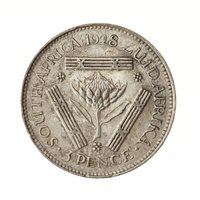
South Africa's native Protea flower, encircled by six bar groups. Date above, legend around, denomination below, engraver's initials flank the stem.
Inscription:
SOUTH-AFRICA 1927 ZUID-AFRIKA
KG
·6 PENCE·
KG
·6 PENCE·
Script: Latin
Engraver: George Kruger Gray
Edge
Reeded
Mints
| Name | Mark |
|---|---|
| Pretoria | — |
Mintings
| Year | Mint Mark | Mintage | Quality | Collection |
|---|---|---|---|---|
| 1925 | — | 79,231 | ||
| 1926 | — | 721,606 | ||
| 1926 | — | 16 | Proof | |
| 1927 | — | 1,547,788 | ||
| 1929 | — | 783,885 | ||
| 1930 | — | 448,267 | ||
| 1930 | — | 14 | Proof |
Historical background
In 1925, South Africa faced a critical juncture in its monetary policy, culminating in the pivotal Currency and Banking Act. The nation was operating on a de facto gold standard, but its currency, the South African pound, was pegged to and circulated alongside the British pound sterling. This created a system heavily dependent on British economic policy and the flow of gold revenues to London. However, post-World War I economic turbulence, including fluctuating gold prices and trade imbalances, exposed the vulnerabilities of this arrangement and spurred a national debate on financial sovereignty.
The central issue was whether to formally return to the classical gold standard, which had been suspended during the war, or to establish a distinct central bank and a managed currency. Proponents of the gold standard, led by the mining industry and then-Finance Minister Jan Smuts, argued it would ensure stability, attract foreign investment, and automatically regulate the money supply. Opponents, including many farmers and industrialists, feared it would lead to deflation, high interest rates, and a stifling of domestic economic growth, as the value of the currency would be dictated solely by gold flows.
The outcome was a political and economic compromise. The 1925 Act, steered through parliament by Smuts, formally returned South Africa to the gold standard at the pre-war parity. Simultaneously, it established the South African Reserve Bank as the nation's first central bank, tasked with managing the currency and holding the gold reserves. This move was intended to project financial credibility on the world stage. However, the decision proved ill-timed, as Britain itself returned to gold at an overvalued rate shortly after, hurting South African exports. The strain ultimately forced South Africa to abandon the gold standard in 1932, but the Reserve Bank endured as a lasting legacy of the 1925 reforms.
The central issue was whether to formally return to the classical gold standard, which had been suspended during the war, or to establish a distinct central bank and a managed currency. Proponents of the gold standard, led by the mining industry and then-Finance Minister Jan Smuts, argued it would ensure stability, attract foreign investment, and automatically regulate the money supply. Opponents, including many farmers and industrialists, feared it would lead to deflation, high interest rates, and a stifling of domestic economic growth, as the value of the currency would be dictated solely by gold flows.
The outcome was a political and economic compromise. The 1925 Act, steered through parliament by Smuts, formally returned South Africa to the gold standard at the pre-war parity. Simultaneously, it established the South African Reserve Bank as the nation's first central bank, tasked with managing the currency and holding the gold reserves. This move was intended to project financial credibility on the world stage. However, the decision proved ill-timed, as Britain itself returned to gold at an overvalued rate shortly after, hurting South African exports. The strain ultimately forced South Africa to abandon the gold standard in 1932, but the Reserve Bank endured as a lasting legacy of the 1925 reforms.

🌱 Common