

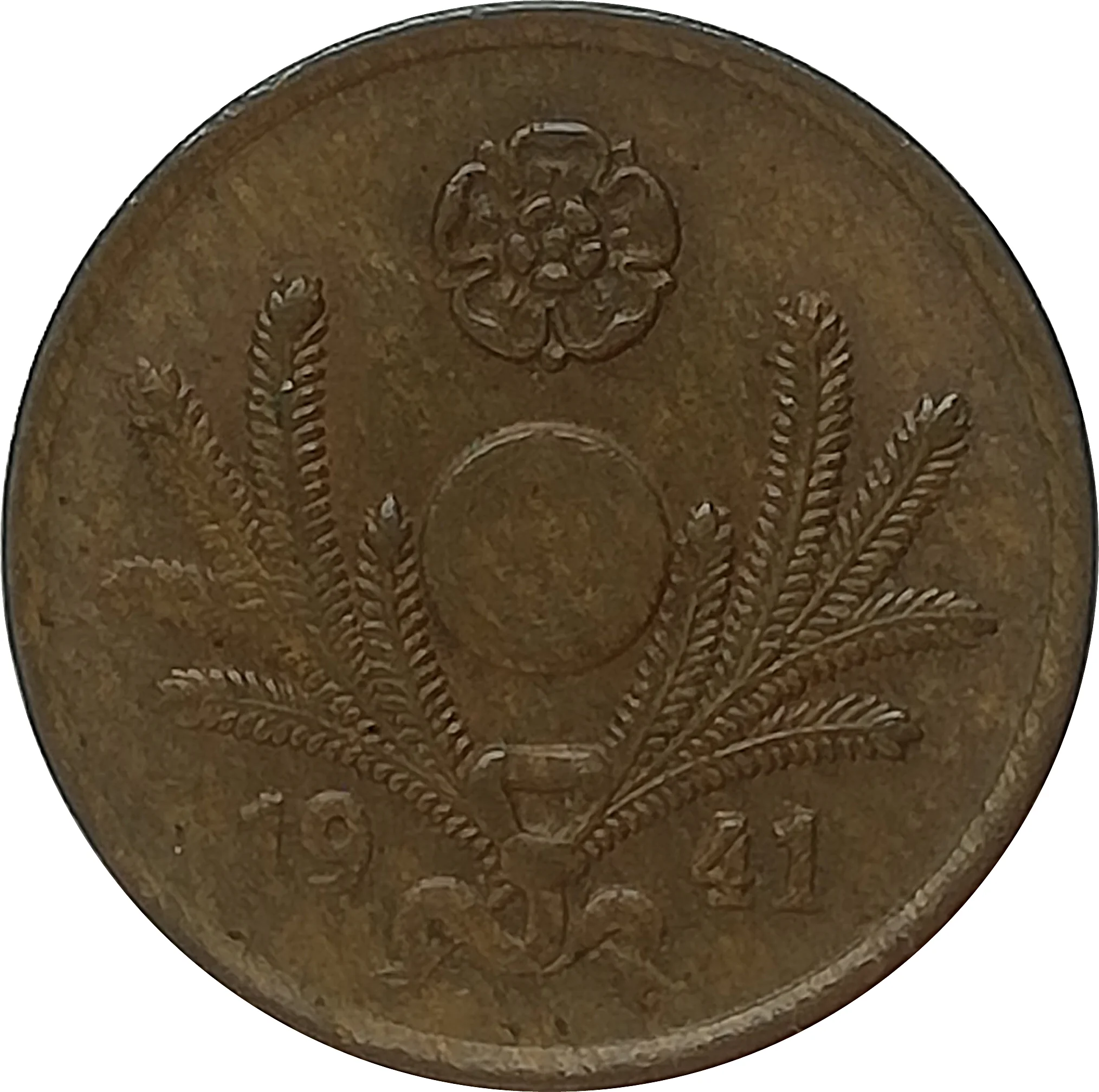
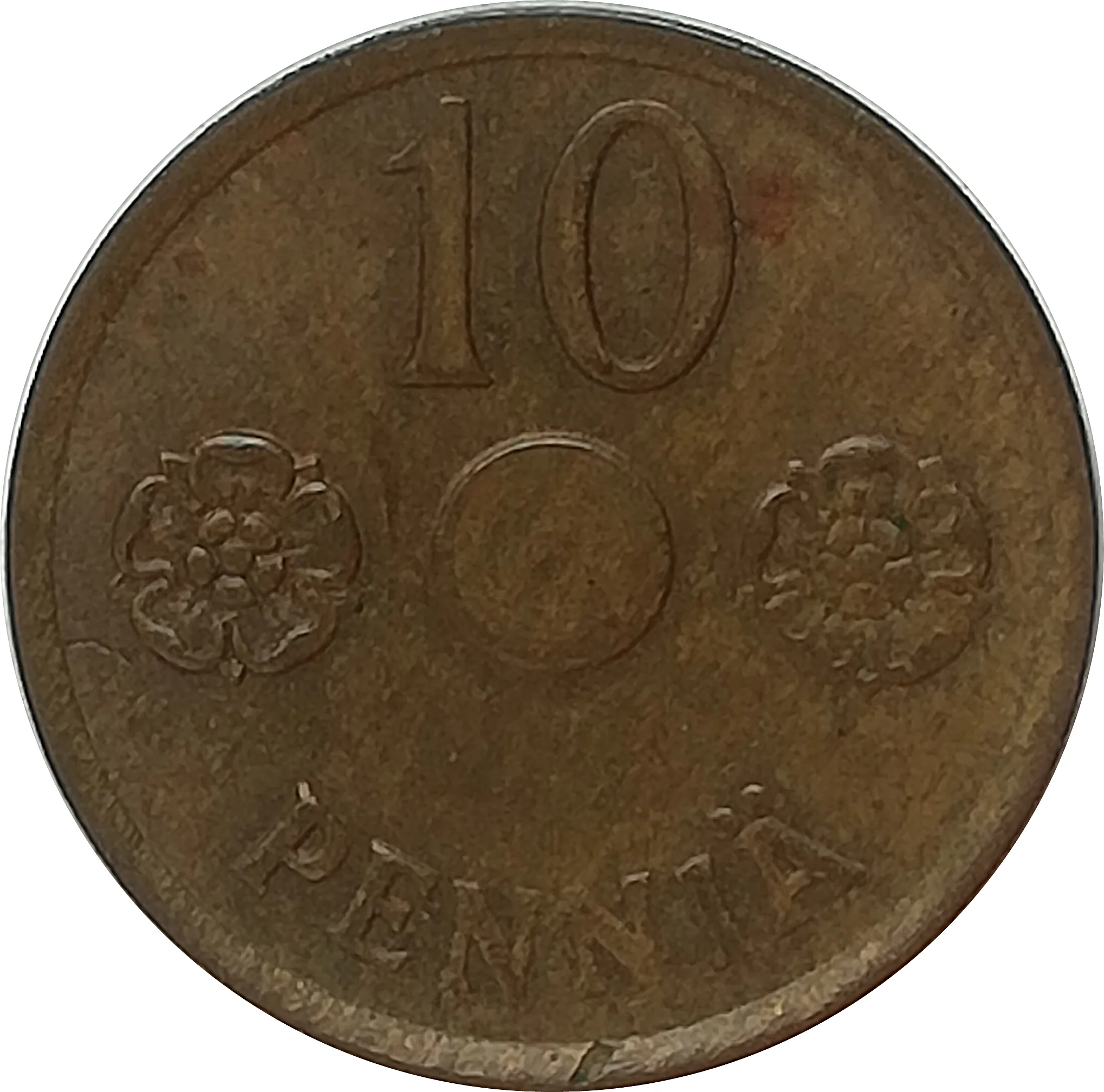
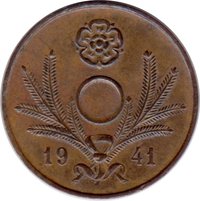
Obverse
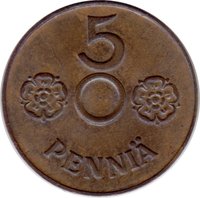
Reverse
Edge
Plain
Mintings
| Year | Mint Mark | Mintage | Quality | Collection |
|---|---|---|---|---|
| 1941 | — | — | ||
| 1942 | — | — | ||
| 1943 | — | — |
Historical background
In 1941, Finland’s currency situation was heavily defined by its participation in the Continuation War (1941-1944) against the Soviet Union, alongside Nazi Germany. The Finnish markka (markkaa) was not a freely convertible currency and its stability was artificially maintained through strict wartime economic controls. The Bank of Finland financed a significant portion of the war effort through money printing, leading to substantial hidden inflation. However, this was masked by a comprehensive regime of price and wage freezes, rationing of essential goods, and state subsidies, which prevented the kind of hyperinflation seen in some other war economies but created a growing monetary overhang and a thriving black market.
Finland’s currency system was also directly linked to the German Reichsmark due to the wartime alliance, though this was a relationship of necessity rather than choice. A bilateral clearing agreement eliminated the need for hard currency reserves in trade with Germany, Finland's most important economic partner during the conflict. This system allowed Finland to import crucial goods like grain, weapons, and fuel, but it also tied the Finnish economy tightly to the German war machine and created large, frozen credit balances in Berlin. Trade with other countries was minimal and strictly controlled.
Overall, the currency situation was one of fragile stability on the surface, underpinned by coercive controls and dependent on German support. The true economic pressures were suppressed, resulting in accumulated monetary imbalances and a distorted economy. The reckoning for this wartime financial policy would come after 1944, when the end of the war brought devaluation, the lifting of controls, and a necessary period of economic stabilization to address the inflationary pressures built up during the conflict.
Finland’s currency system was also directly linked to the German Reichsmark due to the wartime alliance, though this was a relationship of necessity rather than choice. A bilateral clearing agreement eliminated the need for hard currency reserves in trade with Germany, Finland's most important economic partner during the conflict. This system allowed Finland to import crucial goods like grain, weapons, and fuel, but it also tied the Finnish economy tightly to the German war machine and created large, frozen credit balances in Berlin. Trade with other countries was minimal and strictly controlled.
Overall, the currency situation was one of fragile stability on the surface, underpinned by coercive controls and dependent on German support. The true economic pressures were suppressed, resulting in accumulated monetary imbalances and a distorted economy. The reckoning for this wartime financial policy would come after 1944, when the end of the war brought devaluation, the lifting of controls, and a necessary period of economic stabilization to address the inflationary pressures built up during the conflict.
💎 Extremely Rare