

¼ dinar – Jordan
Add to wishlist
Jordan
Context
Material
Diameter: 26.7 mm
Weight: 7.4 g
Thickness: 2 mm
Shape: Equilateral curve heptagon
Composition: Nickel brass
Magnetic: No
Technique: Milled
Alignment: Medal alignment
flip
References
KM: #
Numista: #8447
Value
Exchange value: ¼ JOD
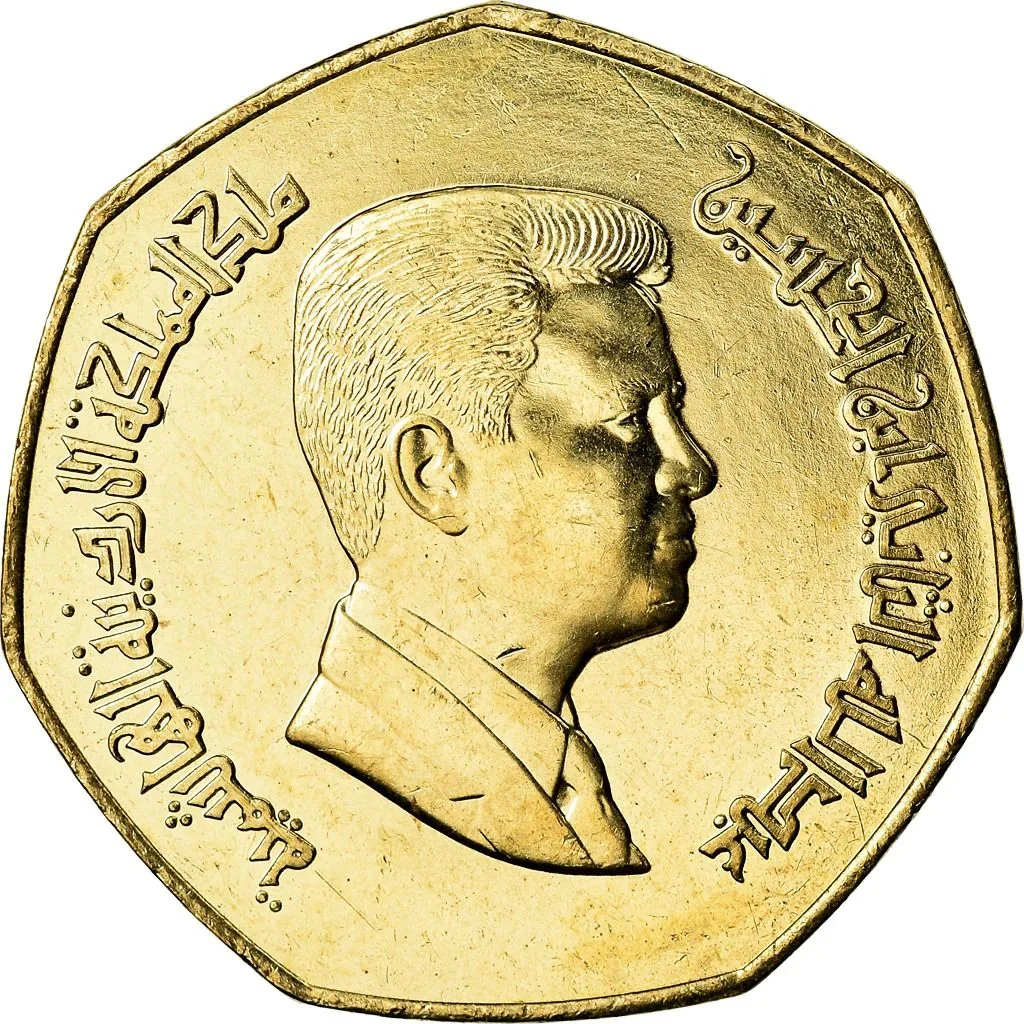
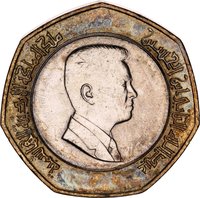
Obverse
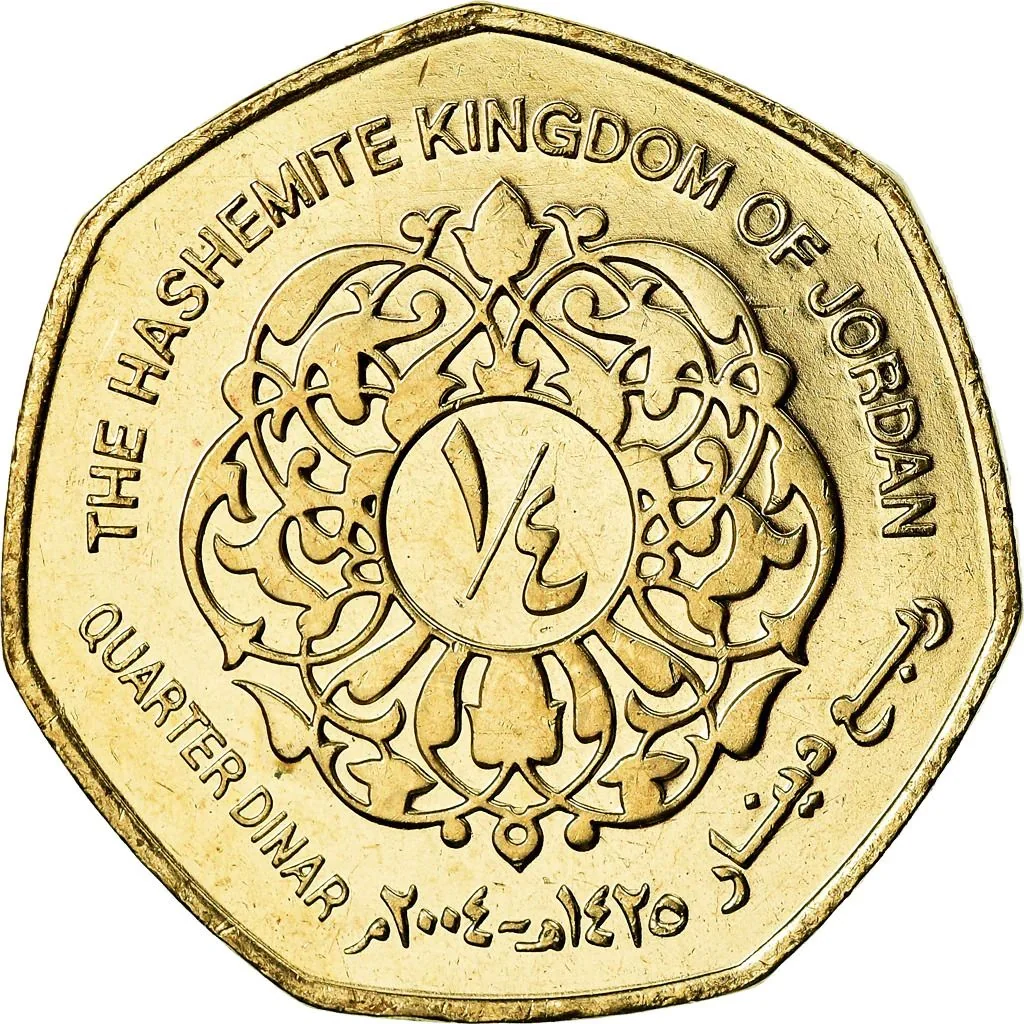
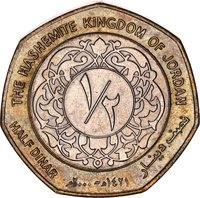
Reverse
Edge
Plain
Mints
| Name | Mark |
|---|---|
| Royal Mint | — |
Mintings
| Year | Mint Mark | Mintage | Quality | Collection |
|---|---|---|---|---|
| 2004 | — | — | ||
| 2006 | — | — | ||
| 2008 | — | — | ||
| 2009 | — | — | ||
| 2012 | — | — | ||
| 2019 | — | — | ||
| 2021 | — | — |
Historical background
In 2004, Jordan's currency situation was characterized by a period of notable stability and confidence, underpinned by a fixed exchange rate regime. The Jordanian dinar (JOD) was, and remains, pegged to the U.S. dollar at a rate of approximately 0.709 JOD per USD, a policy established in 1995. This peg provided a crucial anchor for the economy, helping to control inflation, attract foreign investment, and maintain predictability for trade and financial transactions. The Central Bank of Jordan held substantial foreign currency reserves, which acted as a critical buffer to defend the peg and ensure monetary stability, even amidst regional uncertainties.
This stability, however, existed against a backdrop of significant economic challenges. Jordan's economy faced a high public debt burden, persistent budget deficits, and structural issues like poverty and unemployment. The country was heavily reliant on imports, particularly for oil and food, making it vulnerable to external price shocks. Furthermore, its economy depended on key external inflows: remittances from Jordanians working abroad, foreign aid (primarily from the United States and Gulf allies), and tourism. Any volatility in these inflows posed a potential risk to the balance of payments and, by extension, to the reserves supporting the currency peg.
Overall, the year 2004 saw the Jordanian dinar maintain its firm peg without major incident, a testament to prudent central bank management and continued international support. The currency's strength was a point of national pride and a pillar of macroeconomic policy. Nevertheless, economists and policymakers were mindful that the underlying structural weaknesses in the economy meant that maintaining this stability required ongoing fiscal discipline and careful management of the country's external dependencies to avoid future pressure on the dinar.
This stability, however, existed against a backdrop of significant economic challenges. Jordan's economy faced a high public debt burden, persistent budget deficits, and structural issues like poverty and unemployment. The country was heavily reliant on imports, particularly for oil and food, making it vulnerable to external price shocks. Furthermore, its economy depended on key external inflows: remittances from Jordanians working abroad, foreign aid (primarily from the United States and Gulf allies), and tourism. Any volatility in these inflows posed a potential risk to the balance of payments and, by extension, to the reserves supporting the currency peg.
Overall, the year 2004 saw the Jordanian dinar maintain its firm peg without major incident, a testament to prudent central bank management and continued international support. The currency's strength was a point of national pride and a pillar of macroeconomic policy. Nevertheless, economists and policymakers were mindful that the underlying structural weaknesses in the economy meant that maintaining this stability required ongoing fiscal discipline and careful management of the country's external dependencies to avoid future pressure on the dinar.
🌱 Very Common