

1000 Zlotys – Poland
Non-circulating coins
Commemoration: FIFA World Cup 1994
Poland

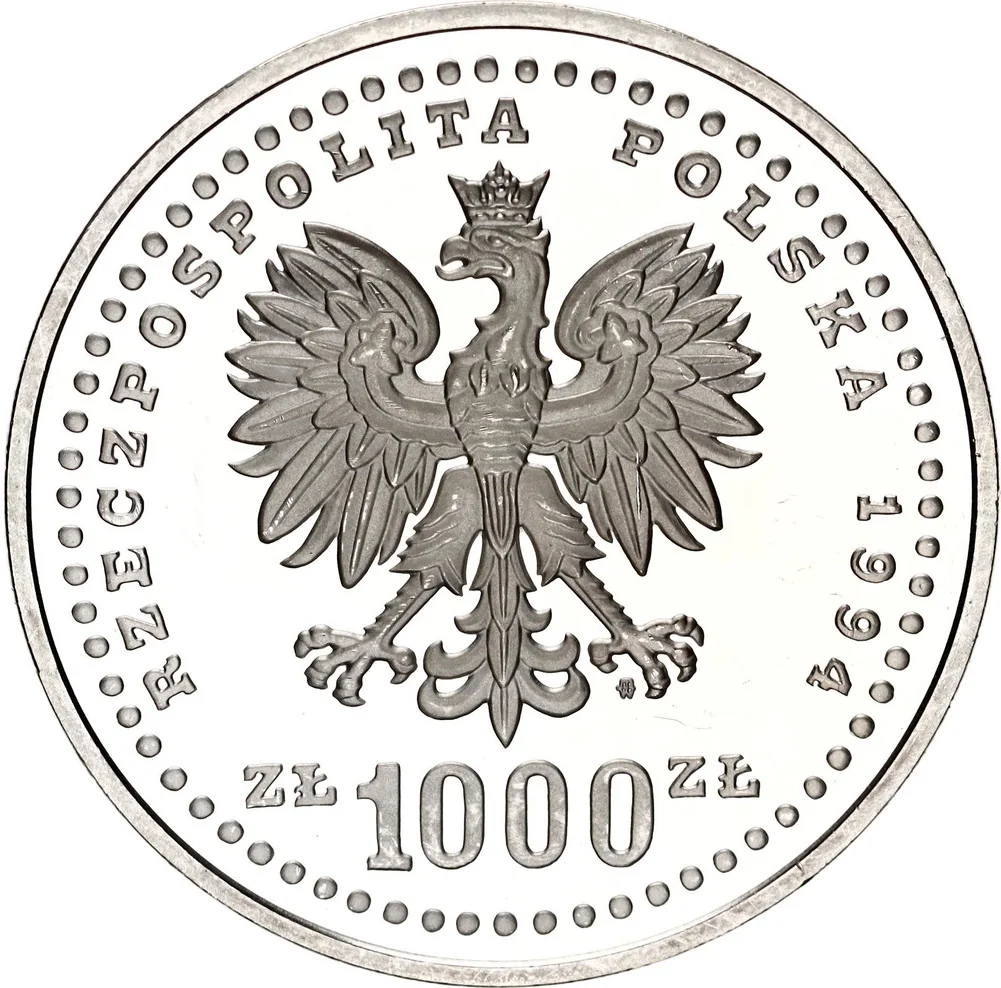
Obverse
Description:
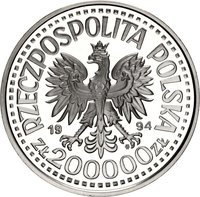
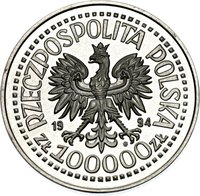
Eagle: A powerful bird of prey.
Inscription:
RZECZPOSPOLITA POLSKA 1994
mw
ZŁ 1000 ZŁ
mw
ZŁ 1000 ZŁ
Translation:
REPUBLIC OF POLAND 1994
1000 ZŁOTYCH 1000 ZŁ
1000 ZŁOTYCH 1000 ZŁ
Script: Latin
Language: Polish
Designer: Robert Kotowicz
Reverse
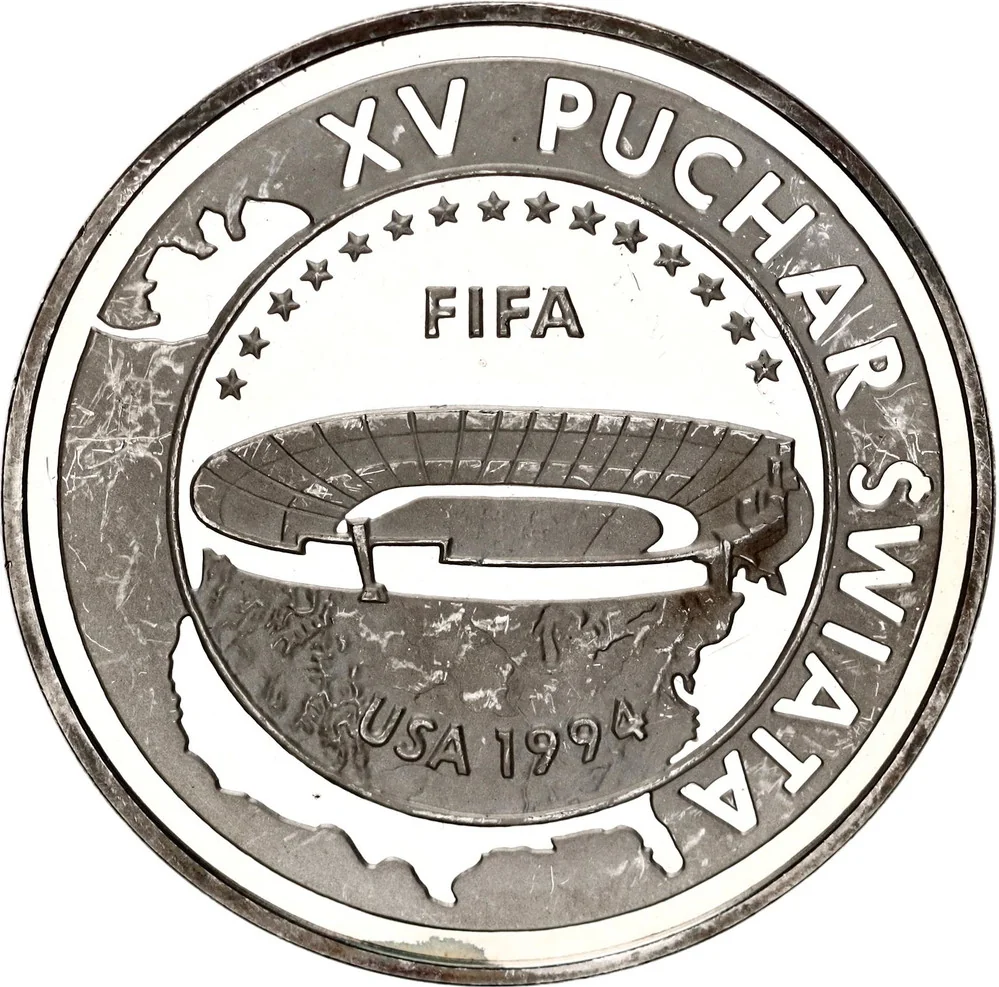
Description:
U.S. Stadium Map
Inscription:
XV PUCHAR ŚWIATA
FIFA
USA 1994
FIFA
USA 1994
Translation:
XV WORLD CUP
FIFA
USA 1994
FIFA
USA 1994
Script: Latin
Language: Polish
Designer: Robert Kotowicz
Edge
Plain
Categories
| Sport> Football> FIFA World Cup |
Mints
| Name | Mark |
|---|---|
| Mint of Poland | (MW) |
Mintings
| Year | Mint Mark | Mintage | Quality | Collection |
|---|---|---|---|---|
| 1994 | MW | 10,480 | Proof |
Historical background
In 1994, Poland was in the midst of a remarkable yet challenging economic transformation following the shock therapy reforms of 1990. The cornerstone of its monetary policy was the anti-inflationary anchor provided by a crawling peg exchange rate system. The Polish zloty (PLN) was pegged to a basket of currencies (initially the US dollar and later including the Deutsche Mark), with its central parity devalued at a pre-announced, gradually slowing monthly rate—around 1.4% per month at the start of the year. This policy, managed by the National Bank of Poland (NBP) under President Hanna Gronkiewicz-Waltz, successfully tamed hyperinflation but came at the cost of a significant loss of monetary policy autonomy and persistent pressure on foreign exchange reserves.
The currency regime faced mounting strain throughout the year. The fixed but crawling peg, while providing stability for trade and investment, made the zloty increasingly overvalued in real terms as domestic inflation, though falling, remained higher than that of Poland's trading partners. This overvaluation, coupled with a growing current account deficit, fueled strong speculative pressures and repeated attacks on the currency. The NBP was forced to spend billions of dollars from its reserves to defend the peg, leading to intense debates about the sustainability of the exchange rate band and the need for greater flexibility.
By the end of 1994, the limitations of the crawling peg were clear, setting the stage for a major policy shift the following year. The pressures culminated in 1995 with a decisive reform: the introduction of a crawling band in May, which widened the allowable fluctuation margins around the central parity, and the redenomination of the zloty in January 1995 (PLN 10,000 became PLN 1). Thus, 1994 was a pivotal year of mounting tension, marking the final phase of a rigid exchange rate anchor and preparing the ground for a more flexible system better suited to Poland's evolving market economy.
The currency regime faced mounting strain throughout the year. The fixed but crawling peg, while providing stability for trade and investment, made the zloty increasingly overvalued in real terms as domestic inflation, though falling, remained higher than that of Poland's trading partners. This overvaluation, coupled with a growing current account deficit, fueled strong speculative pressures and repeated attacks on the currency. The NBP was forced to spend billions of dollars from its reserves to defend the peg, leading to intense debates about the sustainability of the exchange rate band and the need for greater flexibility.
By the end of 1994, the limitations of the crawling peg were clear, setting the stage for a major policy shift the following year. The pressures culminated in 1995 with a decisive reform: the introduction of a crawling band in May, which widened the allowable fluctuation margins around the central parity, and the redenomination of the zloty in January 1995 (PLN 10,000 became PLN 1). Thus, 1994 was a pivotal year of mounting tension, marking the final phase of a rigid exchange rate anchor and preparing the ground for a more flexible system better suited to Poland's evolving market economy.
💎 Extremely Rare