

4 maravedis – Spain
Add to wishlist
Spain
Context
Material
References
KM: #
Numista: #8444
Obverse
Description:
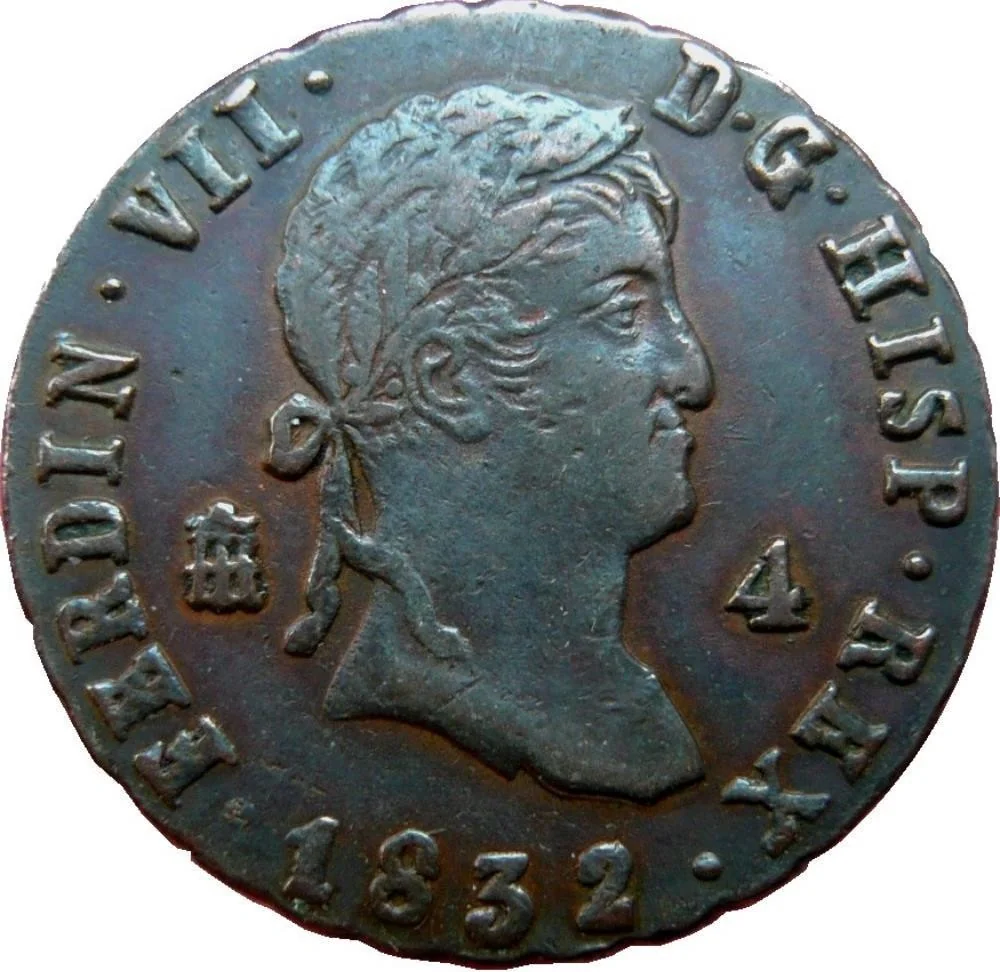
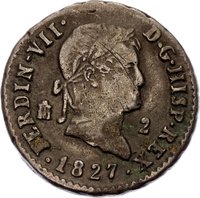
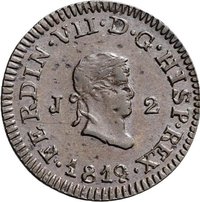
King Fernando VII facing right.
Inscription:
FERDIN · VII· D · G · HISP · REX
4
· 1832 ·
4
· 1832 ·
Translation:
FERDINAND VII BY THE GRACE OF GOD KING OF SPAIN
4
1832
4
1832
Script: Latin
Language: Latin
Engraver: Félix Sagau y Dalmau de Galcerán
Reverse
Description:
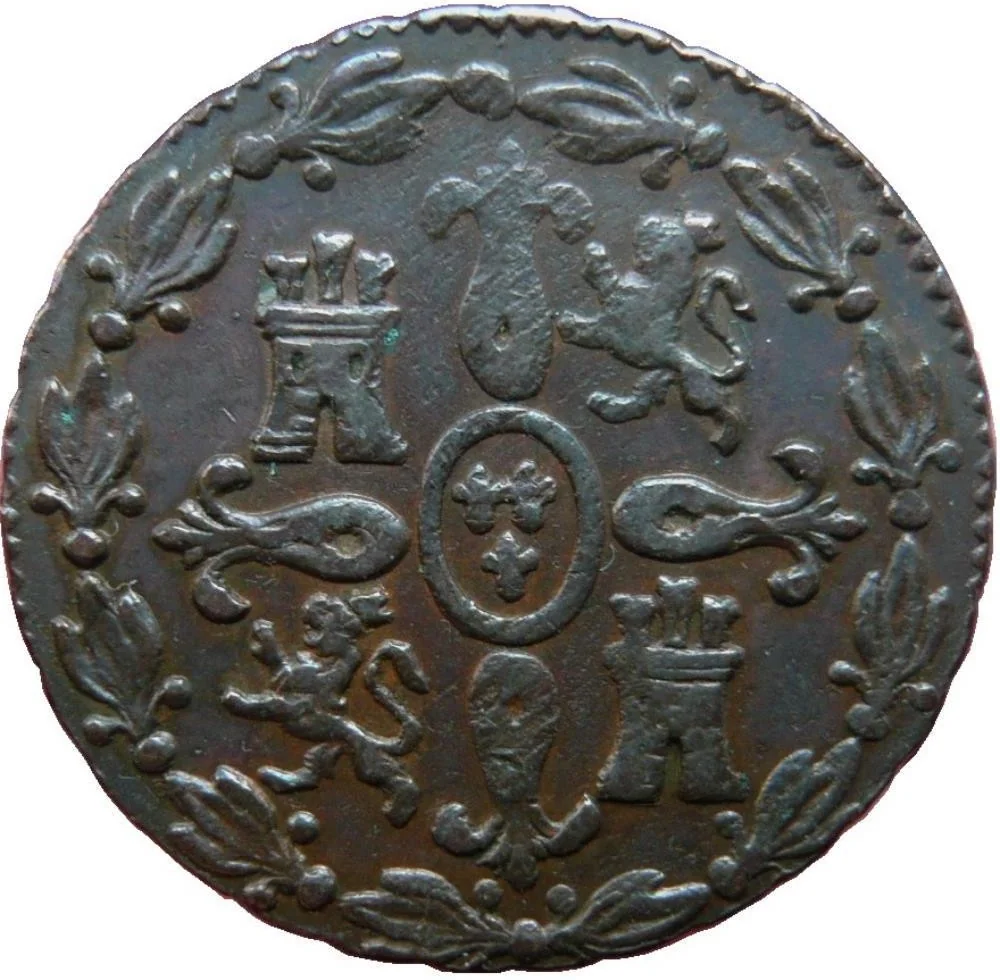
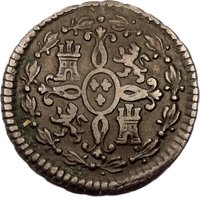
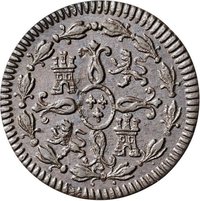
Cross of Don Pelayo featuring castles and lions for Castile and Leon, a central Bourbon fleur-de-lis oval, and a perimeter wreath.
Engraver: Félix Sagau y Dalmau de Galcerán
Edge
Decorated
Categories
| Animal> Feline |
| Building> Castle or fortification |
| Symbol> Cross |
| Symbol> Wreath |
| Symbol> Fleur-de-lis |
Mints
| Name | Mark |
|---|---|
| Royal Mint of Segovia | — |
Mintings
| Year | Mint Mark | Mintage | Quality | Collection |
|---|---|---|---|---|
| 1816 | — | — | ||
| 1817 | — | — | ||
| 1818 | — | — | ||
| 1819 | — | — | ||
| 1820 | — | — | ||
| 1823 | — | — | ||
| 1824 | — | — | ||
| 1825 | — | — | ||
| 1826 | — | — | ||
| 1827 | — | — | ||
| 1828 | — | — | ||
| 1829 | — | — | ||
| 1830 | — | — | ||
| 1831 | — | — | ||
| 1832 | — | — | ||
| 1833 | — | — |
Historical background
In 1816, Spain’s currency situation was chaotic and deeply symptomatic of the nation's profound political and economic crisis. The country was embroiled in the Peninsular War (1808-1814) against Napoleonic France, followed immediately by the loss of most of its American colonies and the restoration of the absolutist monarchy under Ferdinand VII. To finance these endless wars, successive governments had resorted to massive deficit spending, funded not by taxes but by the relentless printing of paper money known as vales reales (royal bonds). First issued in 1780, these had evolved from interest-bearing debt into a de facto forced currency, issued in such staggering volumes that they suffered catastrophic depreciation.
The result was a fractured and unstable monetary system with two parallel currencies: the devalued paper vales reales and traditional silver and gold coinage. A severe shortage of precious metals plagued the economy, as bullion was hoarded, exported to pay for war supplies, or ceased to arrive from the collapsing American colonies. Consequently, the value of the vales reales plummeted to a small fraction of their face value, leading to widespread refusal to accept them at par. Different regions and even cities often assigned them different values, crippling domestic trade and creating a climate of financial uncertainty where barter became common.
Ferdinand VII’s government in 1816 lacked both the political will and the fiscal means to implement a decisive monetary reform. Attempts to stabilize the currency, such as the creation of the Banco de San Fernando in 1829 (a precursor to the Bank of Spain), still lay in the future. Therefore, the currency chaos of 1816 was more than an economic issue; it was a direct reflection of a state in financial ruin, with a shattered credit system, diminished imperial revenues, and a society struggling to function amidst the tangible collapse of the royal promise to pay.
The result was a fractured and unstable monetary system with two parallel currencies: the devalued paper vales reales and traditional silver and gold coinage. A severe shortage of precious metals plagued the economy, as bullion was hoarded, exported to pay for war supplies, or ceased to arrive from the collapsing American colonies. Consequently, the value of the vales reales plummeted to a small fraction of their face value, leading to widespread refusal to accept them at par. Different regions and even cities often assigned them different values, crippling domestic trade and creating a climate of financial uncertainty where barter became common.
Ferdinand VII’s government in 1816 lacked both the political will and the fiscal means to implement a decisive monetary reform. Attempts to stabilize the currency, such as the creation of the Banco de San Fernando in 1829 (a precursor to the Bank of Spain), still lay in the future. Therefore, the currency chaos of 1816 was more than an economic issue; it was a direct reflection of a state in financial ruin, with a shattered credit system, diminished imperial revenues, and a society struggling to function amidst the tangible collapse of the royal promise to pay.
🌱 Common