

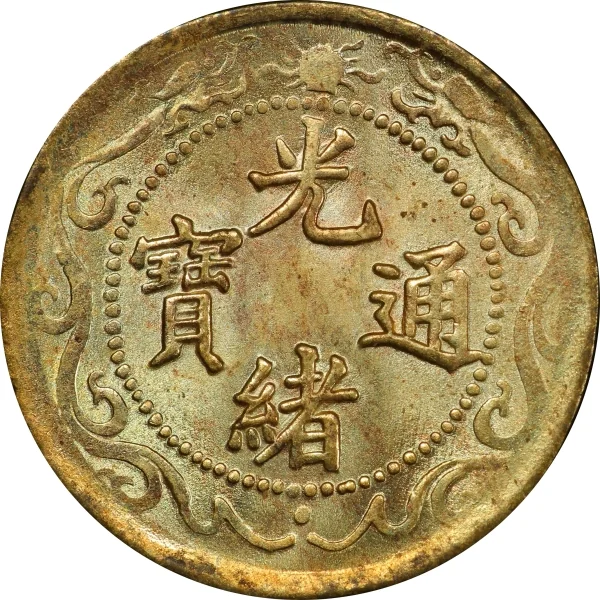
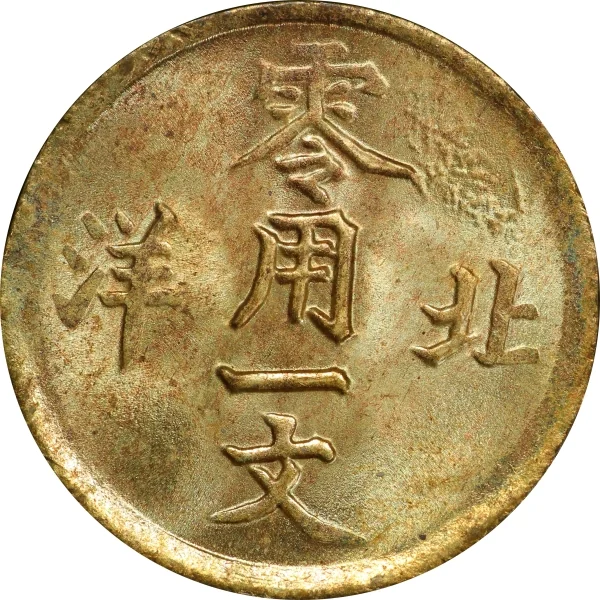
1 Cash – Chihli Province
China
Context
Years: 1904–1907
Country: China 
Issuer: Chihli Province
Ruler: Guangxu
Currency:
(1896—1940)
Demonetized: Yes
Material
References
Y: #Click to copy to clipboard66
Numista: #8431
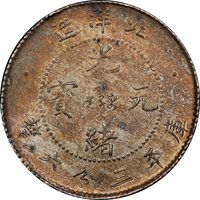
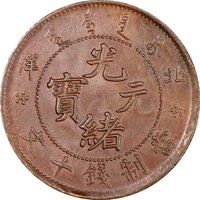
Obverse
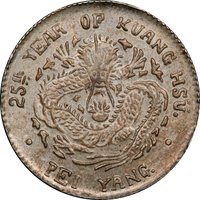
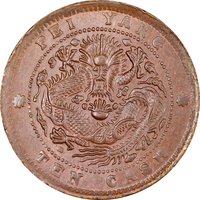
Reverse
Edge
Plain
Mintings
| Year | Mint Mark | Mintage | Quality | Collection |
|---|---|---|---|---|
| — | — | — |
Historical background
In 1904, the currency situation in Chihli Province (modern-day Hebei and the seat of the Qing capital, Beijing) was characterized by profound complexity and instability, reflecting the wider monetary crisis of the late Qing Dynasty. The province operated under a chaotic multi-currency system with no single standard. Official silver taels (sycee, measured in the local Kuping standard) were used for large government and mercantile transactions, while a vast array of silver dollars (foreign coins like Mexican Eagles and domestic provincial mint issues) circulated at fluctuating values. Crucially, the everyday economy for the populace relied on copper cash (wen), but severe shortages and debasement of these coins had drastically driven up their exchange rate against silver, impoverishing commoners who were paid in copper but often taxed in silver.
This monetary disarray was exacerbated by the provincial mint in Tianjin, which, like many others, produced debased copper coinage in an attempt to generate revenue for the cash-strapped Qing government. The influx of these lower-quality copper coins (tongyuan) in the early 1900s led to rapid inflation in the copper-based marketplace, further distorting the silver-copper exchange. Concurrently, foreign banknotes (from institutions like the Hongkong and Shanghai Banking Corporation) and early Chinese banknotes from domestic "native banks" (qianzhuang) and official banks added another volatile layer of paper credit, with their acceptance heavily dependent on the issuer's reputation.
The situation in Chihli was not merely an economic inconvenience; it was a source of social unrest and a significant impediment to commerce and governance. The provincial authorities and the Qing court, weakened by war indemnities from the Boxer Protocol (1901) and facing internal rebellion, struggled to impose order. The currency chaos in this pivotal province, surrounding the imperial capital, thus stood as a potent symbol of the Qing state's declining sovereignty and its inability to provide basic economic stability, foreshadowing the monetary reforms that would be attempted, with limited success, in the dynasty's final years.
This monetary disarray was exacerbated by the provincial mint in Tianjin, which, like many others, produced debased copper coinage in an attempt to generate revenue for the cash-strapped Qing government. The influx of these lower-quality copper coins (tongyuan) in the early 1900s led to rapid inflation in the copper-based marketplace, further distorting the silver-copper exchange. Concurrently, foreign banknotes (from institutions like the Hongkong and Shanghai Banking Corporation) and early Chinese banknotes from domestic "native banks" (qianzhuang) and official banks added another volatile layer of paper credit, with their acceptance heavily dependent on the issuer's reputation.
The situation in Chihli was not merely an economic inconvenience; it was a source of social unrest and a significant impediment to commerce and governance. The provincial authorities and the Qing court, weakened by war indemnities from the Boxer Protocol (1901) and facing internal rebellion, struggled to impose order. The currency chaos in this pivotal province, surrounding the imperial capital, thus stood as a potent symbol of the Qing state's declining sovereignty and its inability to provide basic economic stability, foreshadowing the monetary reforms that would be attempted, with limited success, in the dynasty's final years.
⭐ Rare