

10000 zlotys (Constitution of 3 May 1791) – Poland
Add to wishlist
Circulating commemorative coins
Commemoration: 200th Anniversary of Constitiution of 3 May 1791
Poland
Obverse
Description:
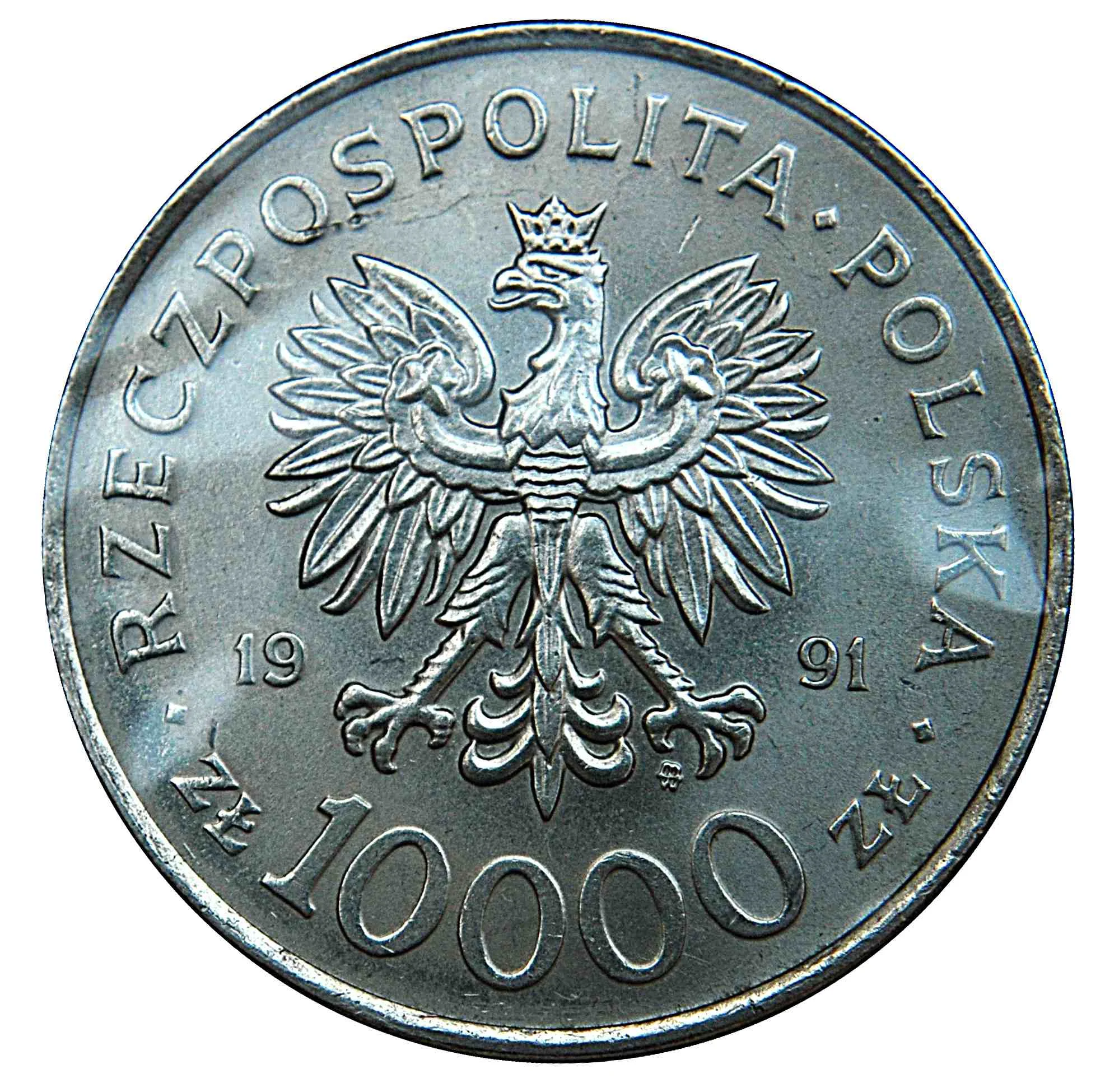
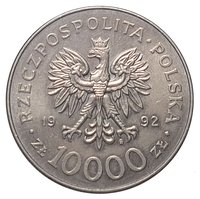
Crowned Polish eagle divides date, value above.
Inscription:
RZECZPOSPOLITA POLSKA
1991
mw
ZŁ 10000 ZŁ
1991
mw
ZŁ 10000 ZŁ
Translation:
REPUBLIC OF POLAND
1991
mw
10,000 ZŁOTYCH
1991
mw
10,000 ZŁOTYCH
Script: Latin
Language: Polish
Designer: Stanisława Wątróbska-Frindt
Reverse
Description:
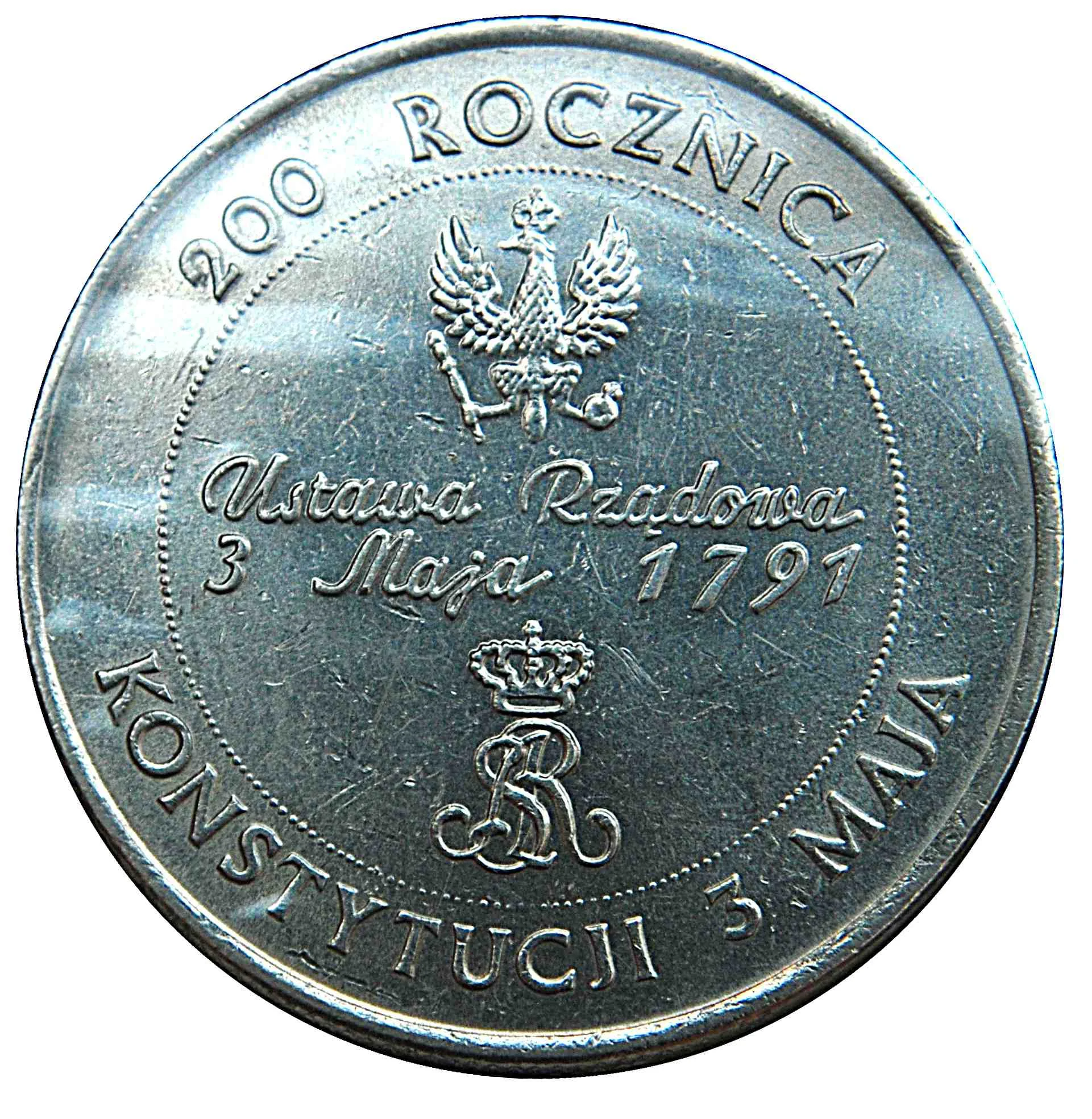
Crowned eagle above, crowned monogram below.
Inscription:
200 ROCZNICA
KONSTYTUCJI 3 MAJA
Ustawa Rządowa
3 Maja 1791
SAR
KONSTYTUCJI 3 MAJA
Ustawa Rządowa
3 Maja 1791
SAR
Translation:
200th Anniversary
of the Constitution of May 3
Government Act
May 3, 1791
of the Constitution of May 3
Government Act
May 3, 1791
Script: Latin
Language: Polish
Designer: Ewa Tyc-Karpińska
Edge
Milled
Mints
| Name | Mark |
|---|---|
| Mint of Poland | (MW) |
Mintings
| Year | Mint Mark | Mintage | Quality | Collection |
|---|---|---|---|---|
| 1991 | MW | 2,605,000 |
Historical background
In 1991, Poland was in the tumultuous early stages of its historic transition from a centrally planned communist economy to a market system, following the political upheavals of 1989. The currency, the złoty (PLZ), was still officially non-convertible and subject to significant distortions. A complex system of multiple exchange rates persisted from the previous decade, including an official rate set by the National Bank of Poland (NBP), a "commercial" rate for state enterprises, and a thriving black market rate. This multiplicity reflected the deep mismatch between the złoty's administered value and its true purchasing power, leading to widespread shortages, hyperinflation that had peaked at over 600% in 1990, and a severe lack of foreign exchange reserves.
The government, under Finance Minister Leszek Balcerowicz, had already launched a radical "shock therapy" stabilization program in 1990, which unified the exchange rates and introduced a fixed peg of the złoty to the US dollar at a highly devalued rate (PLZ 9,500 per USD). By 1991, this anchor was crucial for taming inflation and providing stability, but it came at a high cost. The fixed exchange rate, combined with tight monetary policy, contributed to a deep recession and a surge in unemployment as uncompetitive state industries collapsed. Pressure on the złoty was intensifying due to a growing current account deficit and the continued fragility of the economic transformation.
Consequently, 1991 was a year of critical adjustment and mounting pressure on the fixed peg. While the unified rate had eliminated the distortions of the multi-tier system and helped curb hyperinflation to around 70% for the year, the rigidity of the fixed exchange rate was becoming unsustainable. The government and the NBP began a managed transition towards greater flexibility, leading to a series of controlled devaluations throughout the year and setting the stage for the formal introduction of a crawling peg mechanism in May 1991, which would allow the złoty to depreciate gradually against a basket of currencies. This period was thus a pivotal bridge between the initial shock of convertibility and the move towards a more flexible, market-driven exchange rate regime.
The government, under Finance Minister Leszek Balcerowicz, had already launched a radical "shock therapy" stabilization program in 1990, which unified the exchange rates and introduced a fixed peg of the złoty to the US dollar at a highly devalued rate (PLZ 9,500 per USD). By 1991, this anchor was crucial for taming inflation and providing stability, but it came at a high cost. The fixed exchange rate, combined with tight monetary policy, contributed to a deep recession and a surge in unemployment as uncompetitive state industries collapsed. Pressure on the złoty was intensifying due to a growing current account deficit and the continued fragility of the economic transformation.
Consequently, 1991 was a year of critical adjustment and mounting pressure on the fixed peg. While the unified rate had eliminated the distortions of the multi-tier system and helped curb hyperinflation to around 70% for the year, the rigidity of the fixed exchange rate was becoming unsustainable. The government and the NBP began a managed transition towards greater flexibility, leading to a series of controlled devaluations throughout the year and setting the stage for the formal introduction of a crawling peg mechanism in May 1991, which would allow the złoty to depreciate gradually against a basket of currencies. This period was thus a pivotal bridge between the initial shock of convertibility and the move towards a more flexible, market-driven exchange rate regime.
🌱 Common