

1 Cent – Jamaica
Non-circulating coins
Commemoration: F.A.O.
Jamaica
Context
Years: 1976–1984
Issuer: Jamaica 
Ruler: Elizabeth II
Currency:
(since 1969)
Demonetization: 15 February 2018
Total mintage: 188,811
Material
Diameter: 21.05 mm
Weight: 1.2 g
Shape: Dodecagonal
Composition: Aluminium
Magnetic: No
Technique: Milled
Alignment: Medal alignment
flip
References
KM: #Click to copy to clipboard68
Numista: #10382
Value
Exchange value: 0.01 JMD
Obverse
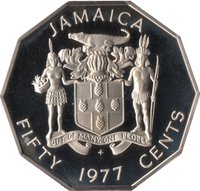
Description:
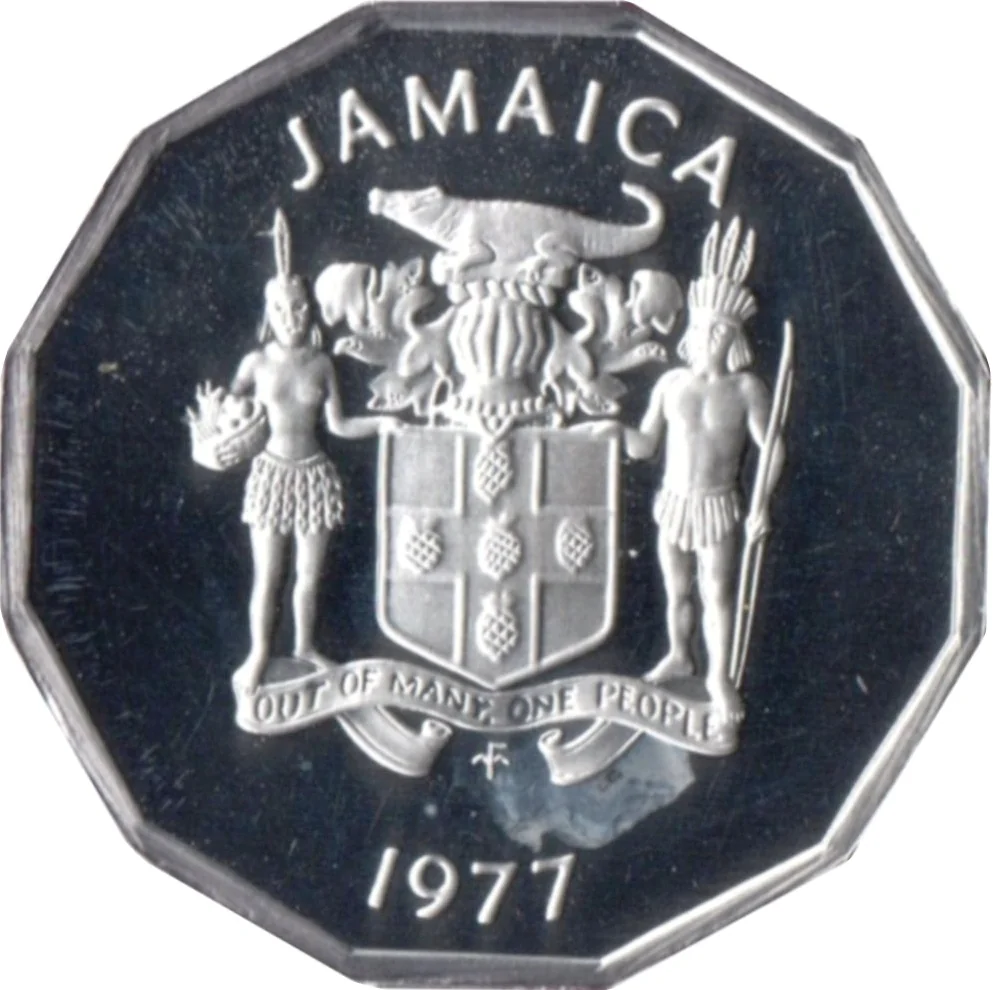
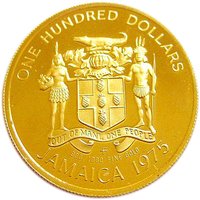
Jamaican coat of arms.
Inscription:
JAMAICA
1977
OUT OF MANY ONE PEOPLE
FM
1977
OUT OF MANY ONE PEOPLE
FM
Translation:
JAMAICA
1977
OUT OF MANY ONE PEOPLE
FM
1977
OUT OF MANY ONE PEOPLE
FM
Script: Latin
Language: English
Engraver: Christopher Ironside
Reverse
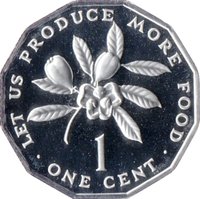
Description:
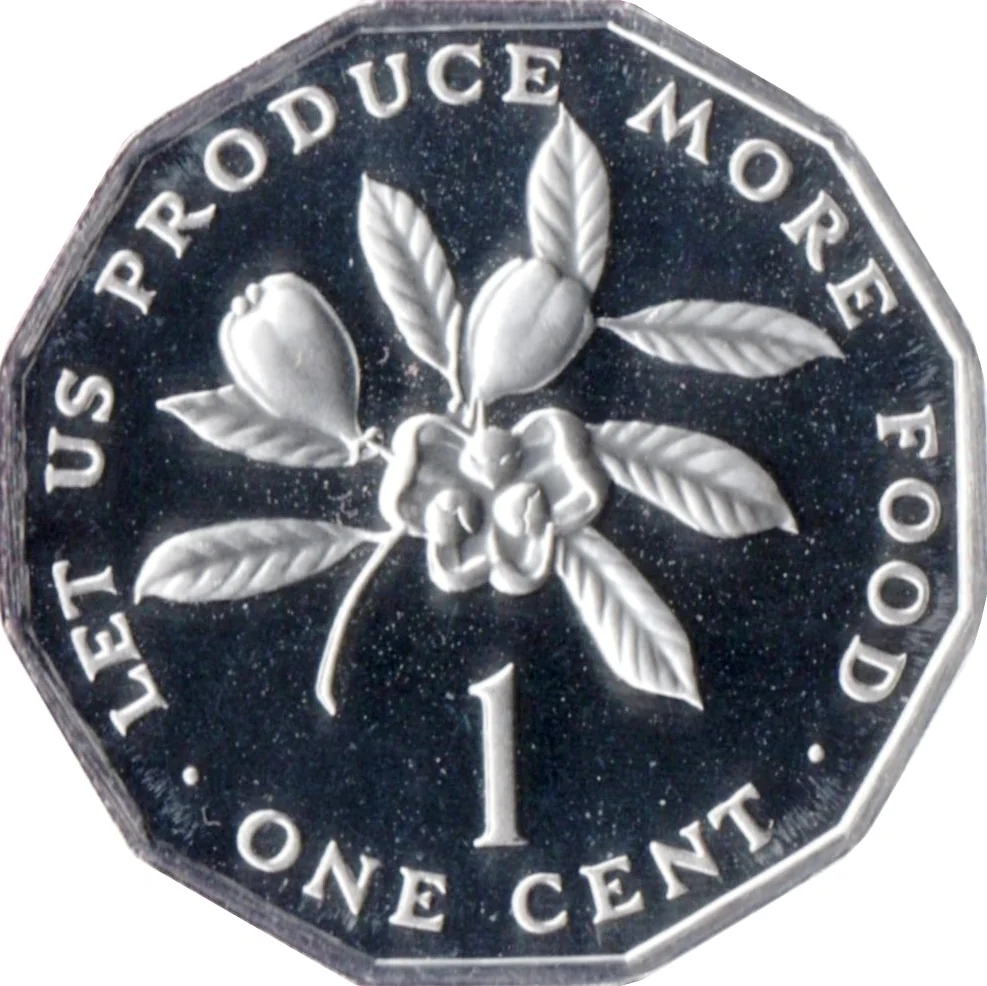
Ackee fruit (Blighia sapida) has significant value.
Inscription:
LET US PRODUCE MORE FOOD
1
· ONE CENT ·
1
· ONE CENT ·
Script: Latin
Engraver: Christopher Ironside
Edge
Plain
Categories
| Symbols> Coat of Arms |
| Organization> FAO |
| Plant> Fruit |
Mints
| Name | Mark |
|---|---|
| Franklin Mint | (FM) |
Mintings
| Year | Mint Mark | Mintage | Quality | Collection |
|---|---|---|---|---|
| 1976 | FM | 18,000 | Matte | |
| 1976 | FM | 24,000 | Proof | |
| 1976 | FM | 1,802 | Special Uncirculated | |
| 1977 | FM | 28,000 | Matte | |
| 1977 | FM | 10,000 | Proof | |
| 1977 | FM | 597 | Special Uncirculated | |
| 1978 | FM | 6,058 | Proof | |
| 1978 | FM | 28,000 | Matte | |
| 1978 | FM | 1,282 | Special Uncirculated | |
| 1979 | FM | 2,608 | Special Uncirculated | |
| 1979 | FM | 28,000 | Matte | |
| 1979 | FM | 4,049 | Proof | |
| 1980 | FM | 28,000 | Matte | |
| 1980 | FM | 2,688 | Proof | |
| 1980 | FM | 3,668 | Special Uncirculated | |
| 1981 | FM | 482 | Special Uncirculated | |
| 1981 | FM | 1,577 | Proof | |
| 1982 | FM | — | Proof | |
| 1982 | FM | — | Special Uncirculated | |
| 1984 | FM | — | Special Uncirculated | |
| 1984 | FM | — | Proof |
Historical background
In 1976, Jamaica's currency situation was defined by acute instability and a severe foreign exchange crisis, stemming from both global economic pressures and domestic political choices. The country, heavily dependent on imports for food and oil, was battered by the 1973 oil price shock and a simultaneous decline in global demand for its key exports, bauxite and alumina. This created a massive balance of payments deficit, draining the nation's foreign reserves. The socialist-oriented government of Prime Minister Michael Manley, elected in 1972, exacerbated the strain by implementing expansive social programs and entering into a contentious agreement with the International Monetary Fund (IMF) in 1976, which came with strict austerity conditions.
The Jamaican dollar, which had been pegged to the British pound and later the U.S. dollar, came under intense pressure. A formal devaluation in 1973 was followed by a system of a managed, crawling peg, but the currency continued to be overvalued. This overvaluation, combined with exchange controls, fueled a rampant black market for U.S. dollars where the Jamaican dollar traded at a fraction of its official value. The scarcity of foreign currency led to severe shortages of essential imported goods, including medicines, spare parts, and basic food items, creating long queues and a "barrel economy" where Jamaicans relied on goods sent from relatives abroad.
Consequently, 1976 represented a pivotal and painful year in Jamaica's economic history. The currency crisis was a central symptom of a broader economic collapse, characterized by high inflation, negative growth, and social unrest. The IMF agreement failed to restore stability, instead triggering political controversy and protests against its austerity measures. This turbulent period set the stage for the deep economic challenges and subsequent structural adjustment programs Jamaica would face in the decades to follow.
The Jamaican dollar, which had been pegged to the British pound and later the U.S. dollar, came under intense pressure. A formal devaluation in 1973 was followed by a system of a managed, crawling peg, but the currency continued to be overvalued. This overvaluation, combined with exchange controls, fueled a rampant black market for U.S. dollars where the Jamaican dollar traded at a fraction of its official value. The scarcity of foreign currency led to severe shortages of essential imported goods, including medicines, spare parts, and basic food items, creating long queues and a "barrel economy" where Jamaicans relied on goods sent from relatives abroad.
Consequently, 1976 represented a pivotal and painful year in Jamaica's economic history. The currency crisis was a central symptom of a broader economic collapse, characterized by high inflation, negative growth, and social unrest. The IMF agreement failed to restore stability, instead triggering political controversy and protests against its austerity measures. This turbulent period set the stage for the deep economic challenges and subsequent structural adjustment programs Jamaica would face in the decades to follow.
🌱 Fairly Common