

½ pound – Falkland Islands
Add to wishlist
United Kingdom
Context
Year: 1974
Country: United Kingdom
Issuer: Falkland Islands
Ruler: Elizabeth II
Currency:
(since 1971)
Total mintage: 2,673
Material
References
KM: #
Numista: #83707
Value
Exchange value: ½ FKP
Bullion value: $569.63
Inflation-adjusted value: 7.73 FKP
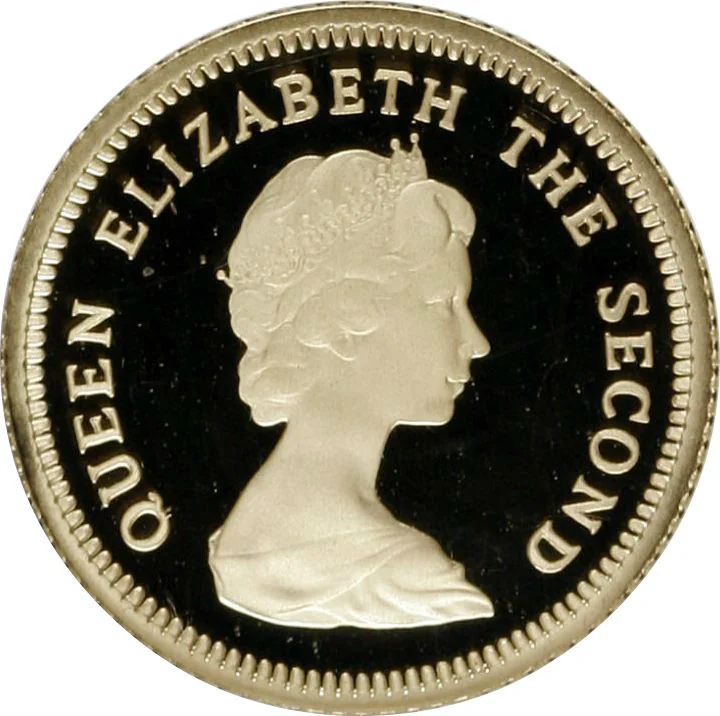
Obverse
Description:
Queen Elizabeth II in profile, wearing the Girls of Great Britain and Ireland Tiara.
Inscription:
QUEEN ELIZABETH THE SECOND
Script: Latin
Designer: Arnold Machin
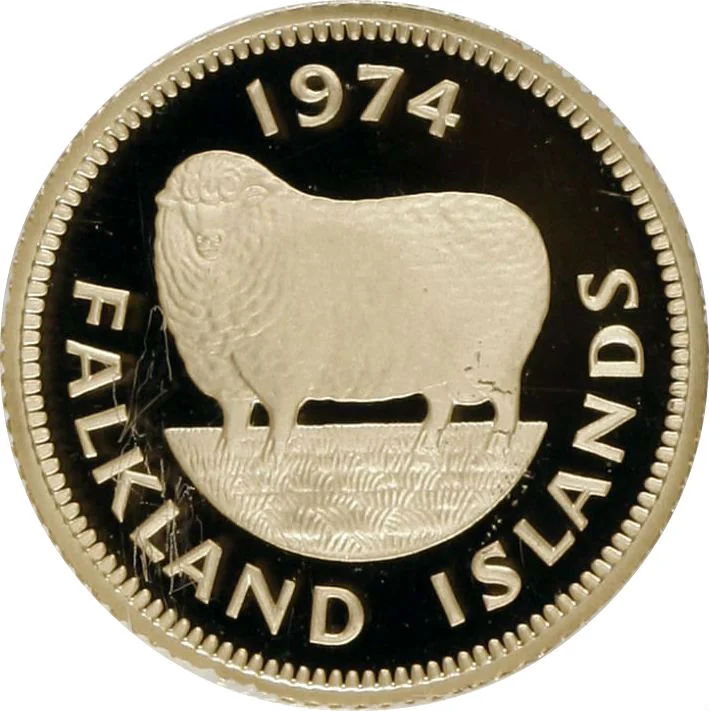
Reverse
Description:
Romney Marsh sheep left.
Inscription:
1974
FALKLAND ISLANDS
FALKLAND ISLANDS
Script: Latin
Engraver: William Maving Gardner
Edge
Reeded
Mints
| Name | Mark |
|---|---|
| Royal Mint | — |
Mintings
| Year | Mint Mark | Mintage | Quality | Collection |
|---|---|---|---|---|
| 1974 | — | 2,673 | Proof |
Historical background
In 1974, the currency situation in the Falkland Islands was a direct reflection of its colonial status and economic ties. The official currency was the Falkland Islands pound (FKP), which had been pegged at par with the British pound sterling (GBP) since the 19th century. This parity was a cornerstone of financial stability, ensuring that the islands' small, pastoral economy—heavily dependent on wool exports and supplies from the United Kingdom—operated seamlessly within the Sterling Area. Banknotes and coins were issued locally by the Falkland Islands Government, but their value was wholly underwritten by sterling reserves held in London.
The year 1974, however, occurred against a backdrop of significant monetary turbulence in the United Kingdom itself. Britain was experiencing high inflation and a currency crisis, leading to the formal end of the Sterling Area in 1972 and a floating of the pound in 1972-73. Despite these major shifts in the core economy, the Falkland Islands maintained its rigid one-to-one peg. This meant that while the external value of the Falkland pound fluctuated against other world currencies in line with sterling, the internal link and local confidence in the currency remained unshaken. The economic life of the islands was too intimately connected to Britain for any alternative to be considered.
Consequently, the currency background in 1974 was one of inherited stability on the surface, but underlying vulnerability. The Falklands' monetary system was entirely derivative, with no independent monetary policy. Its stability depended entirely on the political and economic will of the United Kingdom to support the peg and on the health of the British economy. This arrangement would remain unchallenged until the geopolitical crisis of 1982, which brought new economic pressures but ultimately reinforced the currency's link to sterling, a link that endures to this day.
The year 1974, however, occurred against a backdrop of significant monetary turbulence in the United Kingdom itself. Britain was experiencing high inflation and a currency crisis, leading to the formal end of the Sterling Area in 1972 and a floating of the pound in 1972-73. Despite these major shifts in the core economy, the Falkland Islands maintained its rigid one-to-one peg. This meant that while the external value of the Falkland pound fluctuated against other world currencies in line with sterling, the internal link and local confidence in the currency remained unshaken. The economic life of the islands was too intimately connected to Britain for any alternative to be considered.
Consequently, the currency background in 1974 was one of inherited stability on the surface, but underlying vulnerability. The Falklands' monetary system was entirely derivative, with no independent monetary policy. Its stability depended entirely on the political and economic will of the United Kingdom to support the peg and on the health of the British economy. This arrangement would remain unchallenged until the geopolitical crisis of 1982, which brought new economic pressures but ultimately reinforced the currency's link to sterling, a link that endures to this day.
✨ Legendary