

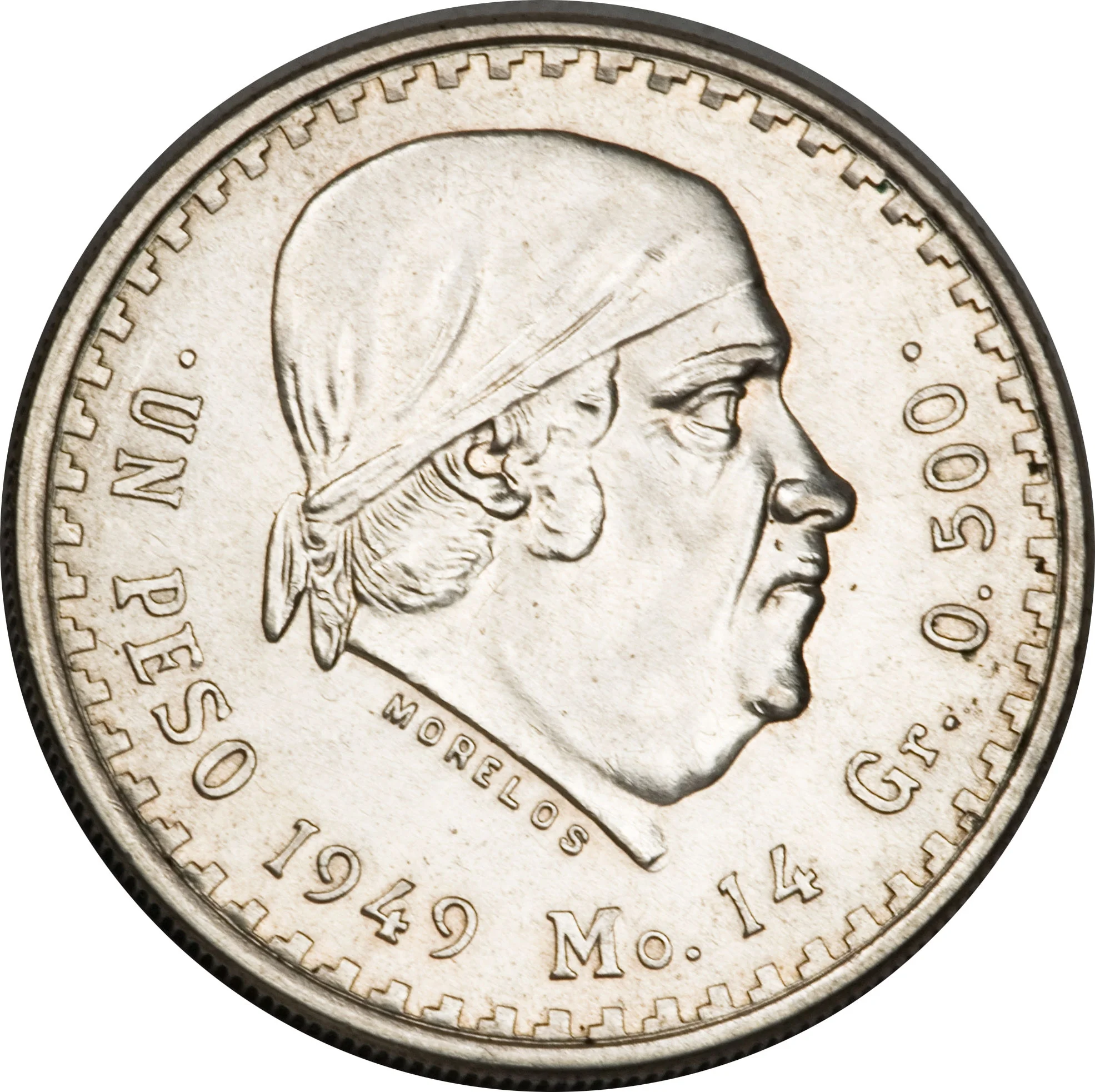
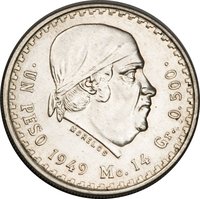
Obverse
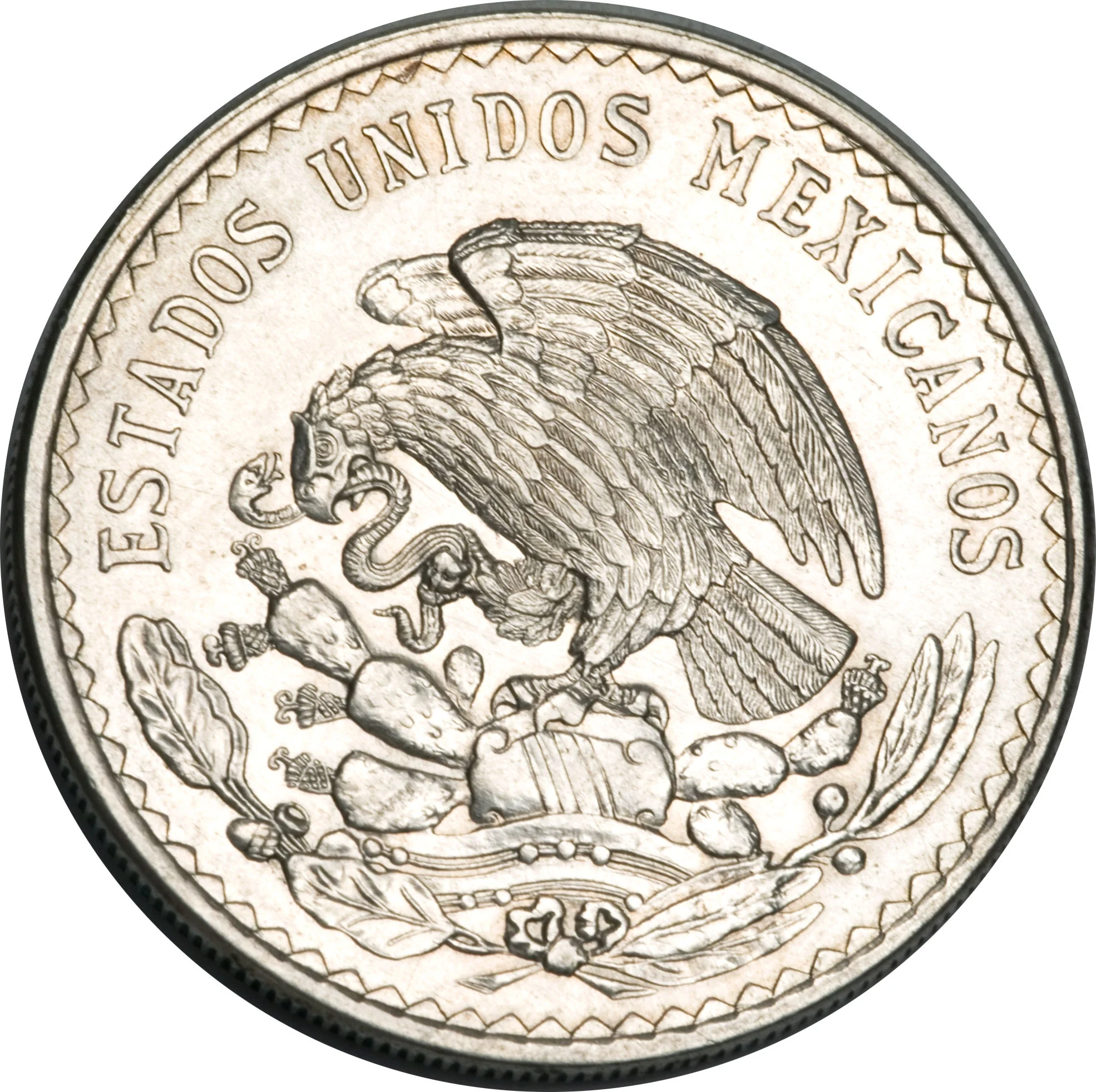
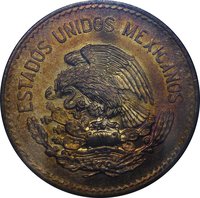
Reverse
Description:
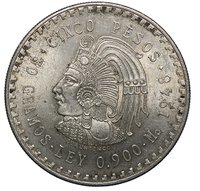
Head of Morelos facing right, with mintmark, fineness, value, and year below.
Inscription:
. UN PESO 1949 Mo. 14 Gr. 0.500.
MORELOS
MORELOS
Script: Latin
Edge
Reeded
Categories
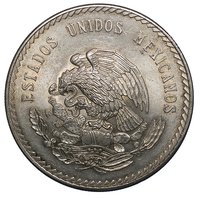
| Animal> Bird> Eagle |
| Symbols> Coat of Arms |
| Person> Politician |
| Animal> Reptile |
Mints
| Name | Mark |
|---|---|
| Mexican Mint | Mo |
Mintings
Historical background
In 1947, Mexico's currency situation was defined by the lingering effects of World War II and the challenges of post-war adjustment. The Mexican peso, which had been effectively pegged to the U.S. dollar at a rate of 4.85 pesos per dollar since 1938, was under significant pressure. During the war, Mexico had experienced strong economic growth due to exports to the Allied powers and accumulated substantial dollar reserves. However, the post-war period saw a surge in imports of consumer and capital goods that had been scarce, leading to a rapid depletion of those reserves and creating a growing balance of payments deficit.
President Miguel Alemán Valdés (1946-1952), embarking on an ambitious program of industrialization and infrastructure development, faced a critical decision. Maintaining the overvalued fixed exchange rate was unsustainable, as it encouraged imports, discouraged exports, and drained foreign reserves. Consequently, on July 17, 1948, the government made a decisive move, abandoning the fixed peg. The Banco de México introduced a system of controlled flexibility, with a dual exchange rate: a preferential official rate for essential imports and a general free market rate that was allowed to depreciate.
This devaluation, which saw the peso fall to approximately 8.65 per dollar in the free market by the end of 1949, was a pivotal moment in Mexico's economic history. It aimed to correct external imbalances, protect reserves, and make Mexican exports more competitive. While it successfully addressed the immediate crisis, it also set a precedent for periodic devaluations and marked the beginning of a long struggle with inflation and exchange rate instability that would characterize much of the latter half of the 20th century, as the state-led growth model continued to face external constraints.
President Miguel Alemán Valdés (1946-1952), embarking on an ambitious program of industrialization and infrastructure development, faced a critical decision. Maintaining the overvalued fixed exchange rate was unsustainable, as it encouraged imports, discouraged exports, and drained foreign reserves. Consequently, on July 17, 1948, the government made a decisive move, abandoning the fixed peg. The Banco de México introduced a system of controlled flexibility, with a dual exchange rate: a preferential official rate for essential imports and a general free market rate that was allowed to depreciate.
This devaluation, which saw the peso fall to approximately 8.65 per dollar in the free market by the end of 1949, was a pivotal moment in Mexico's economic history. It aimed to correct external imbalances, protect reserves, and make Mexican exports more competitive. While it successfully addressed the immediate crisis, it also set a precedent for periodic devaluations and marked the beginning of a long struggle with inflation and exchange rate instability that would characterize much of the latter half of the 20th century, as the state-led growth model continued to face external constraints.
🌱 Common