

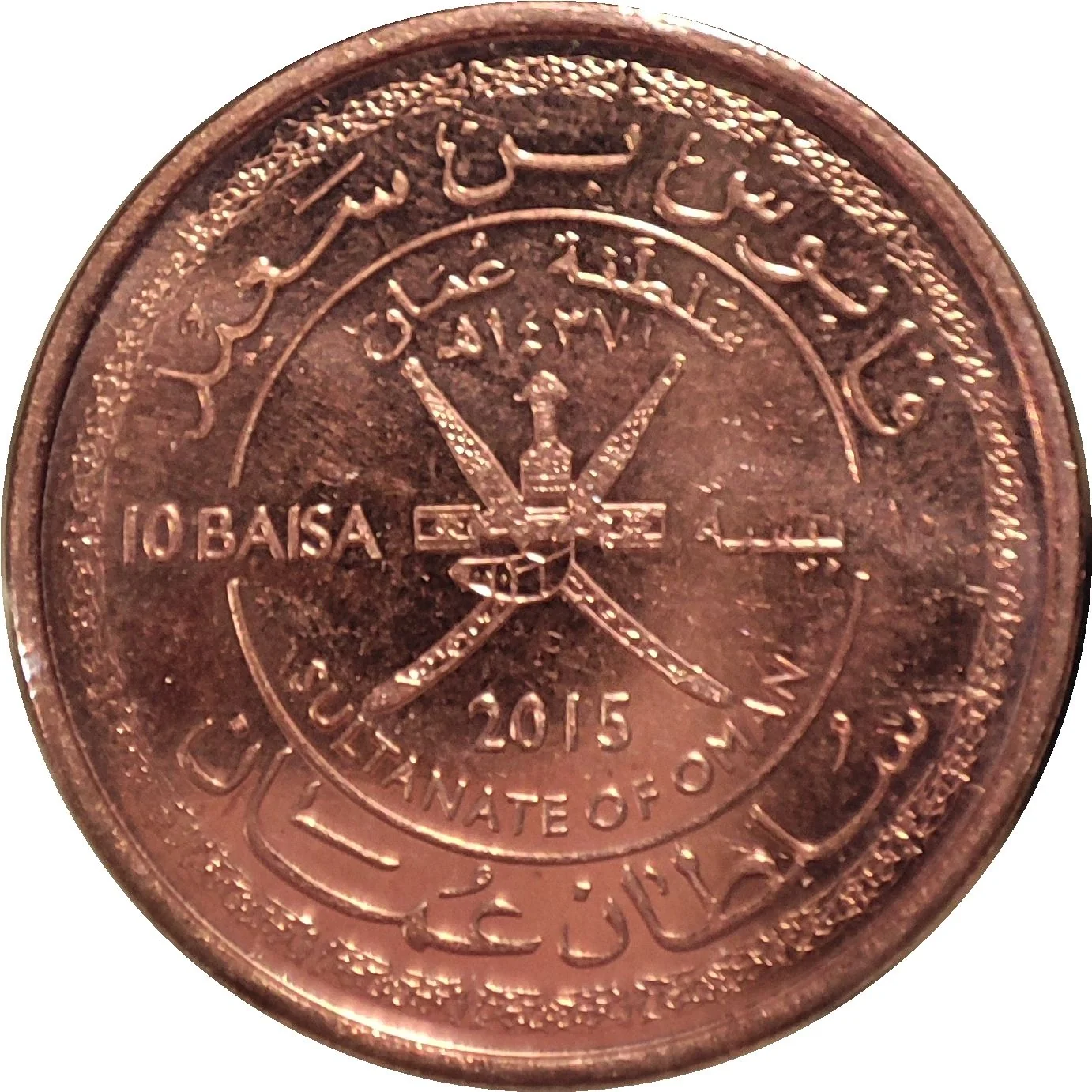
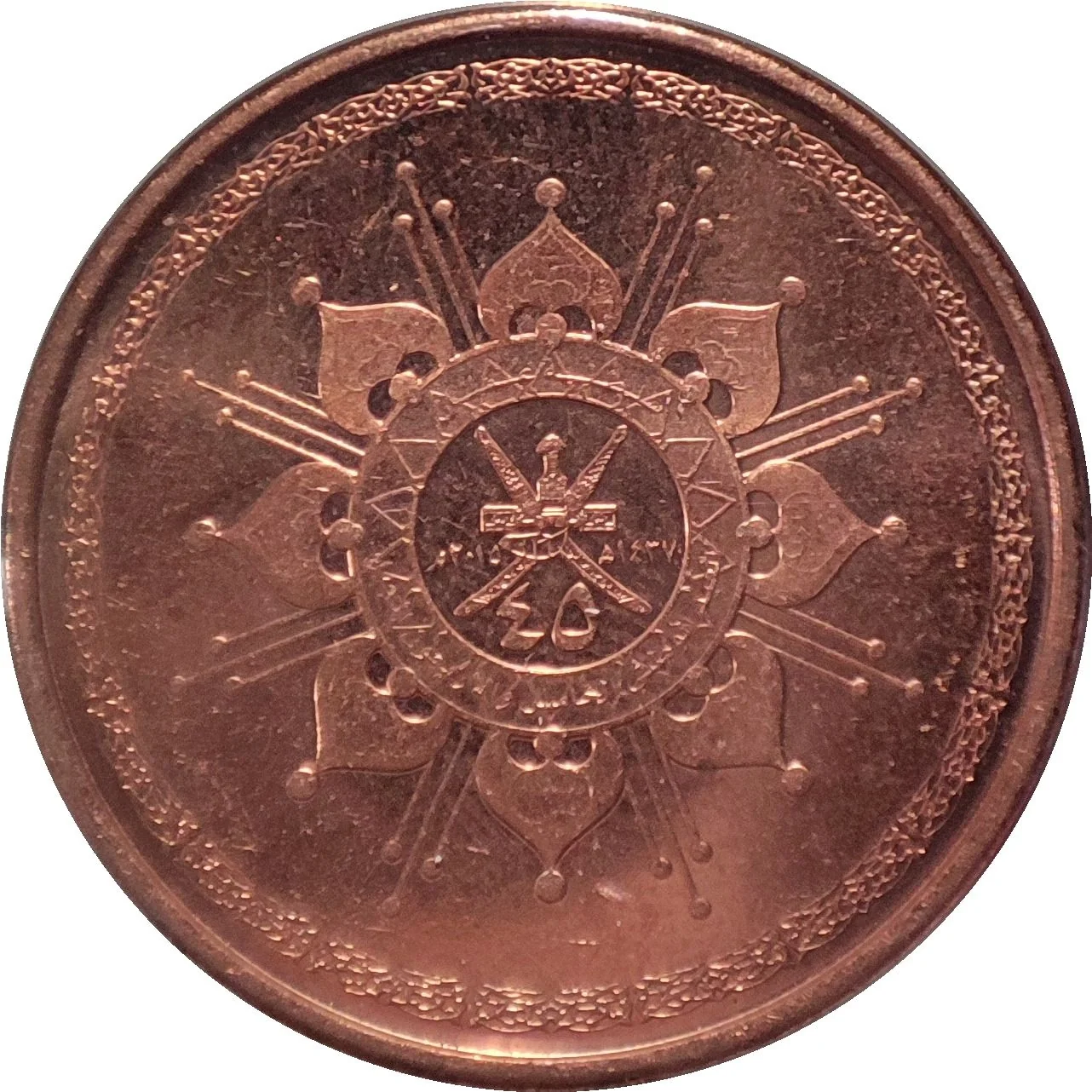
10 baisa (Sultanate) – Oman
Add to wishlist
Circulating commemorative coins
Commemoration: 45th Anniversary of the Sultanate
Oman
Context
Year: 2015
Islamic (Hijri) Year:: 1437
Issuer: Oman
Ruler: Qaboos bin Said
Currency:
(since 1972)
Total mintage: 8,000
Material
References
KM: #
Numista: #83112
Value
Exchange value: 0.01 OMR
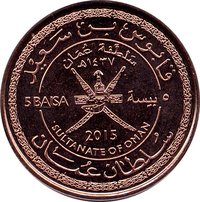
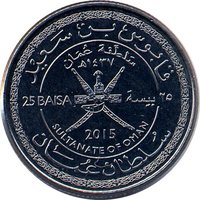
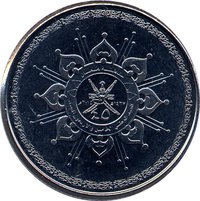
Obverse
Reverse
Edge
Plain
Categories
| Event> National day |
| Symbols> Coat of Arms |
| Object> Cold weapons |
Mints
| Name | Mark |
|---|---|
| Mint of Finland | — |
Mintings
| Year | Mint Mark | Mintage | Quality | Collection |
|---|---|---|---|---|
| 2015 | — | 3,000 | ||
| 2015 | — | 5,000 | Proof |
Historical background
In 2015, Oman's currency situation was defined by stability amidst growing regional economic pressures. The Omani Rial (OMR), pegged at a fixed rate of 1 OMR = 2.6008 USD since 1986, remained firmly anchored to the dollar. This peg, managed by the Central Bank of Oman (CBO), provided predictable exchange rates, low inflation, and a stable environment for trade and foreign investment, which were cornerstones of the nation's economic policy.
However, this stability was being tested by a sharp decline in global oil prices, which began in mid-2014. As a hydrocarbon-dependent economy with oil accounting for the vast majority of government revenue, the fiscal surplus of previous years rapidly turned into a deficit. While the currency peg itself was not in immediate danger due to substantial foreign exchange reserves, the economic fundamentals supporting it were weakening. The government began drawing down its fiscal buffers and considering international debt issuance to cover the budget shortfall.
Consequently, the primary currency-related discussions in 2015 shifted from the exchange rate itself to the long-term sustainability of the fiscal policy that underpinned it. Analysts and rating agencies started to highlight the rising breakeven oil price needed to balance the budget, prompting early debates about fiscal consolidation and economic diversification. The year ended with the Omani Rial's peg intact and unwavering official commitment to it, but with a clear recognition that prolonged low oil prices would necessitate difficult economic adjustments to preserve this cornerstone of monetary policy in the future.
However, this stability was being tested by a sharp decline in global oil prices, which began in mid-2014. As a hydrocarbon-dependent economy with oil accounting for the vast majority of government revenue, the fiscal surplus of previous years rapidly turned into a deficit. While the currency peg itself was not in immediate danger due to substantial foreign exchange reserves, the economic fundamentals supporting it were weakening. The government began drawing down its fiscal buffers and considering international debt issuance to cover the budget shortfall.
Consequently, the primary currency-related discussions in 2015 shifted from the exchange rate itself to the long-term sustainability of the fiscal policy that underpinned it. Analysts and rating agencies started to highlight the rising breakeven oil price needed to balance the budget, prompting early debates about fiscal consolidation and economic diversification. The year ended with the Omani Rial's peg intact and unwavering official commitment to it, but with a clear recognition that prolonged low oil prices would necessitate difficult economic adjustments to preserve this cornerstone of monetary policy in the future.

🌱 Common