

1 Rand – South Africa
South Africa
Context
Years: 1991–1995
Issuer: South Africa 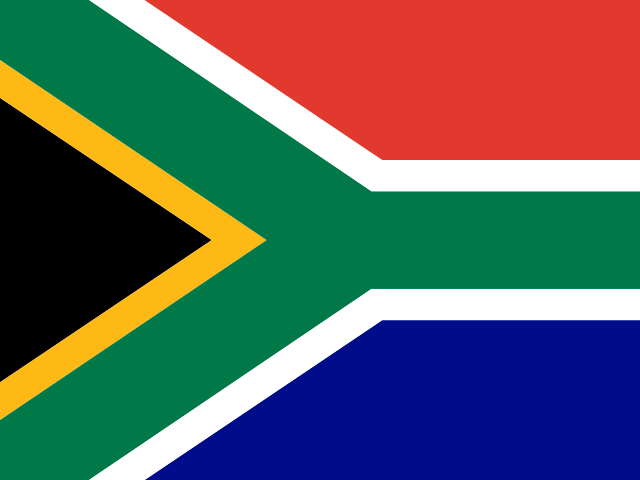
Period:
(since 1961)
Currency:
(since 1961)
Total mintage: 201,055,662
Material
References
KM: #Click to copy to clipboard138
Numista: #831
Value
Exchange value: 1 ZAR = $0.06
Inflation-adjusted value: 8.11 ZAR
Obverse
Description:
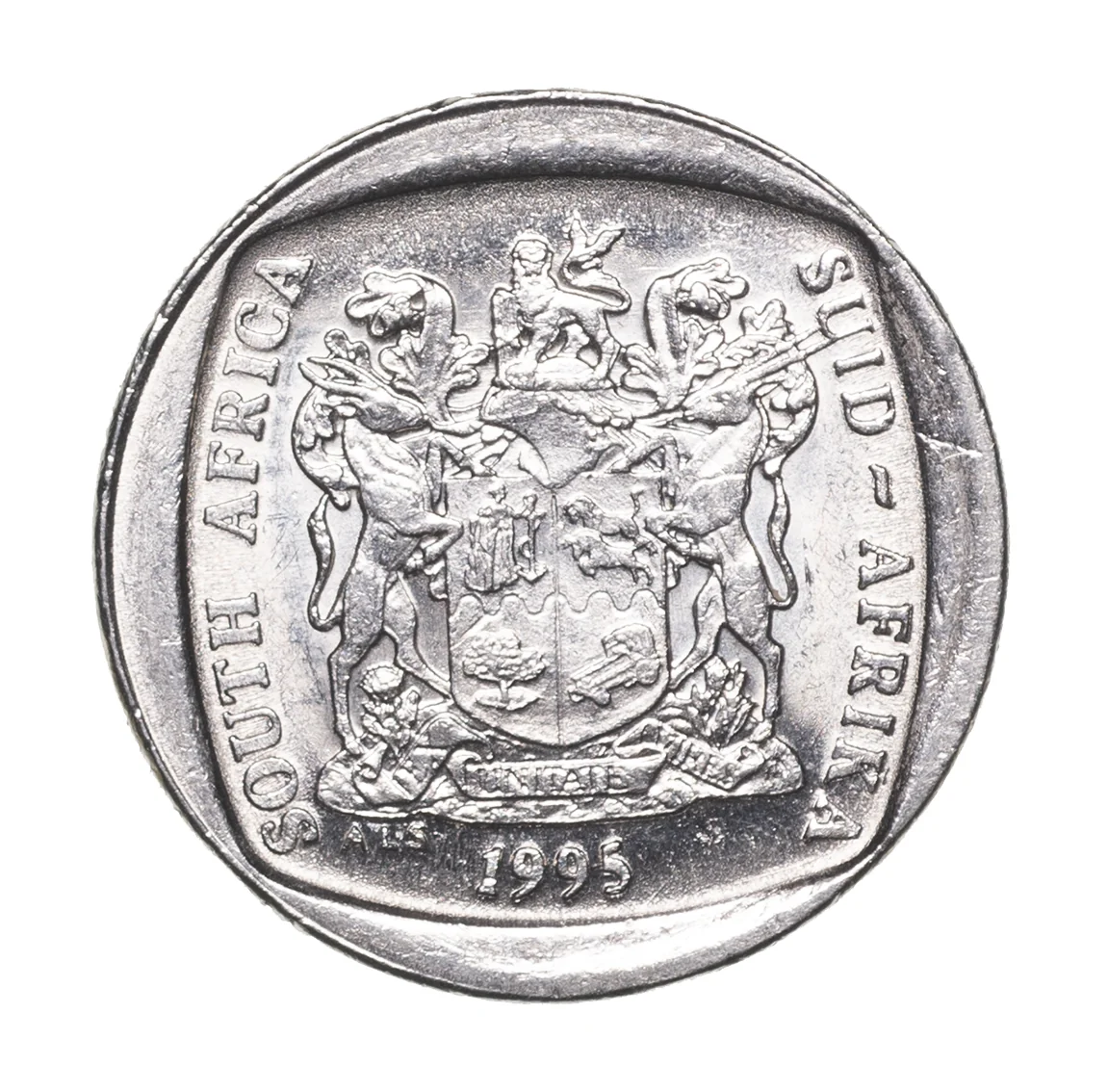
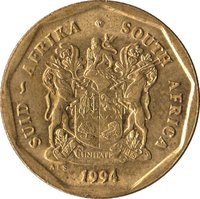
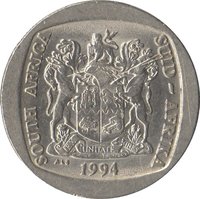
South Africa's coat of arms with the motto "Ex Unitate Vires" (Power Through Unity), the country name in English on the left and Afrikaans on the right.
Inscription:
SOUTH AFRICA
SUID-AFRIKA
EX UNITATE VIRES
ALS 1994
SUID-AFRIKA
EX UNITATE VIRES
ALS 1994
Translation:
SOUTH AFRICA
SOUTH AFRICA
STRENGTH FROM UNITY
ALS 1994
SOUTH AFRICA
STRENGTH FROM UNITY
ALS 1994
Script: Latin
Engraver: Arthur Sutherland
Reverse
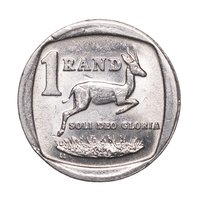
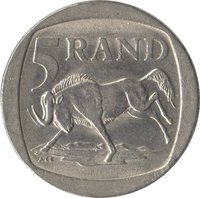
Description:
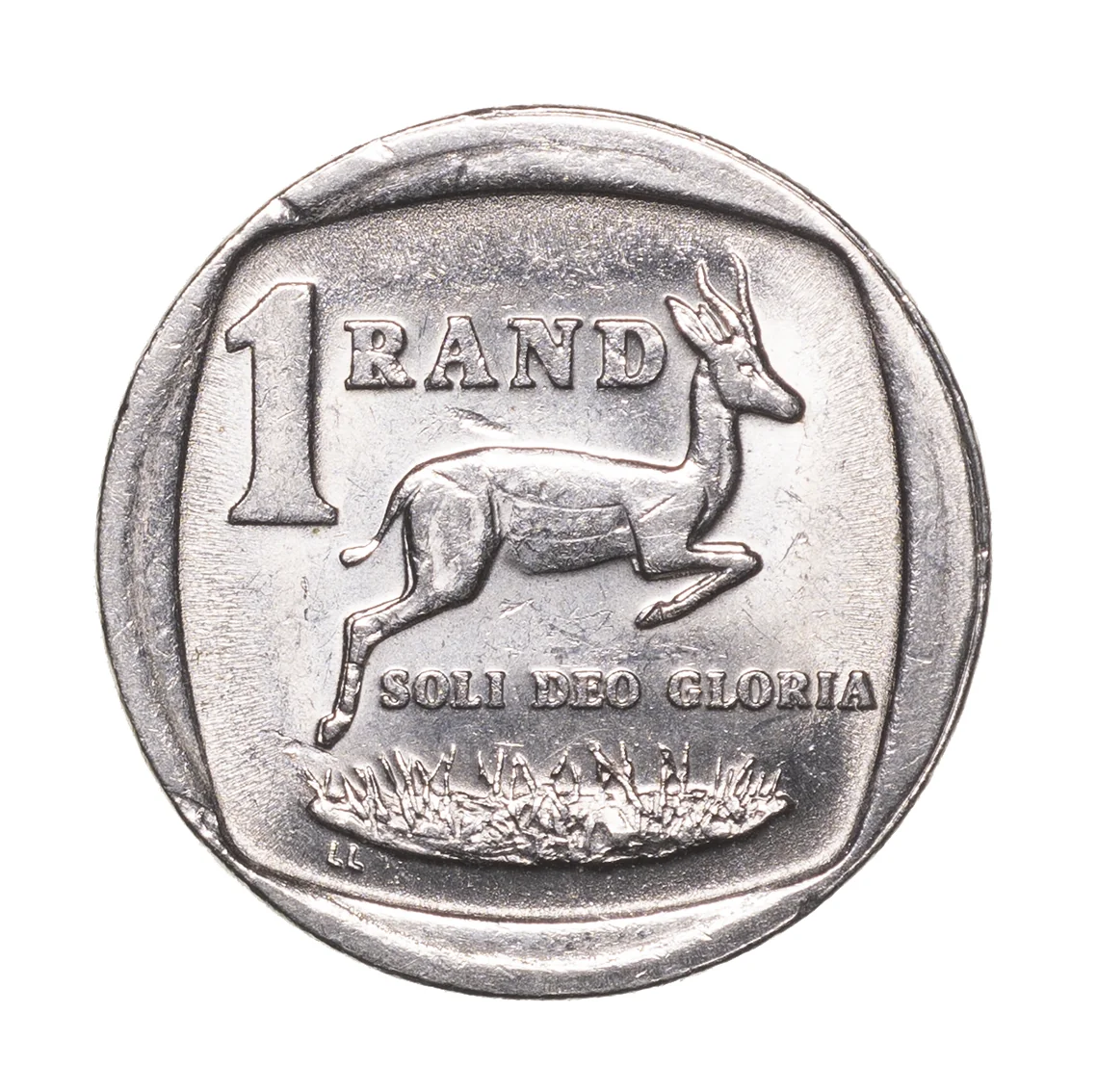
Springbok "Soli Deo gloria," meaning "Glory to God alone," was one of the five core beliefs of the Protestant Reformation.
Inscription:
1 RAND
SOLI DEO GLORIA
LL
SOLI DEO GLORIA
LL
Translation:
1 RAND
GLORY TO GOD ALONE
GLORY TO GOD ALONE
Script: Latin
Engraver: Linda Lotriet
Edge
5 smooth and 5 reeded sections
Categories
| Animal> Cow |
| Symbols> Coat of Arms |
Mints
| Name | Mark |
|---|---|
| South African Mint | — |
Mintings
| Year | Mint Mark | Mintage | Quality | Collection |
|---|---|---|---|---|
| 1991 | — | 20,765,000 | ||
| 1991 | — | 15,000 | BU | |
| 1991 | — | 12,000 | Proof | |
| 1992 | — | 10,000 | Proof | |
| 1992 | — | 59,571,000 | ||
| 1992 | — | 15,087 | BU | |
| 1993 | — | 37,977,000 | ||
| 1993 | — | 10,902 | BU | |
| 1993 | — | 7,790 | Proof | |
| 1994 | — | 54,633,000 | ||
| 1994 | — | 6,786 | BU | |
| 1994 | — | 5,804 | Proof | |
| 1995 | — | 28,012,000 | ||
| 1995 | — | 8,477 | BU | |
| 1995 | — | 5,816 | Proof |
Historical background
In 1991, South Africa's currency situation was defined by the dual pressures of political transition and economic isolation. The country was in the midst of dismantling apartheid, which had triggered comprehensive international sanctions and a severe withdrawal of foreign investment. This capital flight, coupled with high inflation and a large public debt, placed the South African rand (ZAR) under persistent strain. The currency was managed through a controlled exchange rate system, but it was subject to frequent devaluations by the authorities to maintain export competitiveness and manage the country's balance of payments crisis.
The financial rand, a dual-currency mechanism introduced in 1985, remained a critical feature. This system created a separation between the commercial rand for current account transactions and the financial rand, which governed the flow of capital for non-residents. The financial rand typically traded at a significant discount to the commercial rand, reflecting the perceived risk premium and capital controls designed to stem outflows. This complex system underscored the economy's isolation and the government's attempt to control scarce foreign currency reserves while political uncertainty loomed.
Economically, the year was a precursor to more significant reforms. The government, under President F.W. de Klerk, had begun a program of gradual economic liberalization, but structural constraints remained severe. High budget deficits were monetized by the South African Reserve Bank, fueling inflation and undermining confidence in the rand. The currency's volatility in 1991 thus mirrored the broader national moment: it was a currency in limbo, caught between a crumbling old order and an uncertain new future, with its value heavily contingent on the perceived trajectory of the political negotiations.
The financial rand, a dual-currency mechanism introduced in 1985, remained a critical feature. This system created a separation between the commercial rand for current account transactions and the financial rand, which governed the flow of capital for non-residents. The financial rand typically traded at a significant discount to the commercial rand, reflecting the perceived risk premium and capital controls designed to stem outflows. This complex system underscored the economy's isolation and the government's attempt to control scarce foreign currency reserves while political uncertainty loomed.
Economically, the year was a precursor to more significant reforms. The government, under President F.W. de Klerk, had begun a program of gradual economic liberalization, but structural constraints remained severe. High budget deficits were monetized by the South African Reserve Bank, fueling inflation and undermining confidence in the rand. The currency's volatility in 1991 thus mirrored the broader national moment: it was a currency in limbo, caught between a crumbling old order and an uncertain new future, with its value heavily contingent on the perceived trajectory of the political negotiations.
🌱 Very Common