

10 rupees (Dr. Sarvapalli Radhakrishnan) – India
Add to wishlist
Circulating commemorative coins
Commemoration: 125th Birth Anniversary of Dr. Sarvapalli Radhakrishnan
India
Material
Diameter: 27 mm
Weight: 7.71 g
Thickness: 1.8 mm
Shape: Round
Standard: Silver quarter ounce
Technique: Milled
Alignment: Medal alignment
flip
References
KM: #
Numista: #82972
Value
Exchange value: 10 INR
Inflation-adjusted value: 16.96 INR
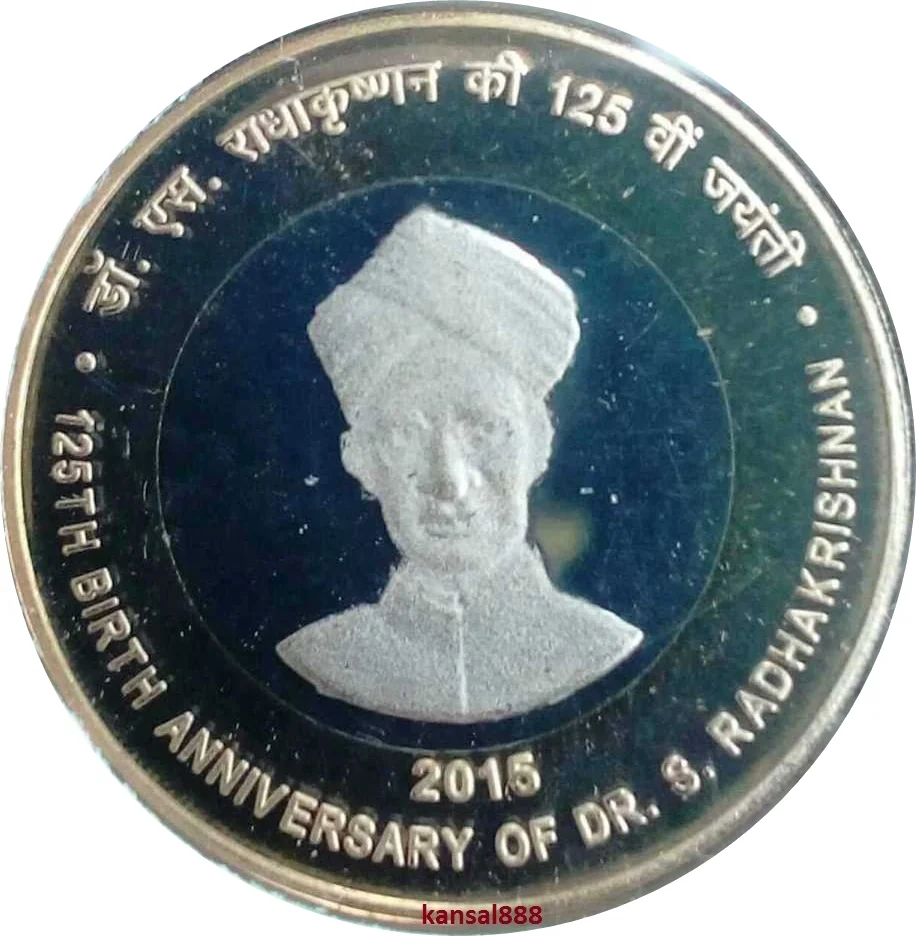
Obverse
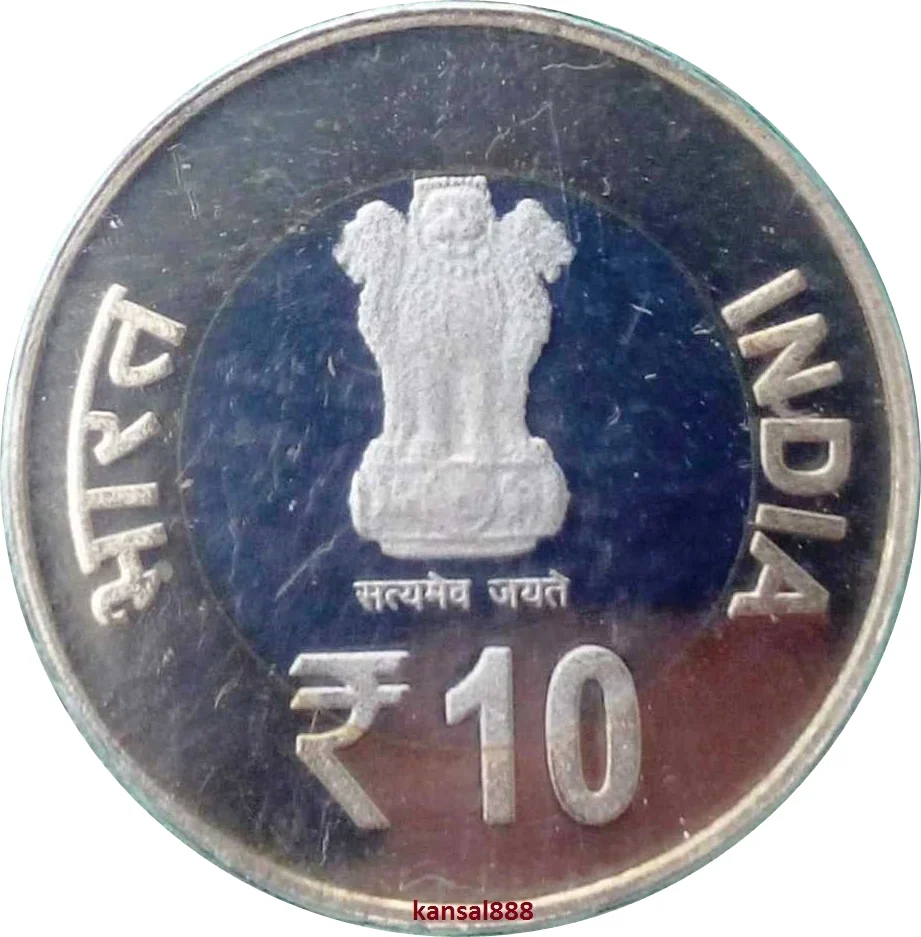
Reverse
Description:
Bust of Radhakrishnan, date and mintmark beneath.
Inscription:
डॉ. एस. राधाकृष्णन की 125 वीं जयंती
2015
125TH BIRTH ANNIVERSARY OF DR. S. RADHAKRISHNAN
2015
125TH BIRTH ANNIVERSARY OF DR. S. RADHAKRISHNAN
Translation:
125th Birth Anniversary of Dr. S. Radhakrishnan
2015
2015
Language: Hindi
Edge
Plain
Categories
| Event> Birth anniversary |
| Person> Politician |
Mints
| Name | Mark |
|---|---|
| Kolkata / Calcutta / Murshidabad | — |
| Hyderabad | ★ |
| Mumbai / Bombay | ♦ |
Historical background
In 2015, India's currency situation was characterized by relative stability and a period of cautious optimism following a period of significant volatility. The Indian Rupee (INR), which had experienced a sharp depreciation in 2013 during the "taper tantrum," had stabilized around the 62-64 per USD range for much of the year. This stability was underpinned by a dramatic fall in global crude oil prices, which eased India's substantial import bill and current account deficit. Furthermore, strong foreign institutional investor (FII) inflows into the equity and debt markets, coupled with the Reserve Bank of India's (RBI) accumulation of foreign exchange reserves, provided a solid buffer against external shocks.
The monetary policy landscape was in a transitional phase, with the RBI formally adopting a flexible inflation targeting framework in February 2015, aiming to bring consumer price index (CPI) inflation down to 6% by January 2016. Governor Raghuram Rajan, focusing on disinflation, had kept the repo rate high for an extended period but began a cycle of rate cuts in early 2015 as inflation showed signs of moderating. This shift aimed to balance growth support with the commitment to price stability. However, the banking sector, particularly public sector banks, was under stress from a growing burden of non-performing assets (NPAs), which constrained credit growth and posed a risk to the broader financial system.
Notably, 2015 set the stage for a monumental currency event that would follow the next year. While the year itself was calm, it was during this period that the groundwork for the 2016 demonetization was being laid, as concerns over counterfeit currency and the shadow economy persisted. The government promoted financial inclusion through the Pradhan Mantri Jan Dhan Yojana, aiming to bring more citizens into the formal banking system. Thus, 2015 was a year of consolidation, where macroeconomic improvements masked underlying structural challenges in the banking sector and informal economy, which would soon come to a dramatic forefront.
The monetary policy landscape was in a transitional phase, with the RBI formally adopting a flexible inflation targeting framework in February 2015, aiming to bring consumer price index (CPI) inflation down to 6% by January 2016. Governor Raghuram Rajan, focusing on disinflation, had kept the repo rate high for an extended period but began a cycle of rate cuts in early 2015 as inflation showed signs of moderating. This shift aimed to balance growth support with the commitment to price stability. However, the banking sector, particularly public sector banks, was under stress from a growing burden of non-performing assets (NPAs), which constrained credit growth and posed a risk to the broader financial system.
Notably, 2015 set the stage for a monumental currency event that would follow the next year. While the year itself was calm, it was during this period that the groundwork for the 2016 demonetization was being laid, as concerns over counterfeit currency and the shadow economy persisted. The government promoted financial inclusion through the Pradhan Mantri Jan Dhan Yojana, aiming to bring more citizens into the formal banking system. Thus, 2015 was a year of consolidation, where macroeconomic improvements masked underlying structural challenges in the banking sector and informal economy, which would soon come to a dramatic forefront.

🌱 Common