

1 Peso (Cry for Independence) – Mexico
Circulating commemorative coins
Commemoration: 100th Anniversary of the "Cry for Independence"
Mexico
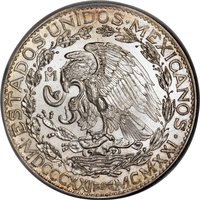
Obverse
Description:
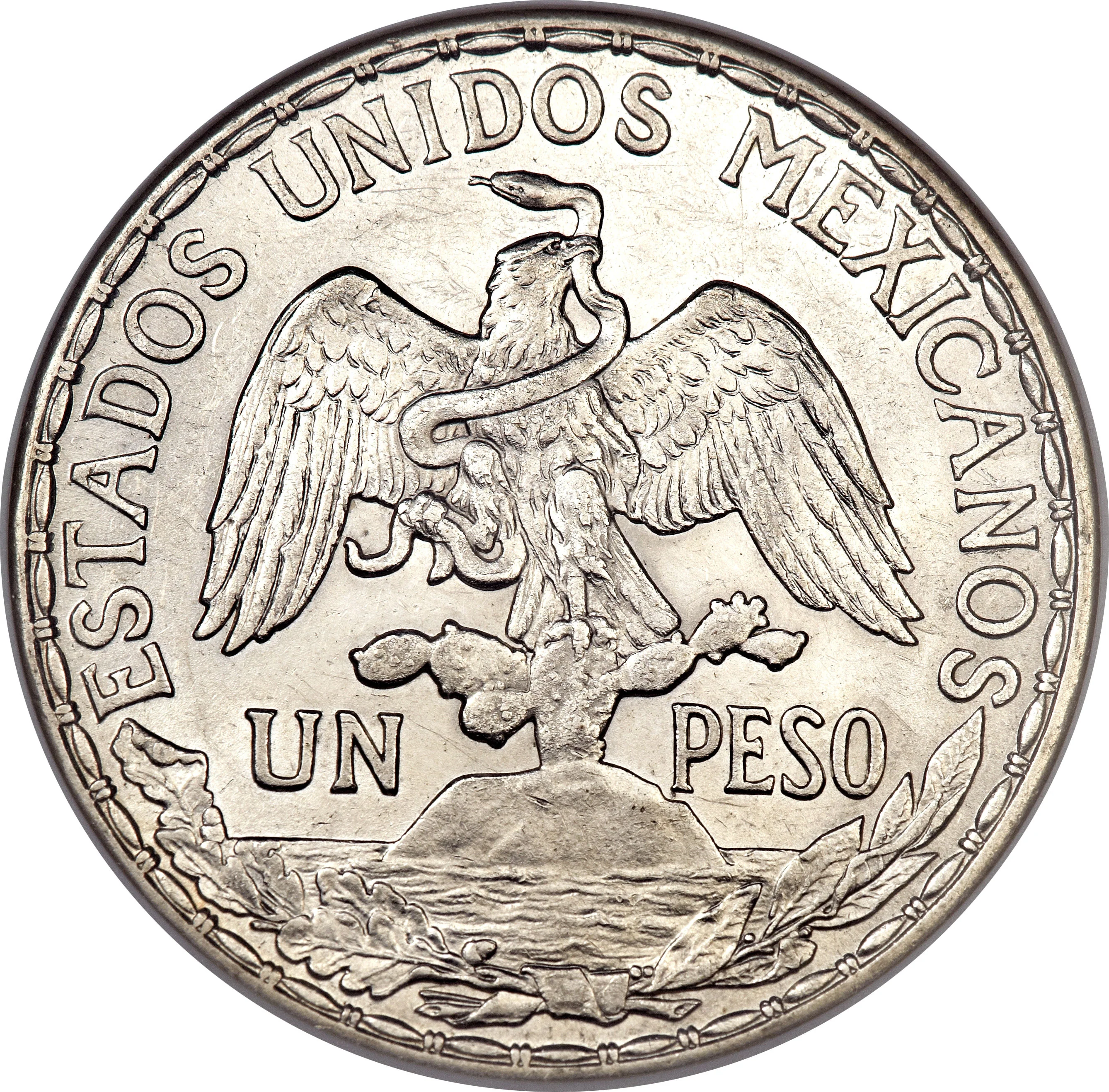
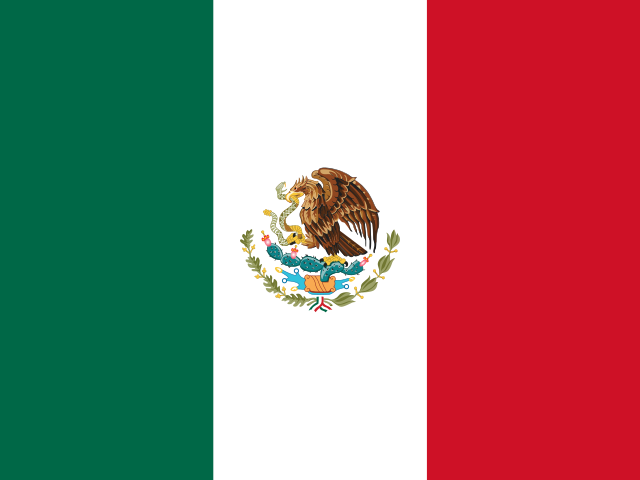
An eagle with outstretched wings eats a snake while perched on a cactus growing from a lake rock. The design, framed by lettering and a denomination, features laurel and olive branches below. This emblem from the Porfirio Díaz era is called the "Porfirian Eagle."
Inscription:
ESTADOS UNIDOS MEXICANOS
UN PESO
UN PESO
Translation:
Mexican United States
One Peso
One Peso
Script: Latin
Language: Spanish
Engraver: Charles Pillet
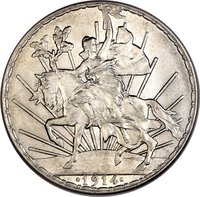
Reverse
Description:
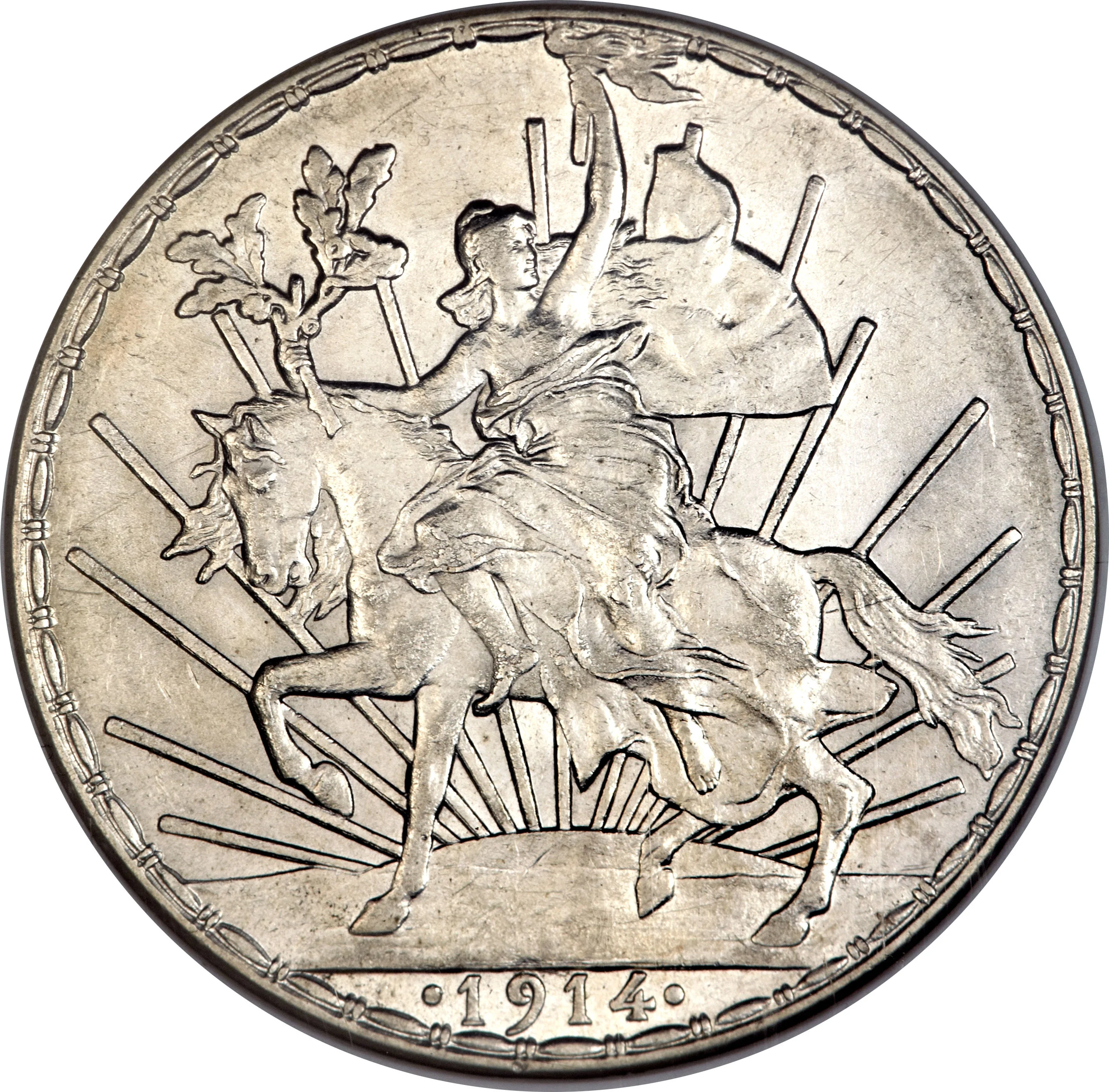
Liberty rides a horse, holding an oak branch in her right hand and a flaming torch in her left, with the sun rising behind her.
Inscription:
.1914.
Script: Latin
Edge
Smooth with incused lettering
Legend:
INDEPENDENCIA Y LIBERTAD
Translation:
Independence and Liberty
Language: Spanish
Mints
| Name | Mark |
|---|---|
| Mexican Mint | — |
Mintings
| Year | Mint Mark | Mintage | Quality | Collection |
|---|---|---|---|---|
| 1910 | — | 3,814,000 | ||
| 1911 | — | 1,227,000 | ||
| 1912 | — | 322,000 | ||
| 1913 | — | 2,880,000 | ||
| 1914 | — | 120,000 |
Historical background
On the eve of the Mexican Revolution in 1910, the nation's currency system was a complex and unstable relic of the Porfiriato, the long dictatorship of Porfirio Díaz. The official currency was the silver peso, but the monetary landscape was fragmented. Alongside Mexican-minted silver coins, U.S. gold dollars and silver pesos circulated freely, as did banknotes issued by dozens of private and state-chartered banks. This system, intended to foster foreign investment and trade, created significant regional disparities and a lack of centralized control, leaving the money supply vulnerable to the solvency of individual banks and international silver prices.
The period was marked by a severe shortage of small-denomination currency, which crippled everyday commerce for the majority of the population. While large transactions for hacienda owners and foreign businesses were facilitated by gold and bank credit, peasants and workers struggled to obtain centavos and reales for basic purchases. This scarcity led to the widespread use of makeshift solutions: haciendas and companies paid workers with tokens or scrip only redeemable at the company store (tienda de raya), a practice that deepened debt peonage and was a major source of social grievance fueling the revolutionary unrest.
Furthermore, the Díaz regime's commitment to the gold standard, maintained through foreign loans, created a profound contradiction. The official exchange rate was artificially fixed, but the actual value of the ubiquitous silver coinage fluctuated with the global market. This, combined with the over-issuance of banknotes by poorly regulated banks, led to periodic devaluations and a loss of public confidence in paper money. Thus, in 1910, Mexico's currency was not just an economic tool but a symbol of the regime's inequalities—centralized in its benefits for the elite and foreign interests, yet dysfunctional and oppressive for the rural and working classes, thereby contributing directly to the revolutionary explosion.
The period was marked by a severe shortage of small-denomination currency, which crippled everyday commerce for the majority of the population. While large transactions for hacienda owners and foreign businesses were facilitated by gold and bank credit, peasants and workers struggled to obtain centavos and reales for basic purchases. This scarcity led to the widespread use of makeshift solutions: haciendas and companies paid workers with tokens or scrip only redeemable at the company store (tienda de raya), a practice that deepened debt peonage and was a major source of social grievance fueling the revolutionary unrest.
Furthermore, the Díaz regime's commitment to the gold standard, maintained through foreign loans, created a profound contradiction. The official exchange rate was artificially fixed, but the actual value of the ubiquitous silver coinage fluctuated with the global market. This, combined with the over-issuance of banknotes by poorly regulated banks, led to periodic devaluations and a loss of public confidence in paper money. Thus, in 1910, Mexico's currency was not just an economic tool but a symbol of the regime's inequalities—centralized in its benefits for the elite and foreign interests, yet dysfunctional and oppressive for the rural and working classes, thereby contributing directly to the revolutionary explosion.
🌱 Common