

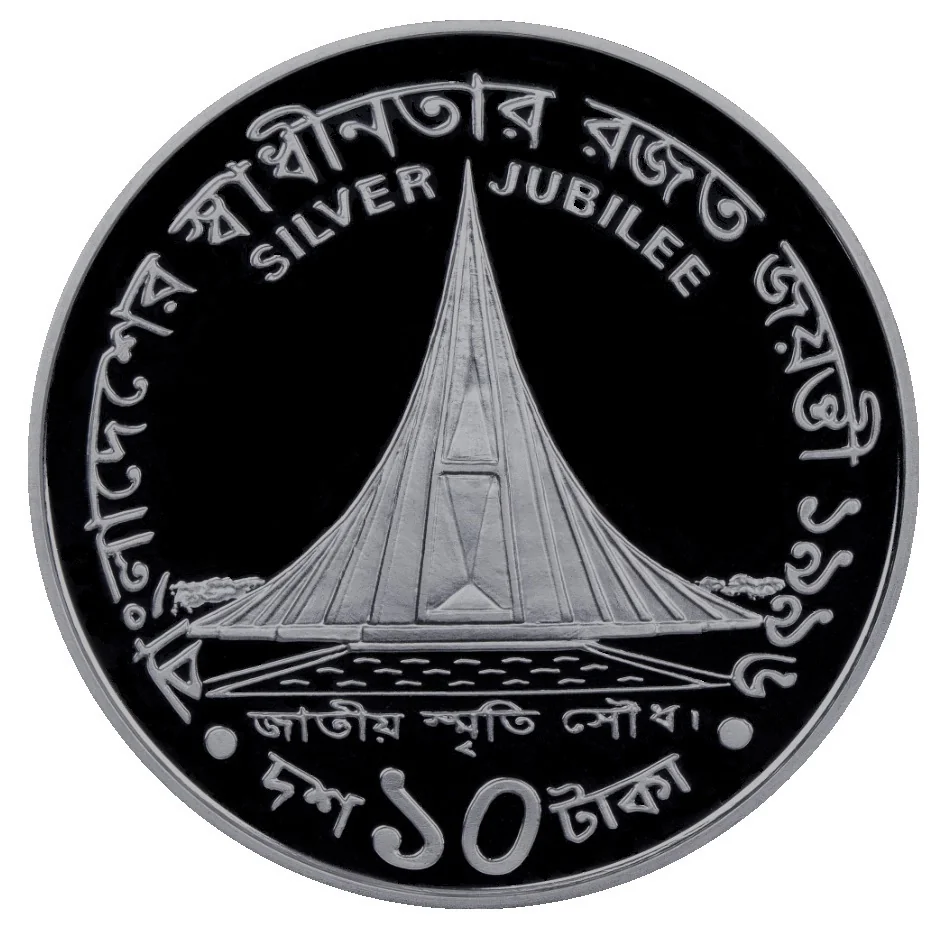
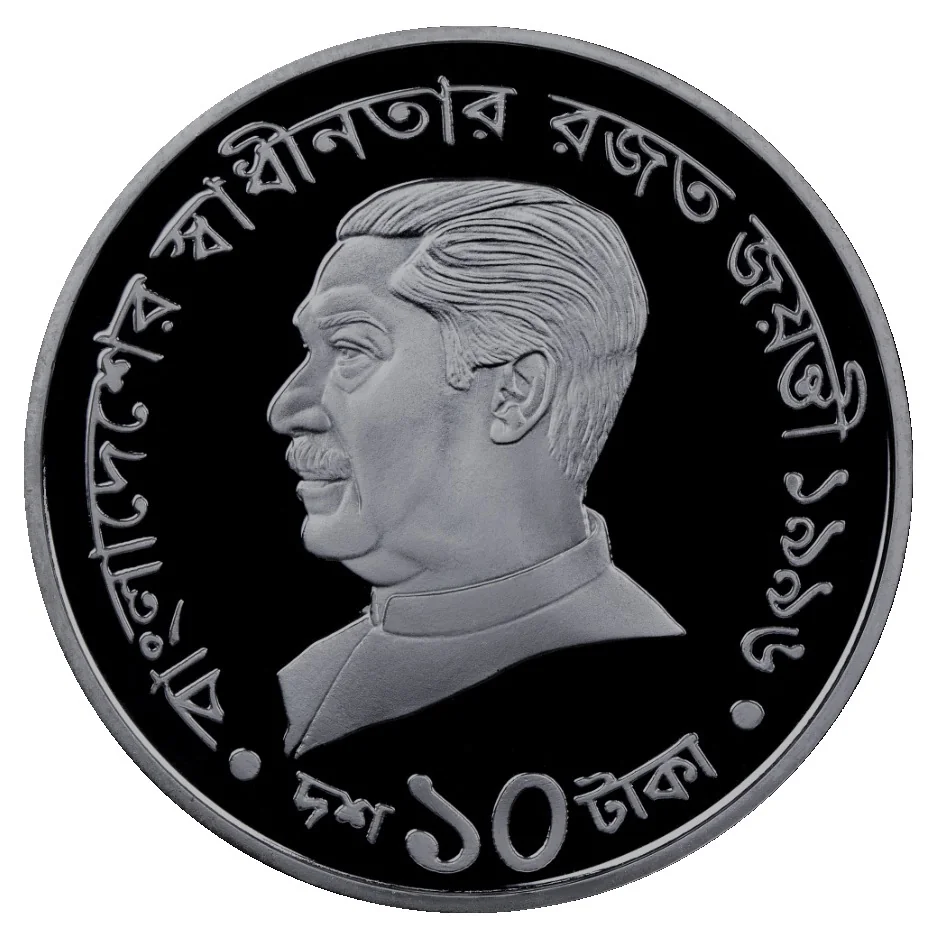
10 taka (Independence) – Bangladesh
Add to wishlist
Non-circulating coins
Commemoration: 25th Anniversary of Independence
Bangladesh
Context
Material
Diameter: 38 mm
Weight: 31.47 g
Silver Weight:: 29.11 g
Shape: Round
Composition: 92.5% Silver
Standard: Silver ounce
Magnetic: No
Technique: Milled
Alignment: Medal alignment
flip
References
KM: #
Numista: #82266
Value
Exchange value: 10 BDT
Bullion value: $74.38
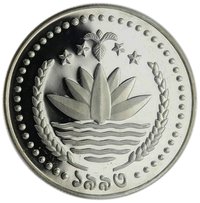
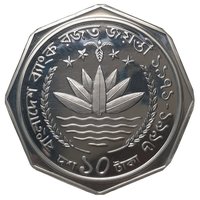
Obverse
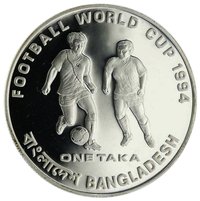
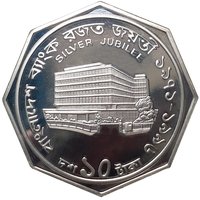
Reverse
Edge
Reeded
Categories
| Event> Independence |
| Person> Politician |
Mints
| Name | Mark |
|---|---|
| Royal Mint of Madrid | — |
Mintings
| Year | Mint Mark | Mintage | Quality | Collection |
|---|---|---|---|---|
| 1996 | — | 5,000 |
Historical background
In 1996, Bangladesh's currency, the Taka (BDT), operated under a managed floating exchange rate system, a significant shift from the earlier fixed regime. This transition, which began in the early 1990s as part of broader IMF-supported economic liberalization, aimed to make the economy more market-oriented and competitive. However, the period was marked by persistent pressure on the Taka, which experienced gradual depreciation against major currencies like the US Dollar. This was primarily driven by a structural trade deficit, limited foreign exchange reserves, and a growing import bill, particularly for essentials like petroleum, machinery, and food grains.
The year itself was politically turbulent, with a contentious general election in June that saw a transition of power from the Bangladesh Nationalist Party (BNP) to the Awami League. This political uncertainty contributed to economic volatility, affecting investor confidence and complicating monetary policy. The Bangladesh Bank, the country's central bank, faced the challenging task of stabilizing the currency while controlling inflation, which remained a concern for the populace. Interventions in the foreign exchange market were frequent but were constrained by the relatively low level of net foreign assets.
Overall, the currency situation in 1996 reflected a developing economy in the midst of structural adjustment. The move towards a more flexible exchange rate was a necessary but difficult step, exposing underlying economic vulnerabilities. While it aimed to improve export competitiveness by allowing the Taka to find a more realistic valuation, the immediate effects included inflationary pressures and challenges in reserve management, setting the stage for ongoing economic reforms in the late 1990s.
The year itself was politically turbulent, with a contentious general election in June that saw a transition of power from the Bangladesh Nationalist Party (BNP) to the Awami League. This political uncertainty contributed to economic volatility, affecting investor confidence and complicating monetary policy. The Bangladesh Bank, the country's central bank, faced the challenging task of stabilizing the currency while controlling inflation, which remained a concern for the populace. Interventions in the foreign exchange market were frequent but were constrained by the relatively low level of net foreign assets.
Overall, the currency situation in 1996 reflected a developing economy in the midst of structural adjustment. The move towards a more flexible exchange rate was a necessary but difficult step, exposing underlying economic vulnerabilities. While it aimed to improve export competitiveness by allowing the Taka to find a more realistic valuation, the immediate effects included inflationary pressures and challenges in reserve management, setting the stage for ongoing economic reforms in the late 1990s.
💎 Extremely Rare