

50 cents – South Africa
Add to wishlist
Circulating commemorative coins
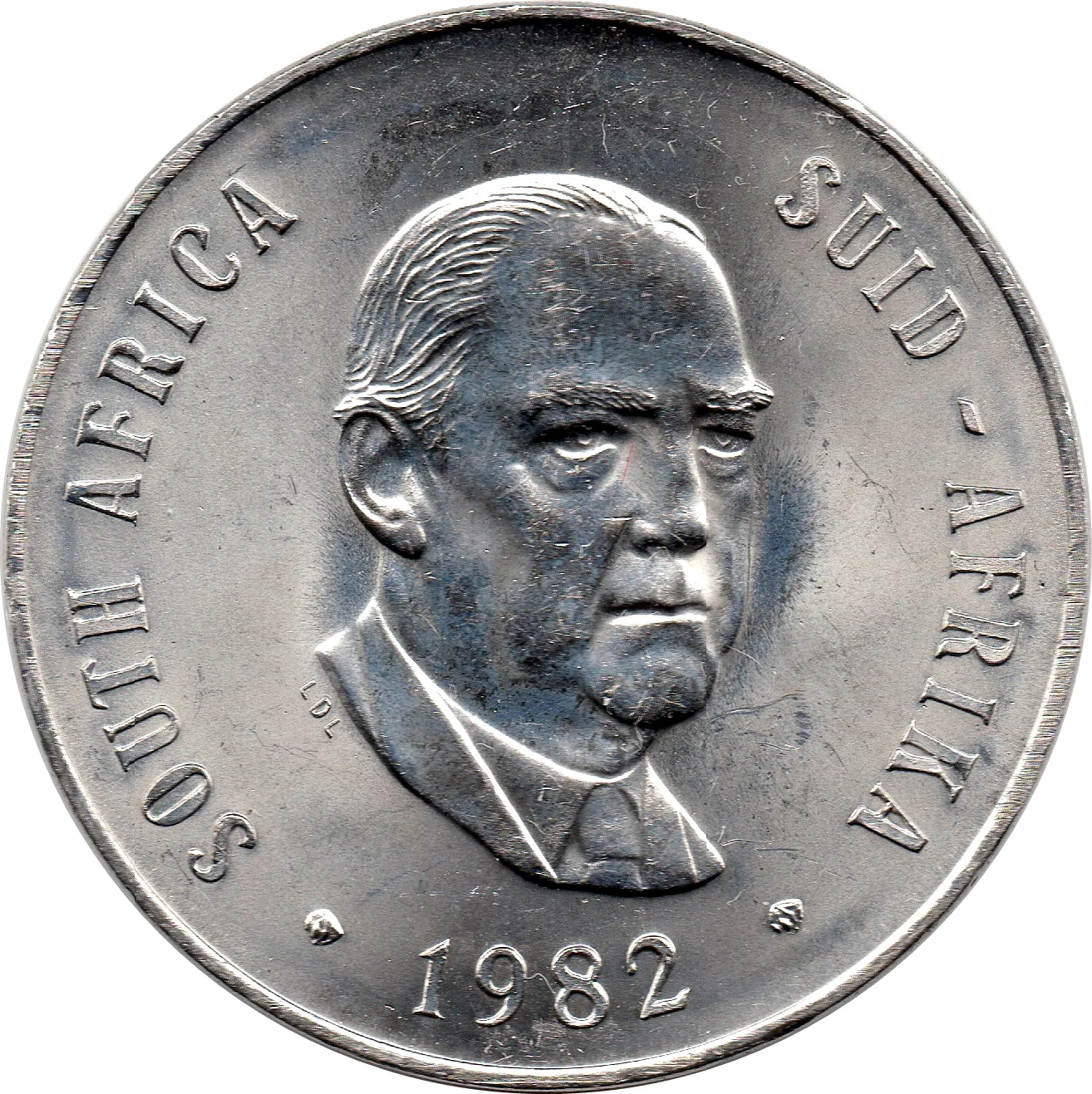
Commemoration: The end of Balthazar Johannes Vorster's presidency
South Africa
Context
Year: 1982
Issuer: South Africa
Period:
(since 1961)
Currency:
(since 1961)
Total mintage: 2,081,999
Material
References
KM: #
Numista: #8197
Value
Exchange value: 0.50 ZAR
Inflation-adjusted value: 13.80 ZAR
Obverse
Description:
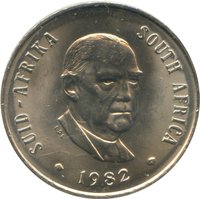
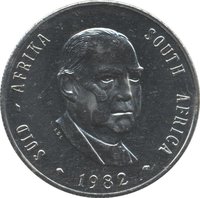
President Vorster, 1/4 right profile.
Inscription:
SOUTH AFRICA SUID-AFRIKA
LDL
1982
LDL
1982
Script: Latin
Engraver: Lourens de Lange
Reverse
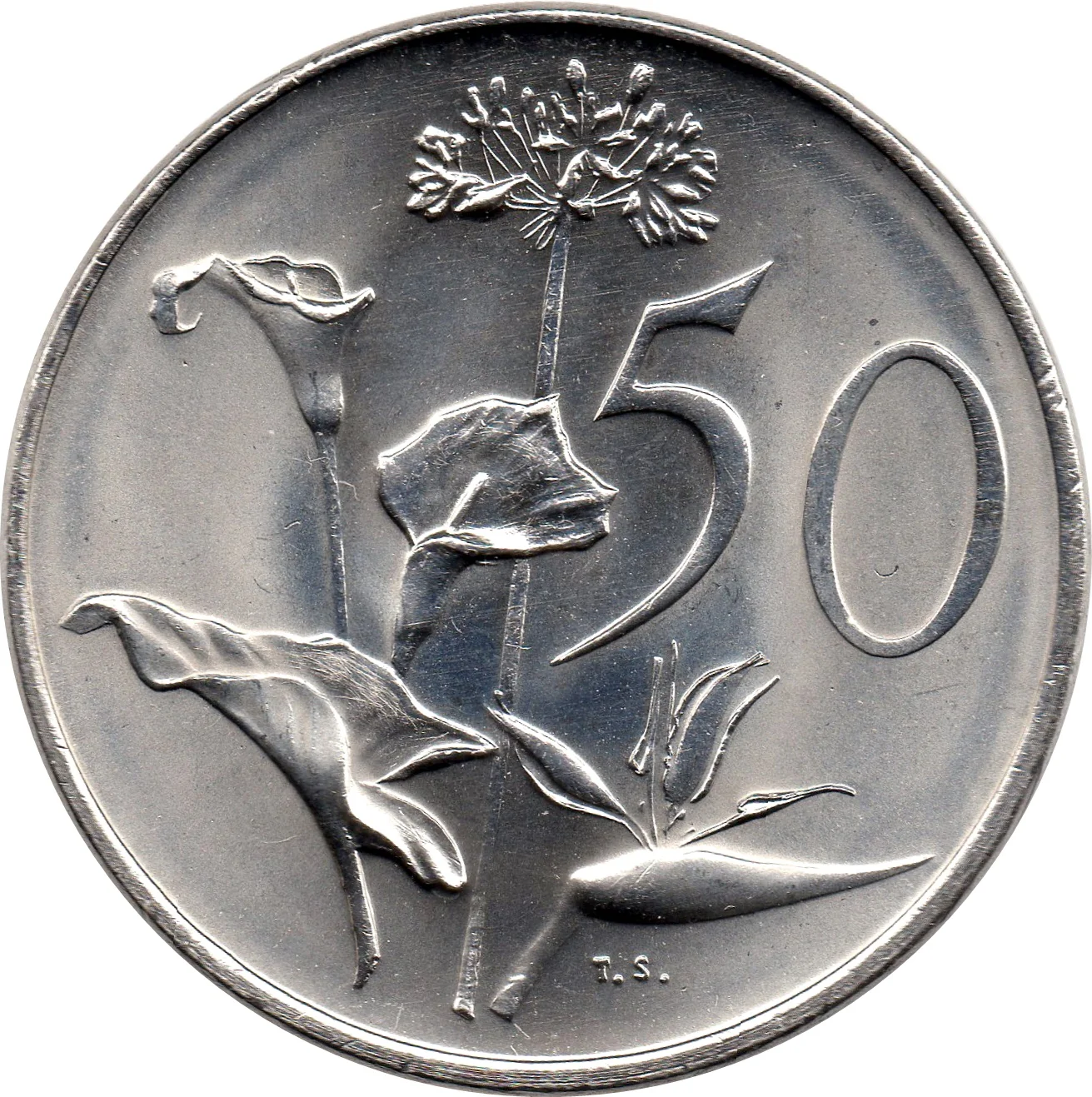
Description:
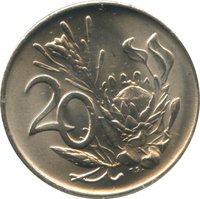
Three South African flowers: Arum Lily, African Lily, and Bird-of-Paradise.
Inscription:
50
T.S.
T.S.
Script: Latin
Engraver: Tommy Sasseen
Edge
Plain
Categories
| Person> Politician |
| Plants> Flower |
Mintings
| Year | Mint Mark | Mintage | Quality | Collection |
|---|---|---|---|---|
| 1982 | — | 2,069,999 | ||
| 1982 | — | 12,000 | Proof |
Historical background
In 1982, South Africa's currency situation was dominated by the severe economic and political pressures of international sanctions and domestic instability. The apartheid government, led by P.W. Botha, was grappling with a deep recession, soaring inflation, and a crippling foreign debt crisis. The value of the South African Rand (ZAR) was under sustained attack, having depreciated significantly following the 1976 Soweto Uprising and the subsequent flight of foreign capital. The government's response was a regime of strict financial controls, including a dual-currency system that created a financial Rand for foreign investors (to isolate the domestic economy from capital flight) and a commercial Rand for trade.
The primary external shock of 1982 was a sharp decline in the gold price, which fell from a peak of $850 per ounce in 1980 to around $300 by the end of 1982. As gold constituted nearly half of South Africa's export earnings, this collapse devastated the country's balance of payments and severely limited its ability to service foreign debt. Coupled with a global recession and rising international interest rates, the nation faced a severe liquidity crunch. The Reserve Bank was forced to aggressively defend the currency by depleting foreign reserves and tightening monetary policy, which further stifled economic growth and increased unemployment.
Internally, the currency controls were a double-edged sword. While they provided a temporary shield from total currency collapse and prevented a complete exodus of capital, they also isolated South Africa from global financial markets and signaled a lack of confidence to international investors. The economic strain of 1982 exacerbated social tensions, fueling the anti-apartheid struggle. Thus, the currency situation was not merely a financial issue but a core symptom of the apartheid state's increasing isolation and the unsustainable cost of maintaining its political system in the face of mounting global and domestic opposition.
The primary external shock of 1982 was a sharp decline in the gold price, which fell from a peak of $850 per ounce in 1980 to around $300 by the end of 1982. As gold constituted nearly half of South Africa's export earnings, this collapse devastated the country's balance of payments and severely limited its ability to service foreign debt. Coupled with a global recession and rising international interest rates, the nation faced a severe liquidity crunch. The Reserve Bank was forced to aggressively defend the currency by depleting foreign reserves and tightening monetary policy, which further stifled economic growth and increased unemployment.
Internally, the currency controls were a double-edged sword. While they provided a temporary shield from total currency collapse and prevented a complete exodus of capital, they also isolated South Africa from global financial markets and signaled a lack of confidence to international investors. The economic strain of 1982 exacerbated social tensions, fueling the anti-apartheid struggle. Thus, the currency situation was not merely a financial issue but a core symptom of the apartheid state's increasing isolation and the unsustainable cost of maintaining its political system in the face of mounting global and domestic opposition.
🌱 Fairly Common