

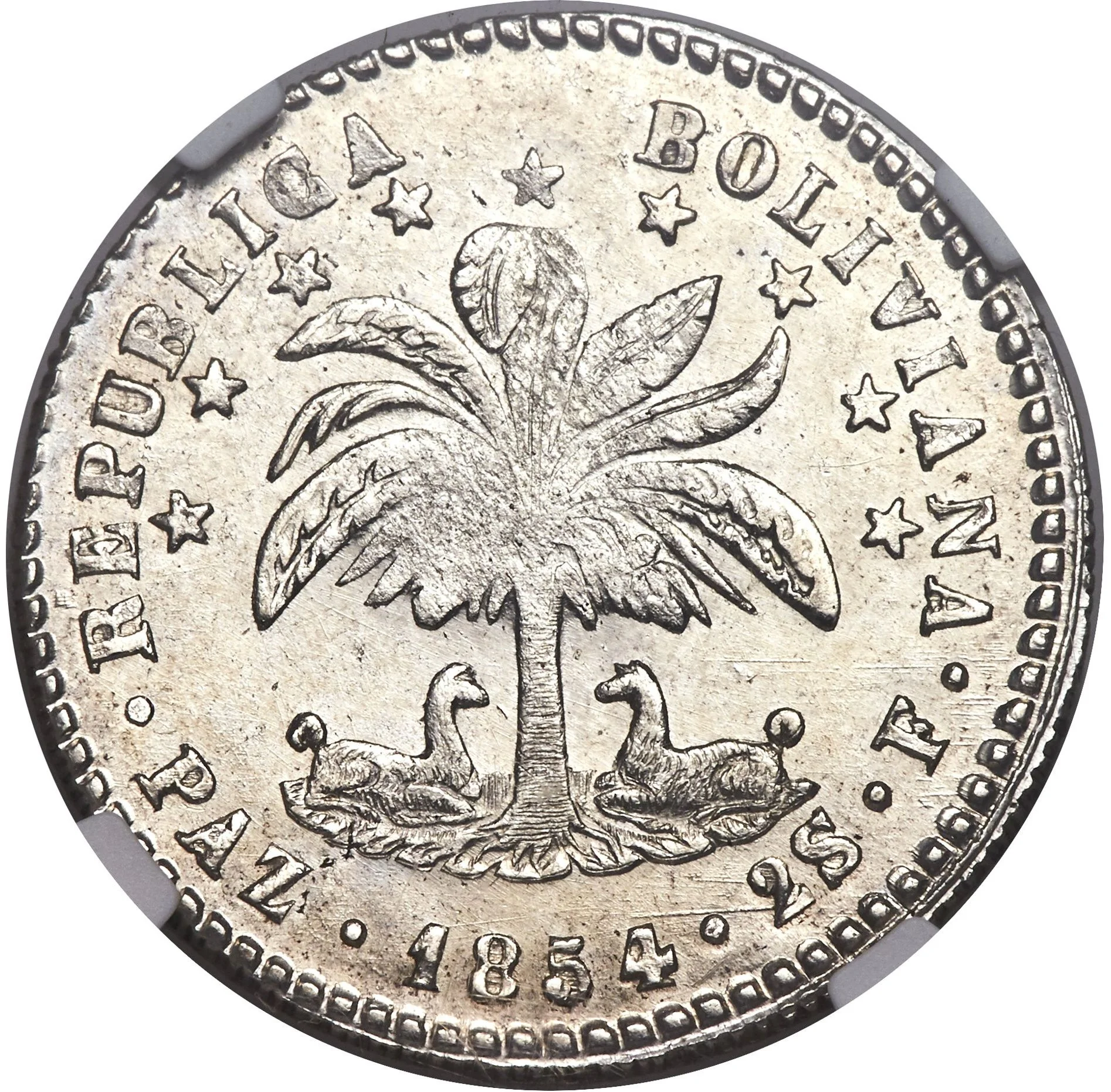
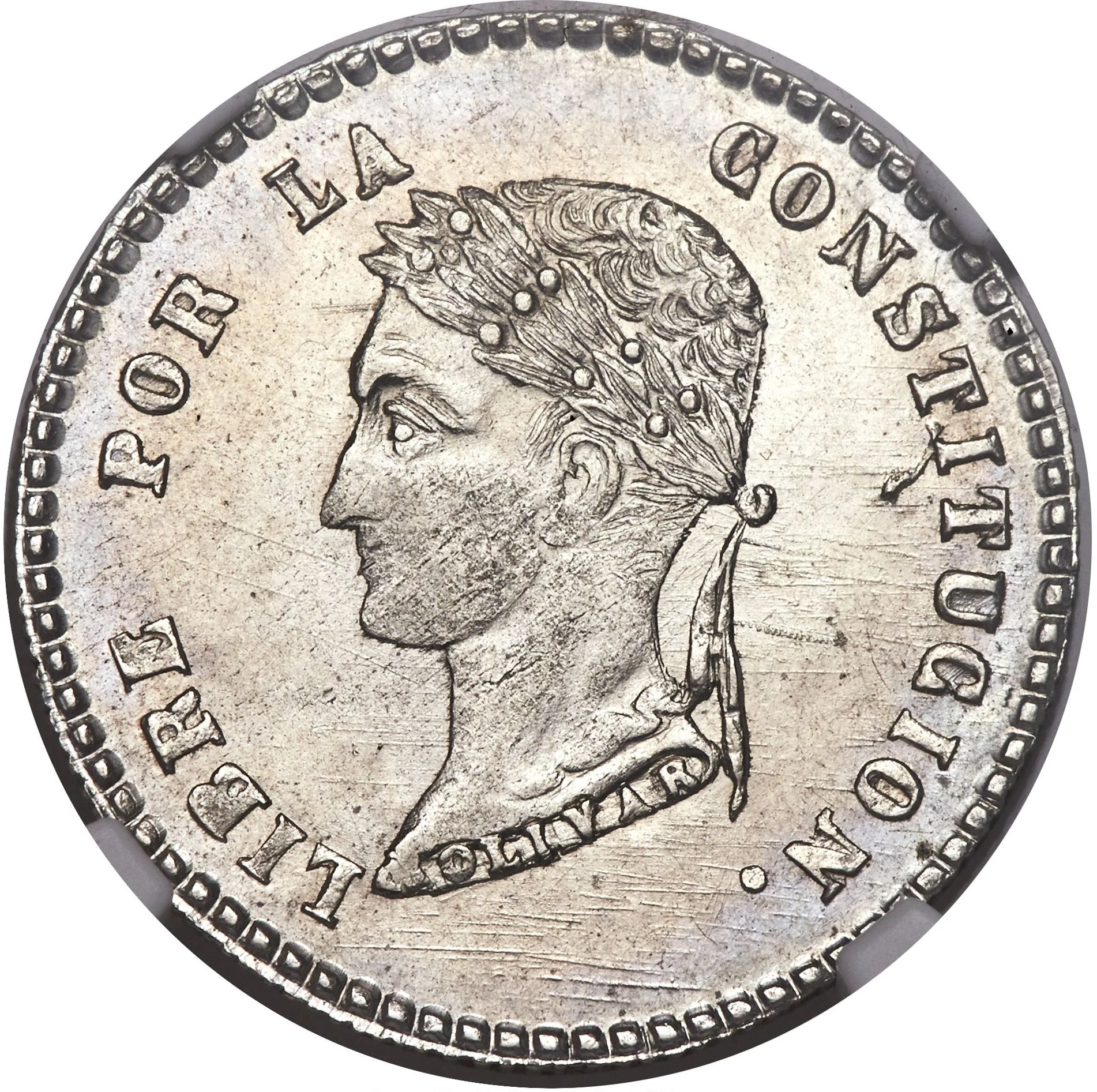
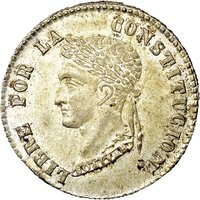
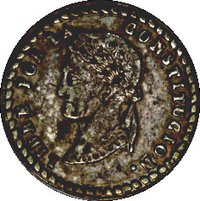
Obverse
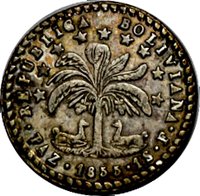
Reverse
Edge
Categories
| Animal> Camel |
| Person> Military leader |
| Person> Politician |
| Plant> Tree |
| Symbol> Wreath |
Mintings
| Year | Mint Mark | Mintage | Quality | Collection |
|---|---|---|---|---|
| 1854 | PAZ | — |
Historical background
In 1854, Bolivia's currency situation was characterized by profound instability and a chaotic multiplicity of monetary units, a direct legacy of the early post-independence period. Following the dissolution of the colonial mint in Potosí, the nation lacked a unified, state-controlled currency. The economy operated on a confusing mix of physical pesos fuertes (hard pesos), debased coinage from the republican mint, and a vast quantity of worn and clipped Spanish colonial coins, primarily silver reales. Furthermore, foreign currencies, especially Peruvian and Chilean coins, circulated freely, their value fluctuating with trade and political relations. This monetary anarchy created significant challenges for commerce, taxation, and state-building, as the intrinsic silver content of any given coin was often more important than its face value.
The core of the problem lay in the severe shortage of official Bolivian coinage and the state's weak fiscal authority. Attempts to establish a national currency, such as the coinage under President José Ballivián in the 1840s, had failed to produce sufficient volume or public trust. Consequently, the economy relied heavily on imported coin and bullion. This environment fostered widespread counterfeiting and the practice of "clipping" silver from coin edges, further eroding confidence. The government's finances were chronically strained, and it often resorted to seigniorage—profiting from minting coins with a face value higher than their metal content—which only deepened inflationary pressures and public distrust.
This monetary disarray set the stage for a significant, though ultimately flawed, reform. In 1853, President Manuel Isidoro Belzu had contracted with a French company to establish a new national mint in Potosí with modern machinery. By 1854, this project was underway, aiming to finally produce a standardized, high-quality silver coinage to displace the chaotic mix in circulation. However, the reform's success was not immediate; the new mint faced operational delays, and the fundamental issues of economic fragility and political instability persisted. Thus, 1854 represents a transitional year, caught between the enduring legacy of monetary chaos and the nascent, hopeful efforts to impose a uniform national currency system.
The core of the problem lay in the severe shortage of official Bolivian coinage and the state's weak fiscal authority. Attempts to establish a national currency, such as the coinage under President José Ballivián in the 1840s, had failed to produce sufficient volume or public trust. Consequently, the economy relied heavily on imported coin and bullion. This environment fostered widespread counterfeiting and the practice of "clipping" silver from coin edges, further eroding confidence. The government's finances were chronically strained, and it often resorted to seigniorage—profiting from minting coins with a face value higher than their metal content—which only deepened inflationary pressures and public distrust.
This monetary disarray set the stage for a significant, though ultimately flawed, reform. In 1853, President Manuel Isidoro Belzu had contracted with a French company to establish a new national mint in Potosí with modern machinery. By 1854, this project was underway, aiming to finally produce a standardized, high-quality silver coinage to displace the chaotic mix in circulation. However, the reform's success was not immediate; the new mint faced operational delays, and the fundamental issues of economic fragility and political instability persisted. Thus, 1854 represents a transitional year, caught between the enduring legacy of monetary chaos and the nascent, hopeful efforts to impose a uniform national currency system.
✨ Legendary