

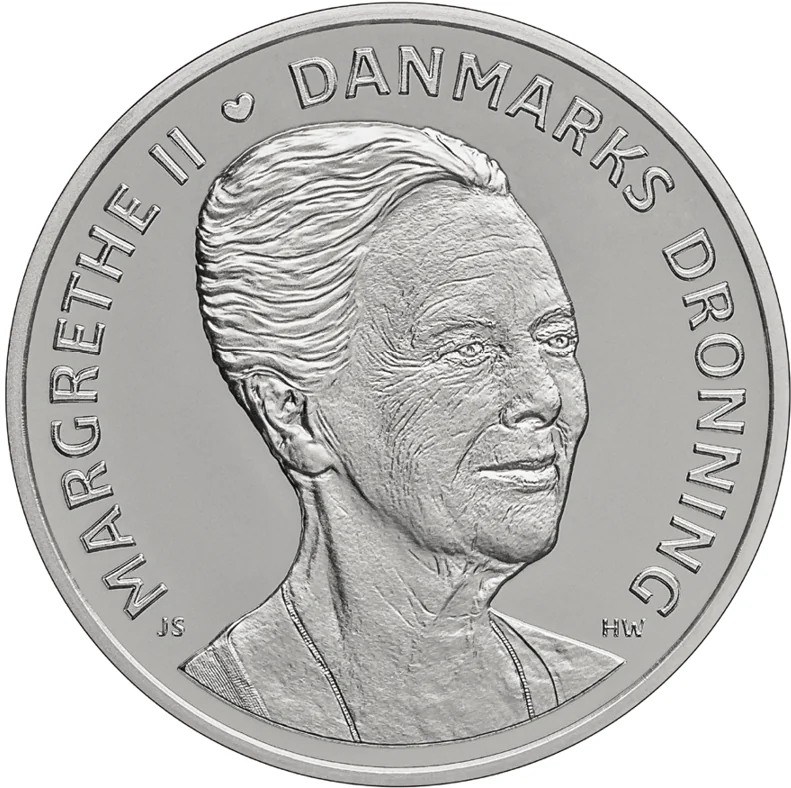
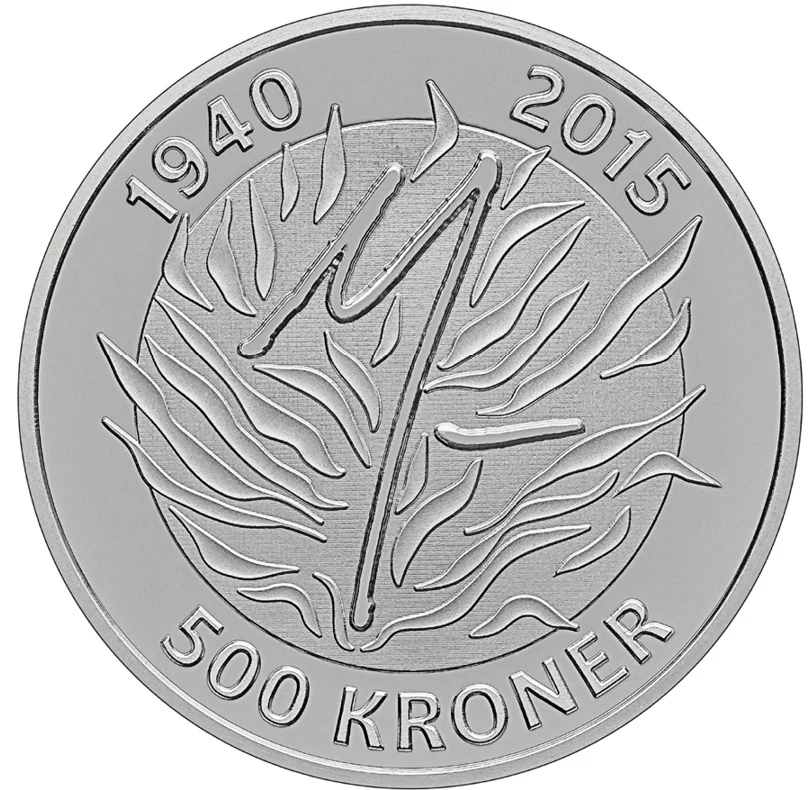
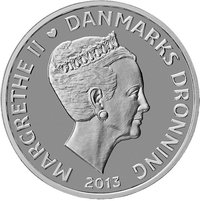
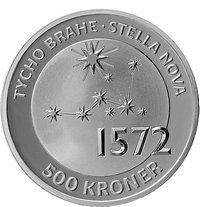
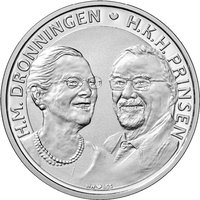
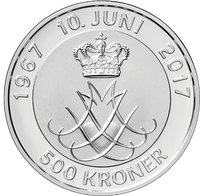
500 kroner (Queen Margrethe II) – Denmark
Add to wishlist
Non-circulating coins
Commemoration: 75th Birthday of Queen Margrethe II
Denmark
Context
Material
Diameter: 38 mm
Weight: 31.1 g
Silver Weight:: 31.07 g
Shape: Round
Composition: 99.9% Silver
Standard: Silver ounce
Magnetic: No
Technique: Milled
Alignment: Medal alignment
flip
References
KM: #
Numista: #81869
Value
Exchange value: 500 DKK
Bullion value: $77.01
Inflation-adjusted value: 598.29 DKK
Categories
| Event> Birth anniversary |
Mints
| Name | Mark |
|---|---|
| Royal Danish Mint | — |
Mintings
| Year | Mint Mark | Mintage | Quality | Collection |
|---|---|---|---|---|
| 2015 | — | — | Proof |
Historical background
In 2015, Denmark's currency situation was dominated by a fierce defense of the krone's peg to the euro within the European Exchange Rate Mechanism (ERM II). The Danish central bank, Nationalbanken, was compelled to take unprecedented action in January and February after the Swiss National Bank unexpectedly abandoned its own currency ceiling. This triggered massive speculative inflows into the krone, seen as a safe and stable alternative, putting intense upward pressure on its value and threatening the long-standing fixed exchange rate policy of 7.46038 kroner per euro.
To maintain the peg, Nationalbanken executed a dramatic and multi-pronged monetary policy response. It intervened heavily in foreign exchange markets, selling kroner and buying foreign assets, which caused its foreign currency reserves to swell significantly. Most notably, it pushed key interest rates into deeply negative territory, with the deposit rate reaching -0.75%. This meant commercial banks were charged to park excess liquidity at the central bank, a radical measure aimed at discouraging hot money inflows and weakening the krone's attractiveness.
The situation was further fueled by the European Central Bank's announcement of its quantitative easing program, which widened the interest rate differential and increased capital flows toward Denmark. By year's end, Nationalbanken's efforts were successful; the peg was firmly intact and speculative pressure had subsided, allowing a slight easing of rates. The 2015 episode starkly highlighted Denmark's commitment to its fixed exchange rate regime, even at the cost of forgoing an independent monetary policy and implementing extreme measures like negative rates, all to ensure stability for its small, open economy.
To maintain the peg, Nationalbanken executed a dramatic and multi-pronged monetary policy response. It intervened heavily in foreign exchange markets, selling kroner and buying foreign assets, which caused its foreign currency reserves to swell significantly. Most notably, it pushed key interest rates into deeply negative territory, with the deposit rate reaching -0.75%. This meant commercial banks were charged to park excess liquidity at the central bank, a radical measure aimed at discouraging hot money inflows and weakening the krone's attractiveness.
The situation was further fueled by the European Central Bank's announcement of its quantitative easing program, which widened the interest rate differential and increased capital flows toward Denmark. By year's end, Nationalbanken's efforts were successful; the peg was firmly intact and speculative pressure had subsided, allowing a slight easing of rates. The 2015 episode starkly highlighted Denmark's commitment to its fixed exchange rate regime, even at the cost of forgoing an independent monetary policy and implementing extreme measures like negative rates, all to ensure stability for its small, open economy.
⭐ Rare