

50 centavos – Mozambique
Add to wishlist
Mozambique
Context
Years: 1973–1974
Issuer: Mozambique
Period:
(1951—1975)
Currency:
(1911—1974)
Demonetized: Yes
Total mintage: 30,651,000
Material
References
KM: #
Numista: #8151
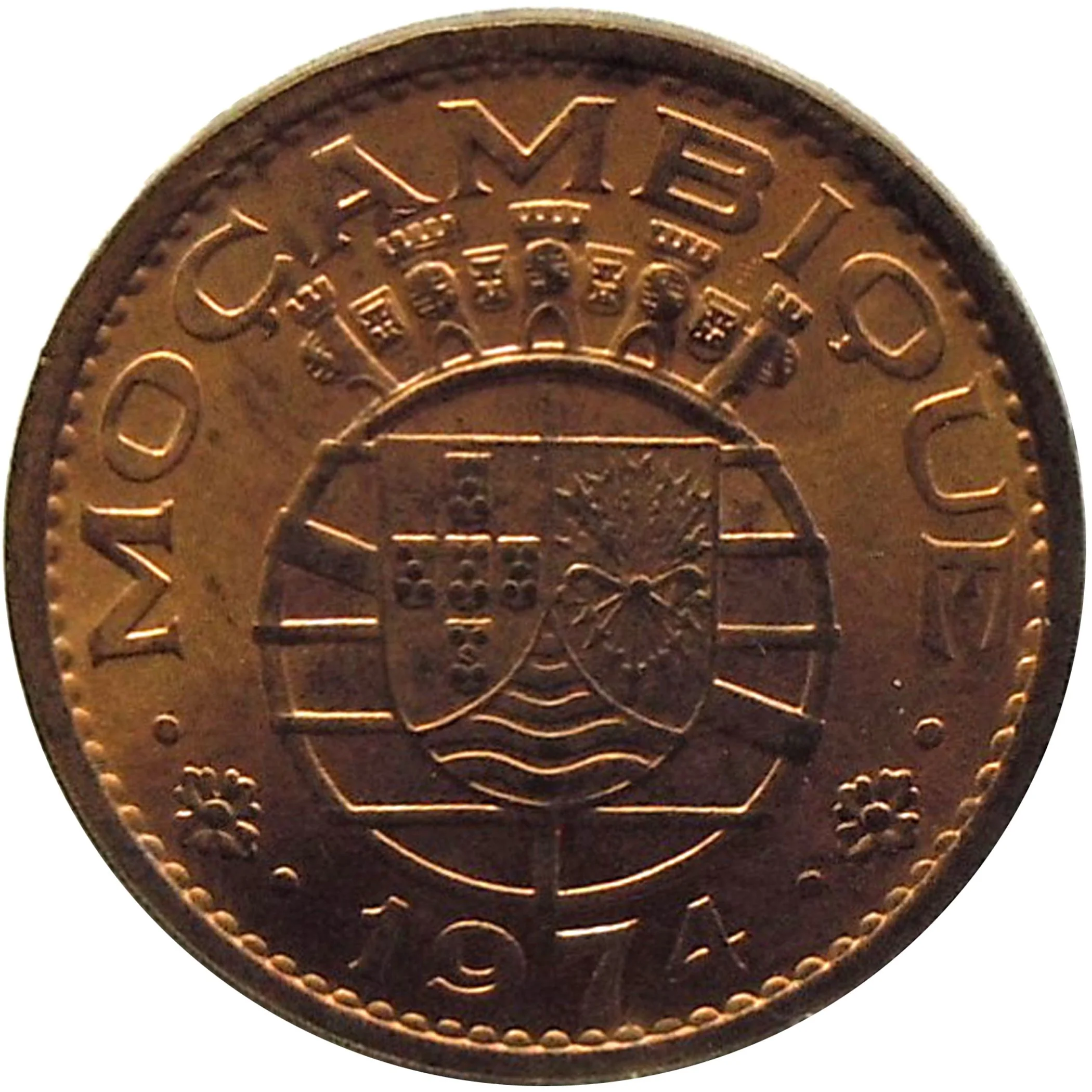
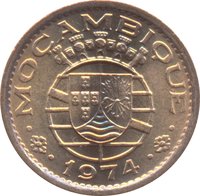
Obverse
Description:
Crowned globe with arms, dated below.
Inscription:
MOÇAMBIQUE
1974
1974
Translation:
Mozambique
1974
1974
Script: Latin
Language: Portuguese
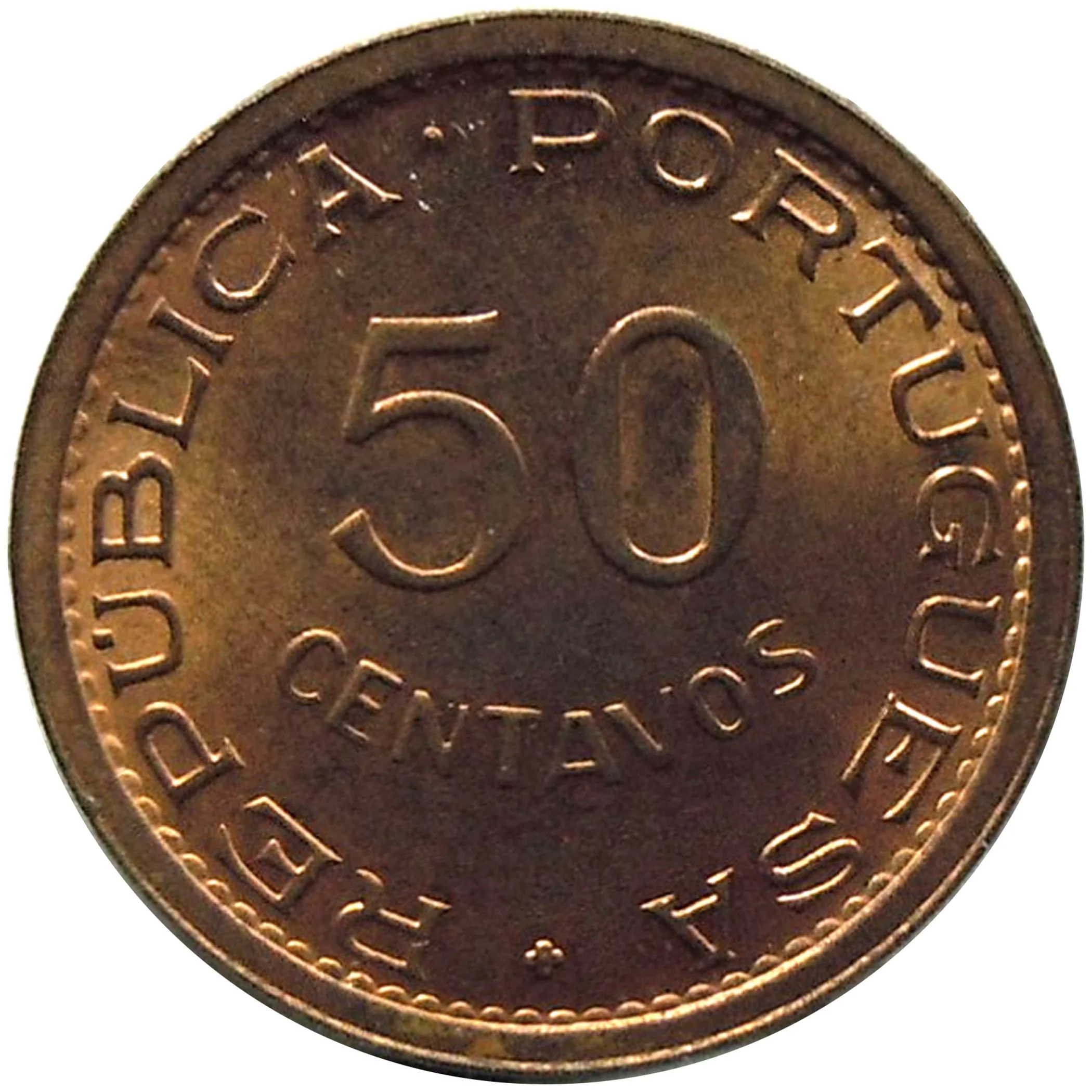
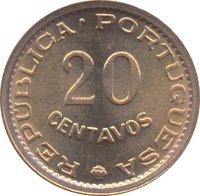
Reverse
Description:
Center value, encircled by legend.
Inscription:
REPUBLICA·PORTUGUESA+
50
CENTAVOS
50
CENTAVOS
Translation:
PORTUGUESE REPUBLIC+
50
CENTS
50
CENTS
Script: Latin
Language: Portuguese
Edge
Plain
Mints
| Name | Mark |
|---|---|
| Imprensa Nacional - Casa da Moeda | — |
Mintings
| Year | Mint Mark | Mintage | Quality | Collection |
|---|---|---|---|---|
| 1973 | — | 6,841,000 | ||
| 1974 | — | 23,810,000 |
Historical background
In 1973, Mozambique remained under Portuguese colonial rule, and its currency was fully integrated into Portugal's monetary system. The official currency was the Mozambican escudo, which was pegged at par with and directly interchangeable with the Portuguese escudo. This arrangement meant that monetary policy was entirely dictated by Lisbon, serving the interests of the colonial economy, which was heavily oriented toward exporting raw materials and agricultural products (like cotton, cashews, and sugar) to Portugal and financing Portugal's own expenditures, including its costly colonial wars.
The currency's stability and value were therefore intrinsically linked to the economic health of Portugal, which was itself facing significant strain. By the early 1970s, Portugal was grappling with the immense financial burden of fighting independence wars in Mozambique, Angola, and Guinea-Bissau. This led to inflationary pressures and a growing external debt, which indirectly affected Mozambique. While the escudo remained the legal tender, economic activity was increasingly shadowed by the ongoing liberation struggle led by FRELIMO, which controlled swathes of the northern countryside and disrupted some colonial economic structures.
Ultimately, the currency situation in 1973 reflected a colonial system in its final, unstable years. The fixed parity with the Portuguese escudo symbolized political control, but it was underpinned by a war economy and growing international isolation. Within two years, the collapse of the Portuguese Estado Novo government in 1974 would lead to Mozambique's independence in 1975, prompting the swift replacement of the Mozambican escudo with the new metical in 1980, a symbolic break from the colonial monetary past.
The currency's stability and value were therefore intrinsically linked to the economic health of Portugal, which was itself facing significant strain. By the early 1970s, Portugal was grappling with the immense financial burden of fighting independence wars in Mozambique, Angola, and Guinea-Bissau. This led to inflationary pressures and a growing external debt, which indirectly affected Mozambique. While the escudo remained the legal tender, economic activity was increasingly shadowed by the ongoing liberation struggle led by FRELIMO, which controlled swathes of the northern countryside and disrupted some colonial economic structures.
Ultimately, the currency situation in 1973 reflected a colonial system in its final, unstable years. The fixed parity with the Portuguese escudo symbolized political control, but it was underpinned by a war economy and growing international isolation. Within two years, the collapse of the Portuguese Estado Novo government in 1974 would lead to Mozambique's independence in 1975, prompting the swift replacement of the Mozambican escudo with the new metical in 1980, a symbolic break from the colonial monetary past.
🌱 Very Common