

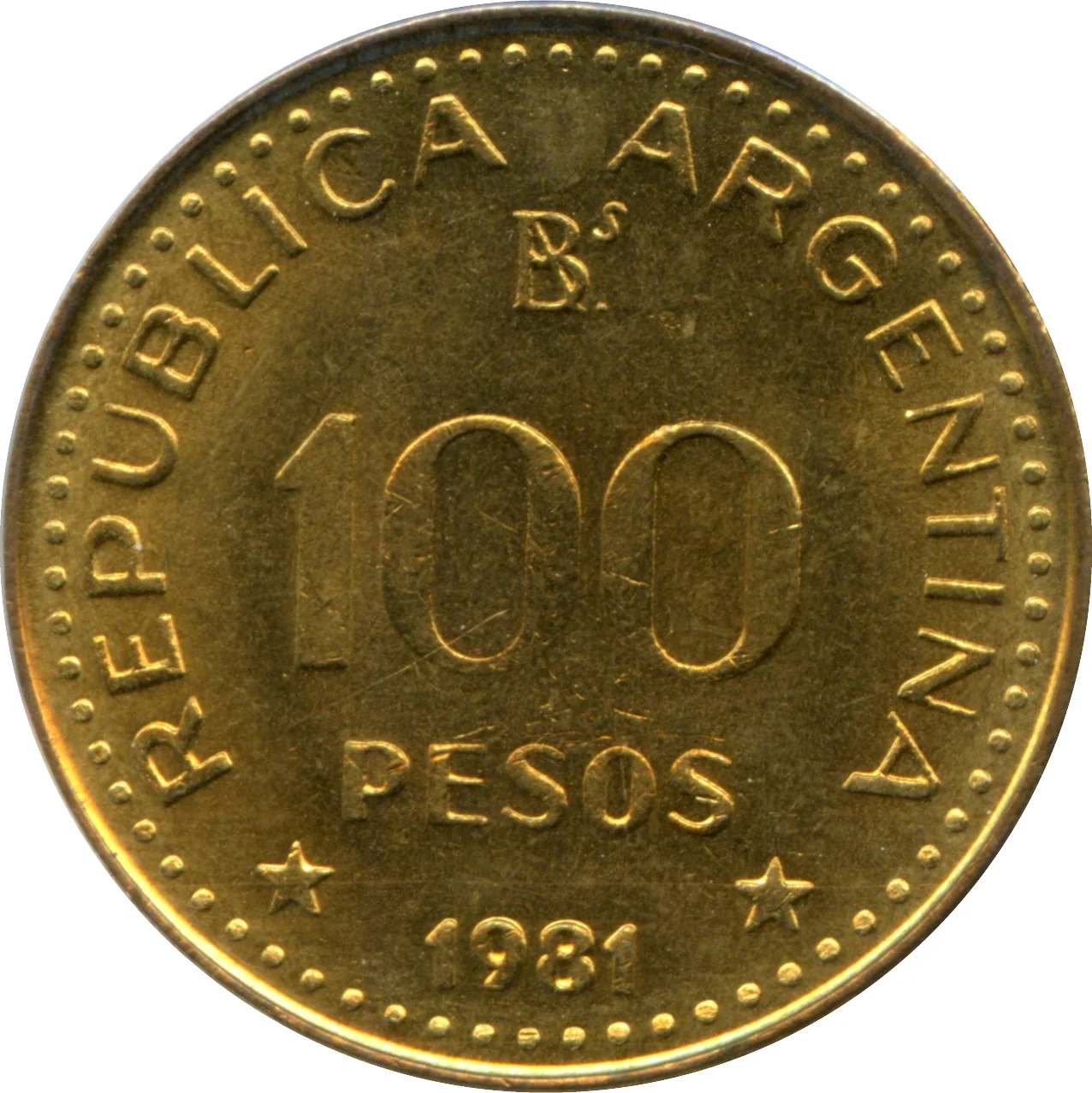
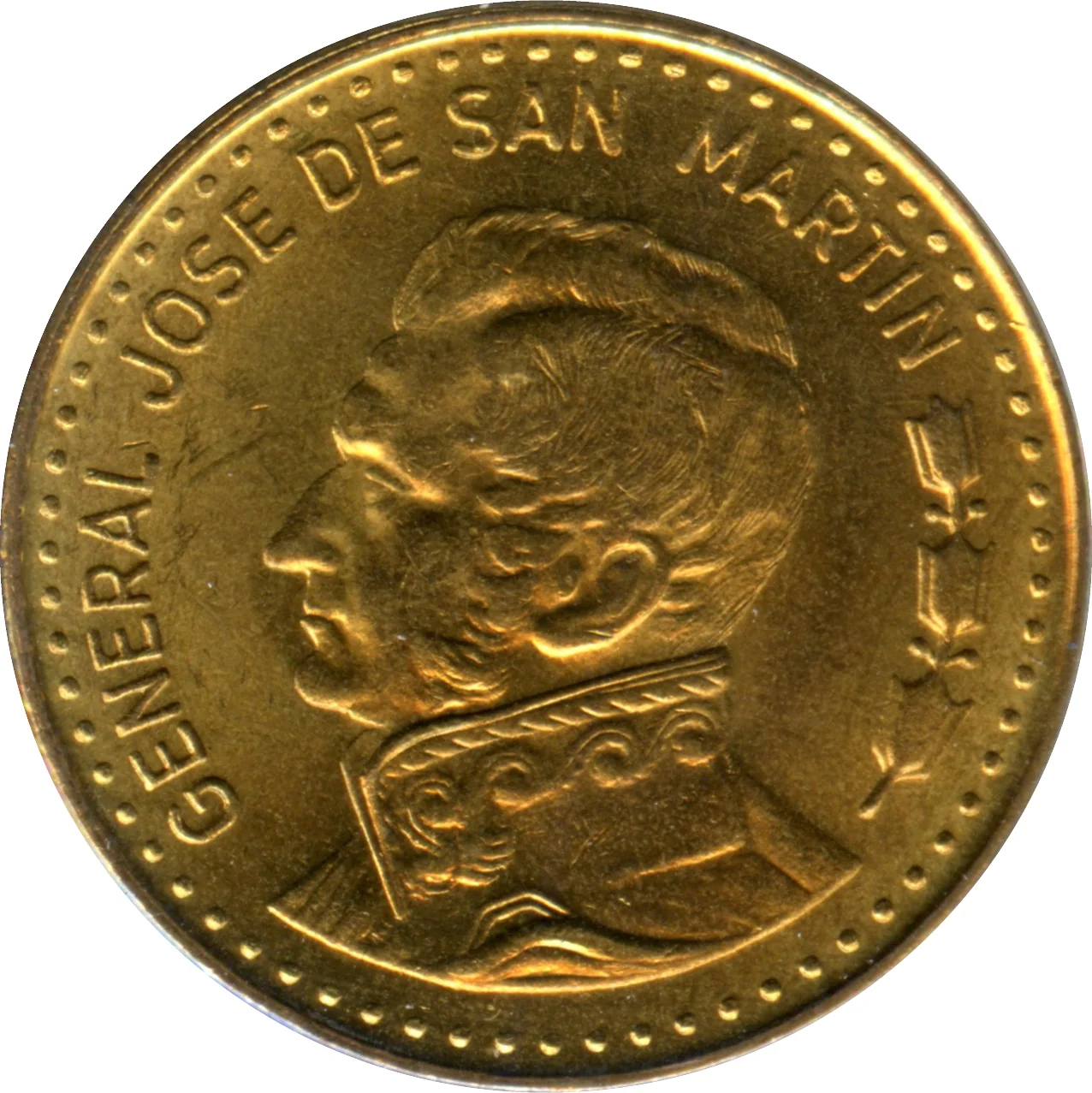
Obverse
Reverse
Description:
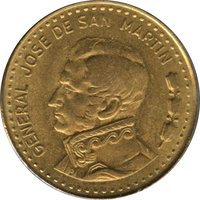
Armored bust of San Martín, left profile.
Inscription:
GENERAL JOSE DE SAN MARTIN
Script: Latin
Edge
Reeded
Categories
| Person> Military leader |
| Person> Politician |
Mints
| Name | Mark |
|---|---|
| Buenos Aires | BAˢ |
Historical background
By 1980, Argentina was in the late stages of the "Proceso de Reorganización Nacional," a military dictatorship that had seized power in 1976. The regime's economic policy, led by Minister José Alfredo Martínez de Hoz, was characterized by financial liberalization and a fixed exchange rate anchor known as the tablita cambiaria. This pre-announced, gradual devaluation schedule was intended to curb hyperinflation and restore confidence by promising a predictable peso-to-dollar rate. Initially successful, the policy led to a massive influx of foreign capital and a consumption boom, but it also created a severe overvaluation of the Argentine peso.
The currency regime fostered a dangerous imbalance. As the peso became increasingly overvalued, Argentine exports became uncompetitive, widening the trade deficit. Simultaneously, the financial deregulation encouraged massive speculation and foreign currency-denominated debt accumulation by both the private sector and the state. The situation was inherently unstable, relying on continuous capital inflows to support the fixed exchange rate and finance the deficits. By 1980, external shocks like rising US interest rates and a global recession began to reverse these capital flows, exposing the fragility of the system.
The breaking point came in March 1980 with the collapse of the country's largest private bank, Banco de Intercambio Regional (BIR), triggering a financial panic. This crisis of confidence led to massive capital flight, as Argentines rushed to convert pesos into dollars before an expected devaluation. The government was forced to abandon the tablita, but did so in a chaotic, multi-tiered exchange rate system. The currency crisis of 1980 plunged Argentina into a deep recession, bankrupted countless businesses, and left the financial system in ruins, setting the stage for the devastating debt crisis and hyperinflation that would define the following decade.
The currency regime fostered a dangerous imbalance. As the peso became increasingly overvalued, Argentine exports became uncompetitive, widening the trade deficit. Simultaneously, the financial deregulation encouraged massive speculation and foreign currency-denominated debt accumulation by both the private sector and the state. The situation was inherently unstable, relying on continuous capital inflows to support the fixed exchange rate and finance the deficits. By 1980, external shocks like rising US interest rates and a global recession began to reverse these capital flows, exposing the fragility of the system.
The breaking point came in March 1980 with the collapse of the country's largest private bank, Banco de Intercambio Regional (BIR), triggering a financial panic. This crisis of confidence led to massive capital flight, as Argentines rushed to convert pesos into dollars before an expected devaluation. The government was forced to abandon the tablita, but did so in a chaotic, multi-tiered exchange rate system. The currency crisis of 1980 plunged Argentina into a deep recession, bankrupted countless businesses, and left the financial system in ruins, setting the stage for the devastating debt crisis and hyperinflation that would define the following decade.
🌱 Very Common