

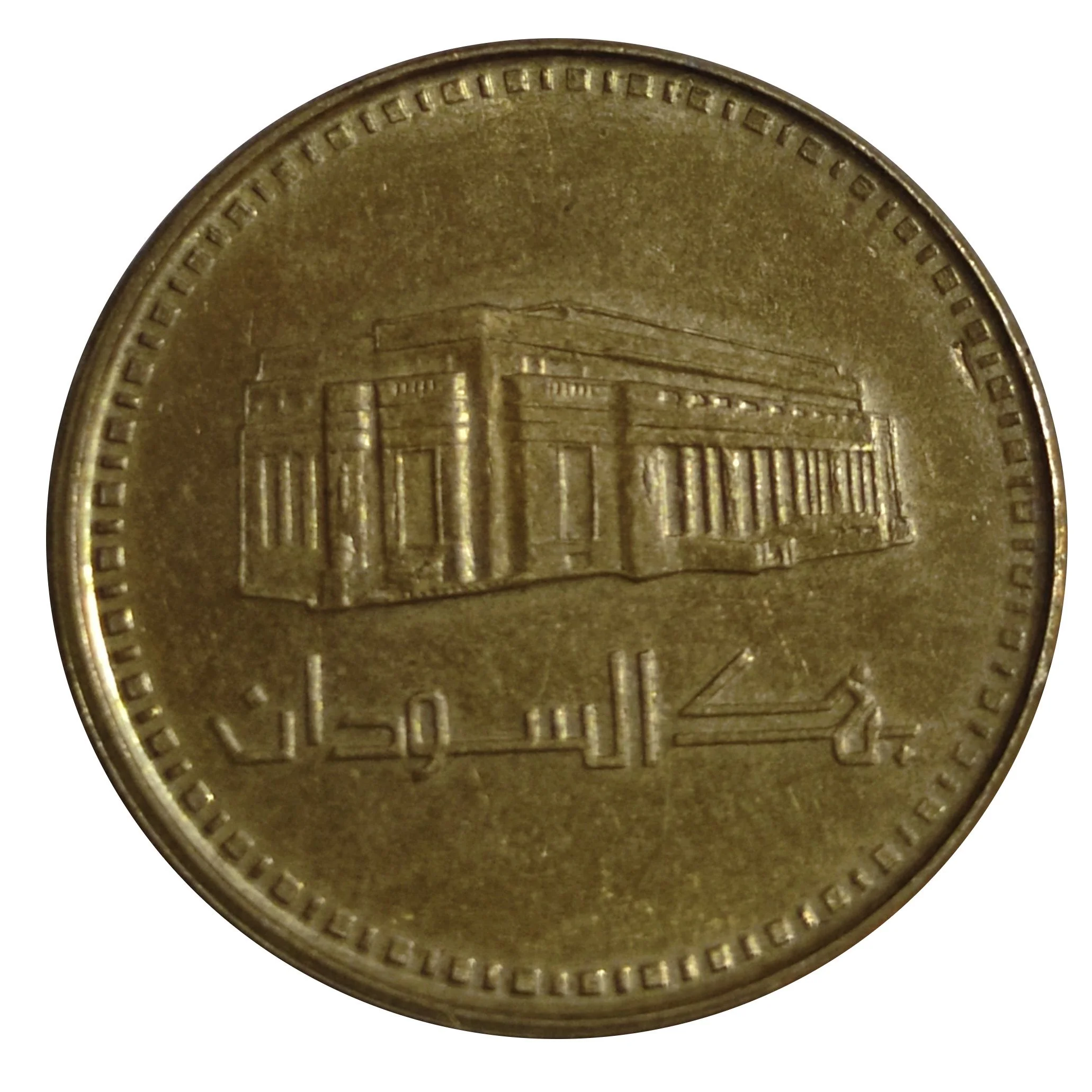
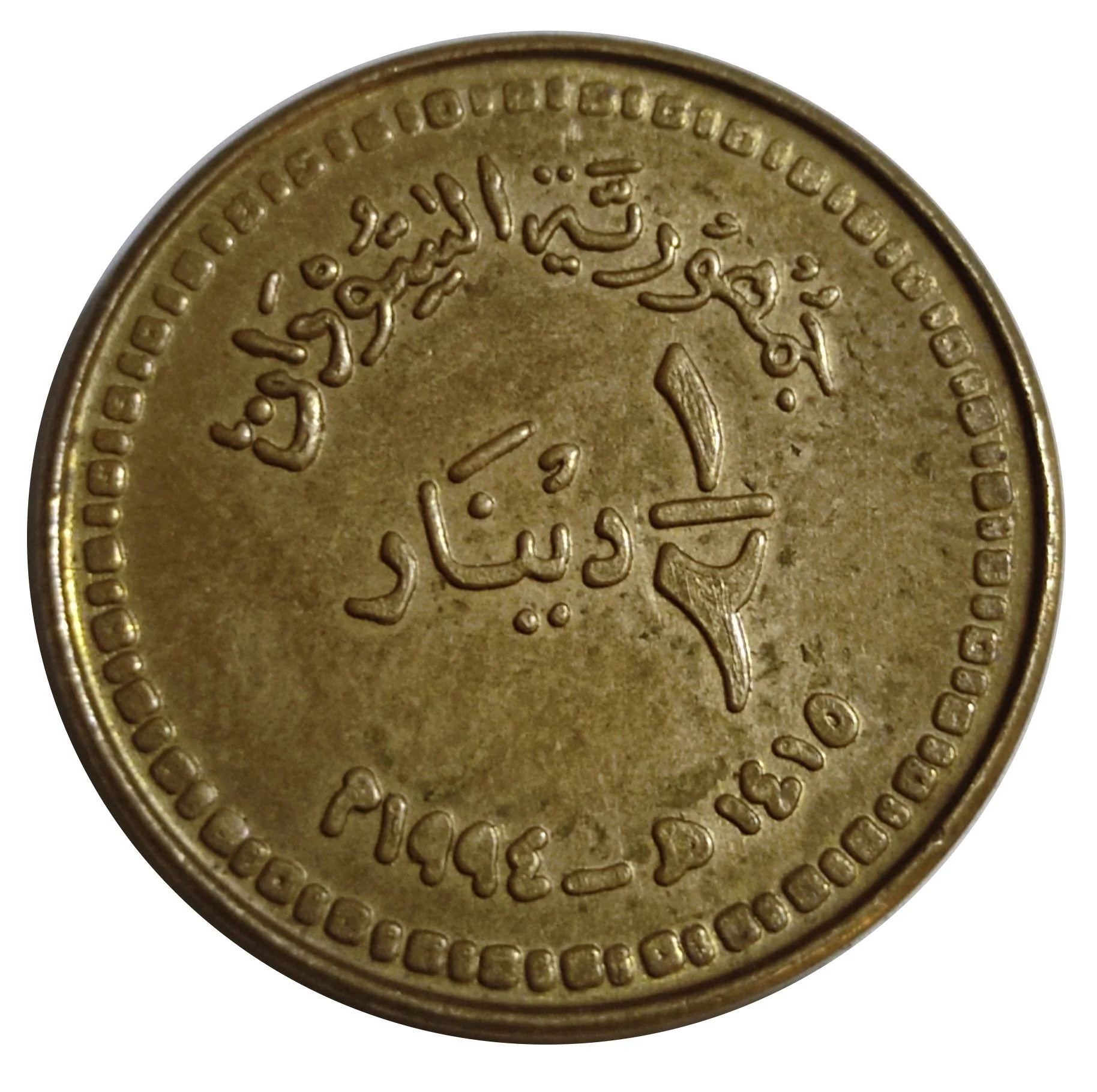
½ dinar – Sudan
Add to wishlist
Sudan
Context
Year: 1994
Islamic (Hijri) Year:: 1415
Issuer: Sudan
Period:
(1956—1969)
Currency:
(1992—2007)
Demonetization: 1 July 2007
Material
References
KM: #
Numista: #80819
Value
Exchange value: ½ SDD
Obverse
Reverse
Edge
Plain
Mintings
| Year | Mint Mark | Mintage | Quality | Collection |
|---|---|---|---|---|
| 1994 | — | — |
Historical background
In 1994, Sudan was in the midst of a severe and protracted economic crisis, exacerbated by decades of civil war, international isolation, and poor macroeconomic management. The national currency, the Sudanese dinar (introduced in 1992 to replace the Sudanese pound at a rate of 1:10), was rapidly losing value. Hyperinflation, estimated to be well over 100% annually, was eroding savings and purchasing power, creating immense hardship for the civilian population. The government's financing of massive military expenditures and subsidies through money printing was the primary driver of this inflationary spiral, as productivity collapsed and the formal economy contracted.
A stark dual-exchange-rate system defined the currency situation. The government maintained an official fixed rate for the dinar, which was vastly overvalued and used for priority imports and government transactions. However, the parallel black market rate was the dominant benchmark for most real economic activity, with the dinar trading at a fraction of its official value. This disparity fueled corruption, as access to foreign currency at the official rate became a lucrative privilege. Severe foreign exchange shortages were chronic, restricting essential imports of medicine, spare parts, and manufactured goods, further crippling the economy.
The currency instability was both a cause and a symptom of Sudan's broader fragmentation. The ongoing war with the Sudan People's Liberation Army (SPLA) in the south consumed over half the national budget, diverting resources from development and destroying infrastructure. International debt arrears and economic sanctions, linked to the government's alleged support for terrorism, cut off access to multilateral financial assistance and normal banking channels. Consequently, by 1994, Sudan's currency situation was characterized by a worthless official currency, a thriving black market, and an economy surviving on subsistence agriculture and informal trade, with no viable stabilization policy in sight.
A stark dual-exchange-rate system defined the currency situation. The government maintained an official fixed rate for the dinar, which was vastly overvalued and used for priority imports and government transactions. However, the parallel black market rate was the dominant benchmark for most real economic activity, with the dinar trading at a fraction of its official value. This disparity fueled corruption, as access to foreign currency at the official rate became a lucrative privilege. Severe foreign exchange shortages were chronic, restricting essential imports of medicine, spare parts, and manufactured goods, further crippling the economy.
The currency instability was both a cause and a symptom of Sudan's broader fragmentation. The ongoing war with the Sudan People's Liberation Army (SPLA) in the south consumed over half the national budget, diverting resources from development and destroying infrastructure. International debt arrears and economic sanctions, linked to the government's alleged support for terrorism, cut off access to multilateral financial assistance and normal banking channels. Consequently, by 1994, Sudan's currency situation was characterized by a worthless official currency, a thriving black market, and an economy surviving on subsistence agriculture and informal trade, with no viable stabilization policy in sight.

✨ Legendary