

5 centimes – France
Add to wishlist
France
Context
Year: 1808
Issuer: France
Ruler: Napoleon I
Currency:
(1795—1959)
Demonetized: Yes
Total mintage: 108,000
Material
References
KM: #
Numista: #8023
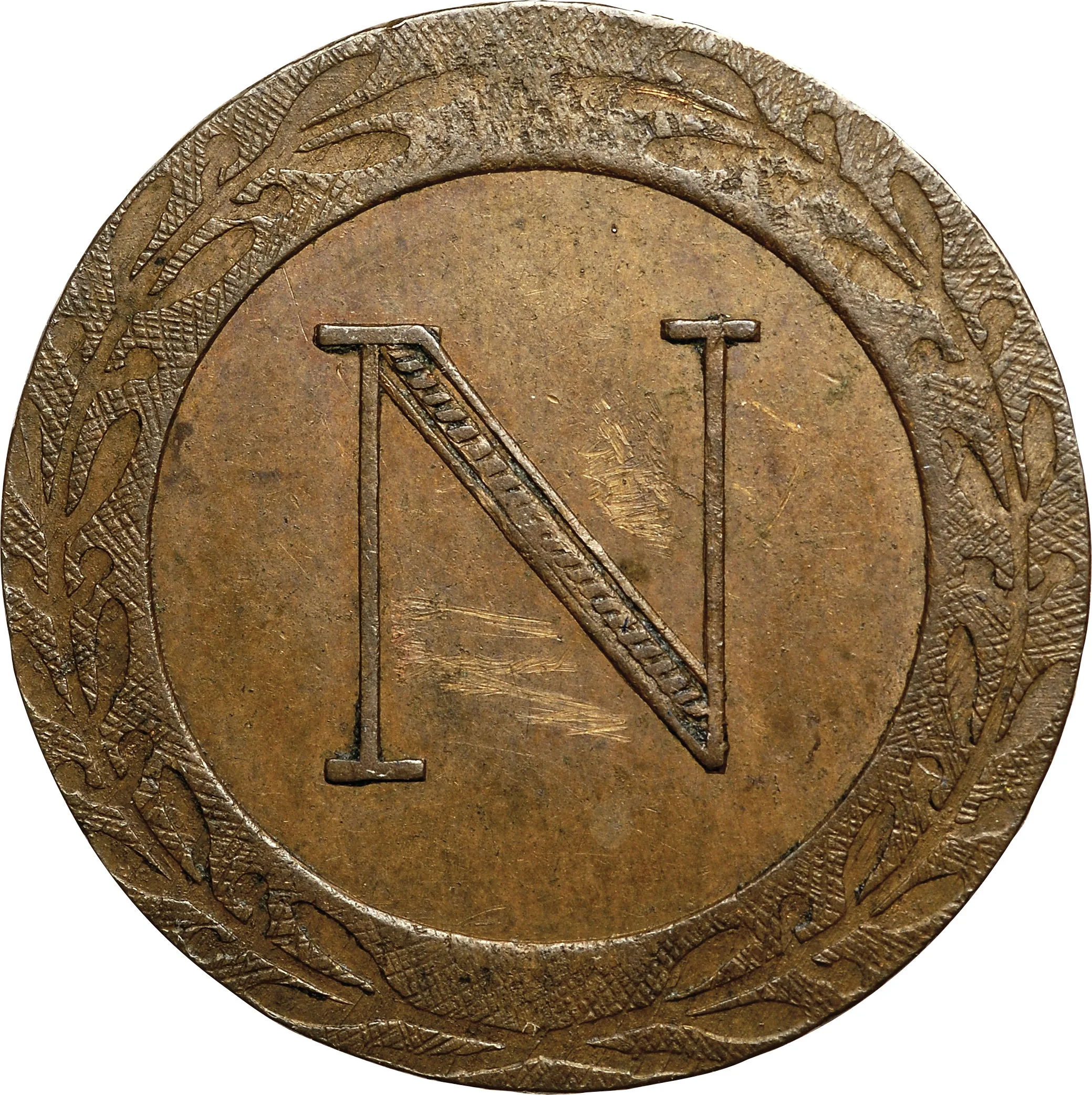
Obverse
Description:
Napoleon's "N" encircled by two crowns on the coin's central field.
Inscription:
N
Script: Latin
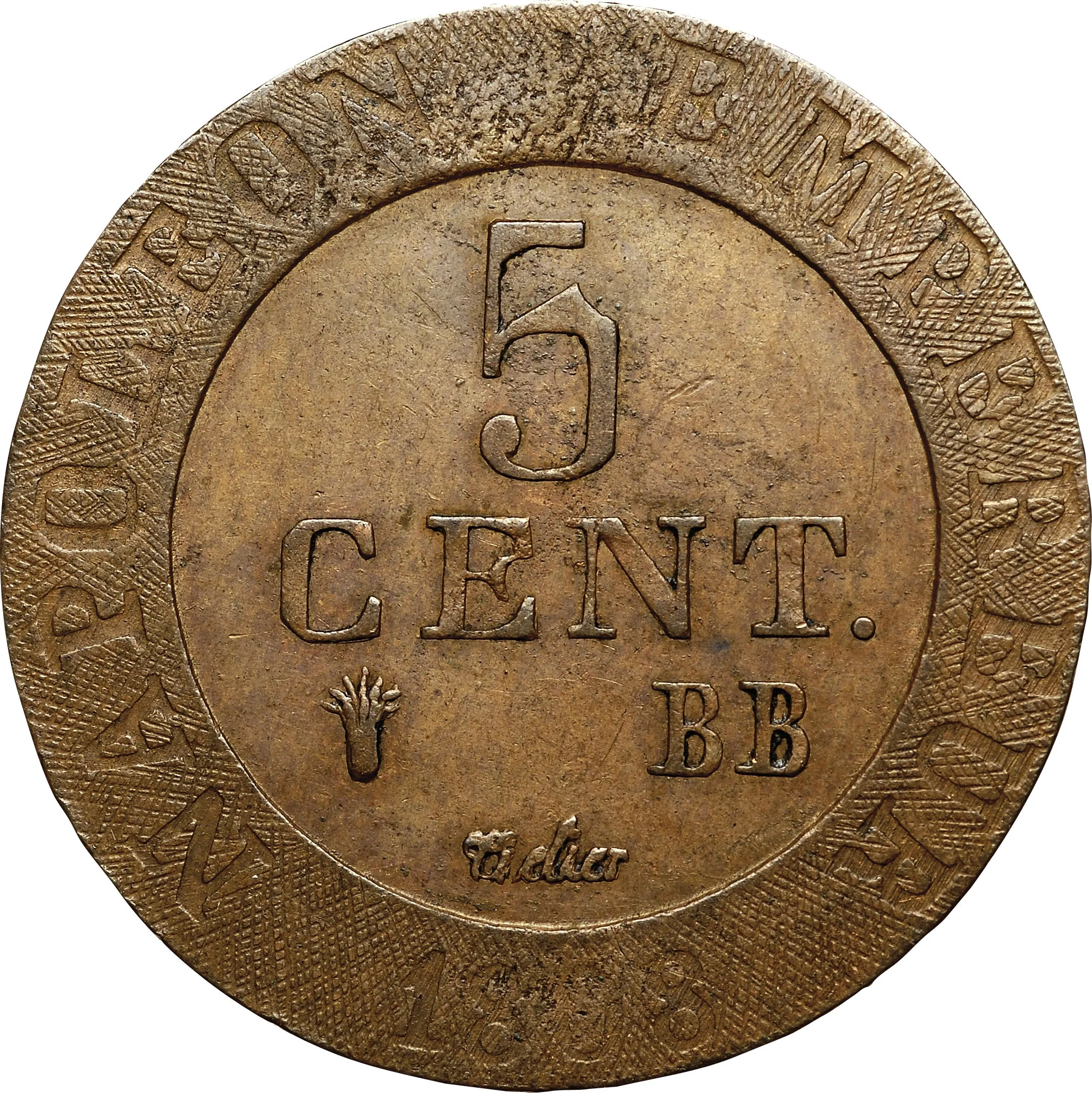
Reverse
Description:
Strasbourg workshop BB.
Signed in cursive Tiolier, engraver Pierre-Joseph Tiolier.
Signed in cursive Tiolier, engraver Pierre-Joseph Tiolier.
Inscription:
NAPOLEON EMPEREUR
5
CENT.
BB
1808
5
CENT.
BB
1808
Script: Latin
Engraver: Pierre-Joseph Tiolier
Edge
Plain
Mints
| Name | Mark |
|---|---|
| Strasbourg | BB |
Mintings
| Year | Mint Mark | Mintage | Quality | Collection |
|---|---|---|---|---|
| 1808 | BB | 108,000 |
Historical background
In 1808, France's currency situation was fundamentally shaped by Napoleon Bonaparte's aggressive efforts to stabilize the nation's finances after the chaos of the Revolution. The cornerstone of this system was the franc germinal, established by the law of 7 Germinal, Year XI (1803). This reform created a bimetallic standard, definitively pegging the franc to both gold and silver at a fixed ratio (1 franc = 5 grams of silver, 90% pure). The new system was disciplined, with the Bank of France (founded in 1800) holding a monopoly on note issuance in Paris, and it successfully restored public confidence in the currency after the hyperinflation of the assignats.
However, the demands of near-constant warfare placed immense strain on this stability. While the franc itself remained strong domestically, financing the Napoleonic Wars led to heavy taxation of conquered territories and the extraction of war indemnities. Furthermore, the Continental System—the blockade against British trade enacted in 1806—disrupted commerce and created shortages of certain goods, indirectly applying economic pressure. The government and the Bank of France sometimes resorted to expanding the money supply to meet military expenses, a practice that sowed the seeds for future inflationary problems, though these were largely masked by 1808.
Consequently, the monetary landscape of France in 1808 was one of controlled duality. Internally, it presented a facade of exceptional strength and hard-currency reliability, a symbol of Napoleonic order and reform. Externally, and in practice, it was a tool of empire, underpinned by the fiscal exploitation of Europe and vulnerable to the escalating costs of military ambition. The system held firm that year, but the structural pressures of war finance would ultimately contribute to its strain in the years following.
However, the demands of near-constant warfare placed immense strain on this stability. While the franc itself remained strong domestically, financing the Napoleonic Wars led to heavy taxation of conquered territories and the extraction of war indemnities. Furthermore, the Continental System—the blockade against British trade enacted in 1806—disrupted commerce and created shortages of certain goods, indirectly applying economic pressure. The government and the Bank of France sometimes resorted to expanding the money supply to meet military expenses, a practice that sowed the seeds for future inflationary problems, though these were largely masked by 1808.
Consequently, the monetary landscape of France in 1808 was one of controlled duality. Internally, it presented a facade of exceptional strength and hard-currency reliability, a symbol of Napoleonic order and reform. Externally, and in practice, it was a tool of empire, underpinned by the fiscal exploitation of Europe and vulnerable to the escalating costs of military ambition. The system held firm that year, but the structural pressures of war finance would ultimately contribute to its strain in the years following.
⭐ Somewhat Rare