

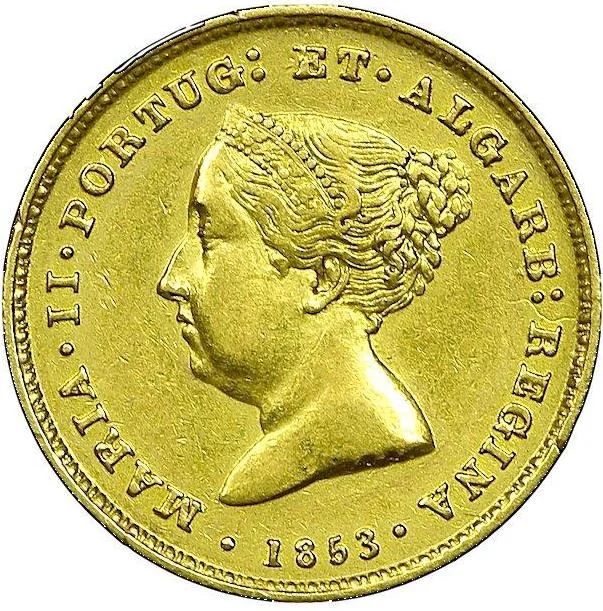
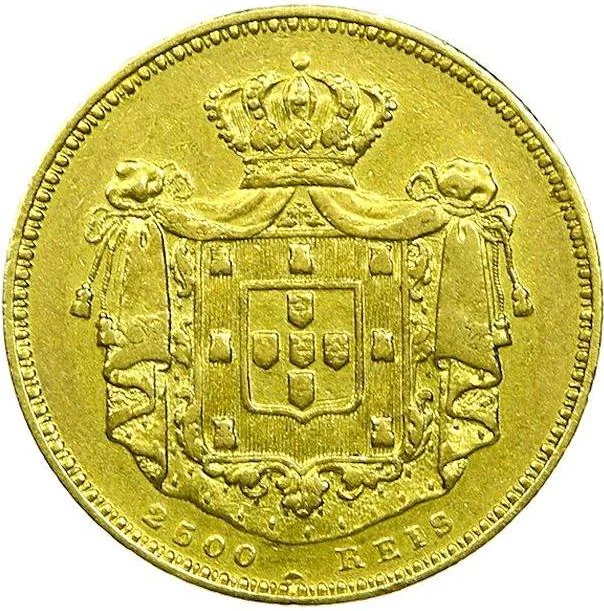
Mints
| Name | Mark |
|---|---|
| Imprensa Nacional - Casa da Moeda | — |
Mintings
| Year | Mint Mark | Mintage | Quality | Collection |
|---|---|---|---|---|
| 1853 | — | 1,010 |
Historical background
In 1853, Portugal’s currency system was in a state of complex transition, caught between its historical past and the pressures of modernization. The official monetary unit was the real (plural: réis), a currency of great antiquity but suffering from severe practical issues. The system was decimal in theory, but in practice, transactions often involved astronomically large numbers due to centuries of inflation and devaluation. Large sums were commonly expressed in mil-réis (1,000 réis) or even conto de réis (1,000,000 réis), making everyday accounting cumbersome.
The circulation was a chaotic mix of domestic and foreign coinage. Domestically, the government struggled with a chronic shortage of small change, leading to widespread use of privately issued tokens and even cut pieces of coins. More significantly, foreign gold coins, particularly British sovereigns and Brazilian peças, circulated freely alongside Portuguese coinage, driven by international trade and a lack of confidence in the domestic system. This de facto bimetallism, without stable fixed ratios, created exchange uncertainties and hindered economic planning.
This unsatisfactory situation was pushing the country toward a major monetary reform. The pressures of industrialization, railway expansion, and increasing integration into the global economy made a stable, modern currency essential. Consequently, 1853 fell within a period of intense study and debate that would culminate, just over a decade later, in the landmark reform of 1854. This reform introduced a new gold standard currency, the escudo, valued at 1,000 réis, finally decimalizing and simplifying the system to meet the needs of a modernizing nation.
The circulation was a chaotic mix of domestic and foreign coinage. Domestically, the government struggled with a chronic shortage of small change, leading to widespread use of privately issued tokens and even cut pieces of coins. More significantly, foreign gold coins, particularly British sovereigns and Brazilian peças, circulated freely alongside Portuguese coinage, driven by international trade and a lack of confidence in the domestic system. This de facto bimetallism, without stable fixed ratios, created exchange uncertainties and hindered economic planning.
This unsatisfactory situation was pushing the country toward a major monetary reform. The pressures of industrialization, railway expansion, and increasing integration into the global economy made a stable, modern currency essential. Consequently, 1853 fell within a period of intense study and debate that would culminate, just over a decade later, in the landmark reform of 1854. This reform introduced a new gold standard currency, the escudo, valued at 1,000 réis, finally decimalizing and simplifying the system to meet the needs of a modernizing nation.
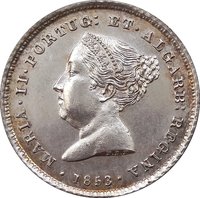
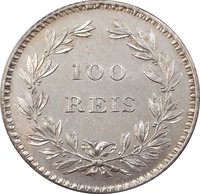
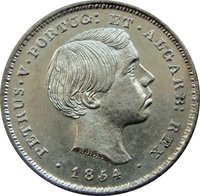
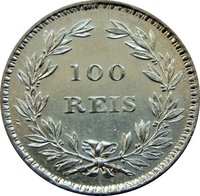
✨ Legendary