

10 Centimes – Morocco
Circulating commemorative coins
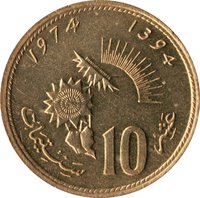
Commemoration: F.A.O.
Morocco
Context
Year: 1974
Islamic (Hijri) Year: 1394
Issuer: Morocco 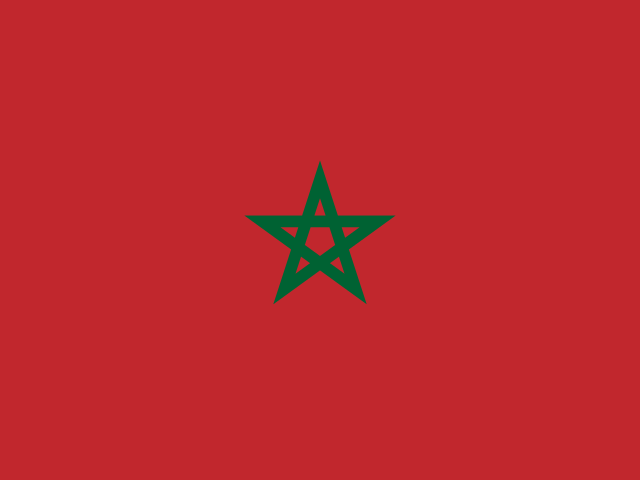
Ruler: Hassan II
Currency:
(since 1960)
Total mintage: 67,970,000
Material
References
Y: #Click to copy to clipboard60
Numista: #801
Value
Exchange value: 0.10 MAD
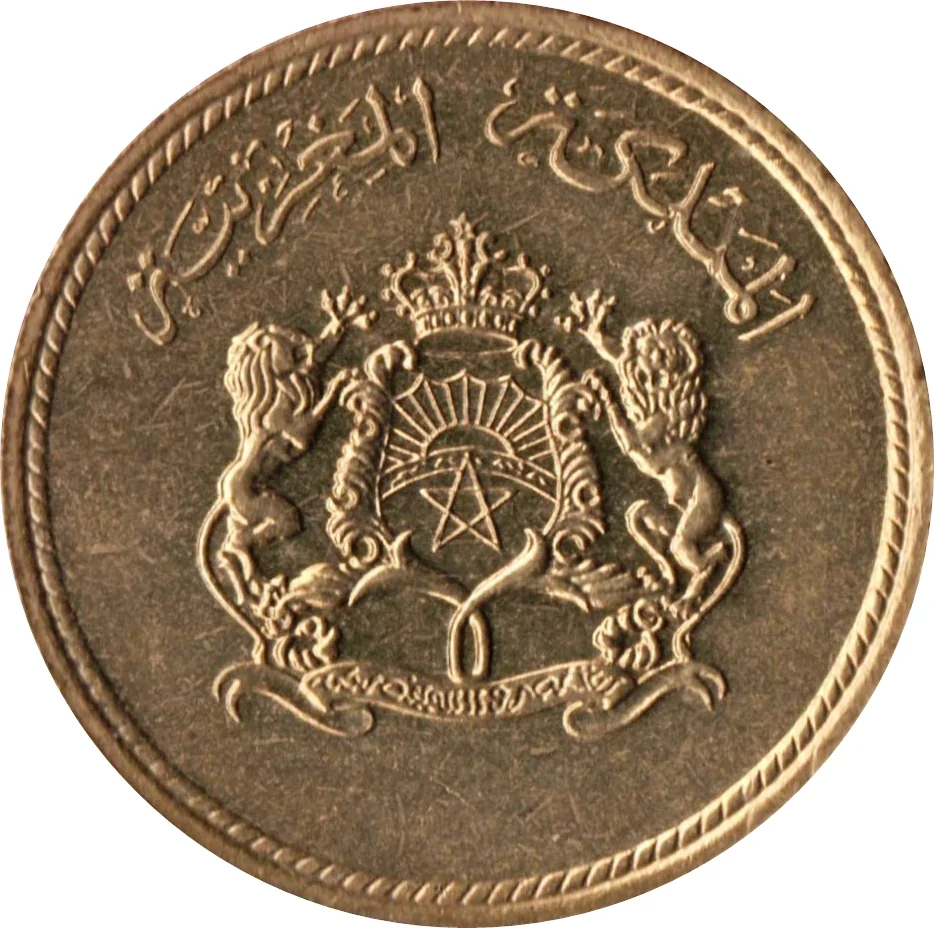
Obverse
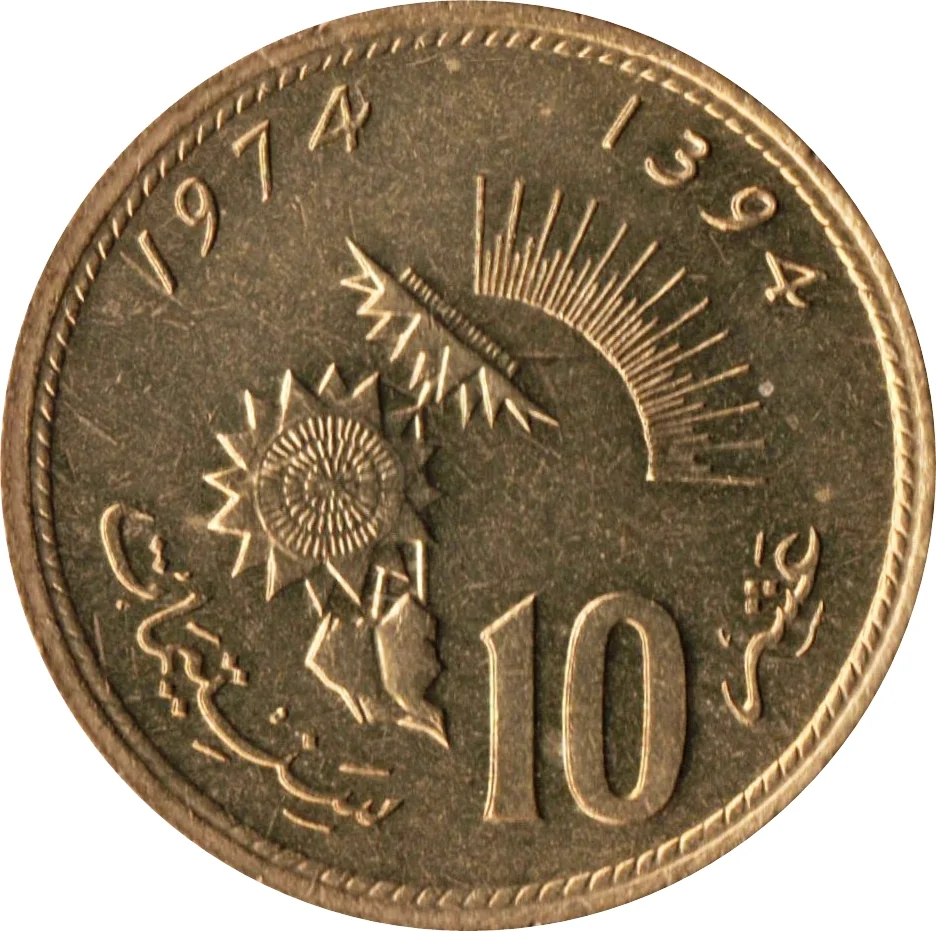
Reverse
Edge
Reeded
Categories
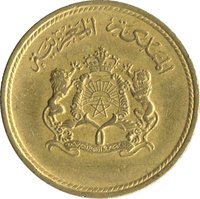
| Symbols> Coat of Arms |
| Organization> FAO |
| Plants> Flower |
Mints
| Name | Mark |
|---|---|
| Royal Mint | — |
Mintings
| Year | Mint Mark | Mintage | Quality | Collection |
|---|---|---|---|---|
| 1974 | — | 67,950,000 | ||
| 1974 | — | 20,000 | Proof |
Historical background
In 1974, Morocco's currency situation was characterized by stability under a fixed exchange rate regime, with the Moroccan dirham (MAD) pegged to the French franc. This peg, a legacy of the French protectorate (1912–1956), firmly anchored Morocco's monetary policy and foreign trade to its former colonial power. The arrangement provided predictability for importers and exporters, particularly as France remained Morocco's dominant economic partner, and helped control inflation. The dirham's value was maintained by the newly established central bank, Bank Al-Maghrib (founded in 1959), which managed foreign exchange reserves to defend the peg.
However, this stability existed within a broader context of economic challenge and transition. The early 1970s were marked by King Hassan II's "Moroccanization" economic policies, which aimed to increase local control over the economy but also created investor uncertainty. More pressingly, the international environment was volatile following the collapse of the Bretton Woods system and the 1973 oil crisis, which triggered global inflation and balance of payments pressures worldwide. While the direct peg to the French franc shielded Morocco from some currency fluctuations, it also meant the country had limited independent monetary tools to address these external shocks.
Consequently, by 1974, pressures were mounting beneath the surface of the fixed rate. The costs of the oil crisis, combined with ambitious state-led industrialization and infrastructure spending, began to strain public finances and foreign reserves. While a full-blown currency crisis would not erupt until later in the decade—leading to an International Monetary Fund (IMF) agreement in 1978—the foundations of the 1974 status quo were being undermined. The year thus represents the closing phase of a relatively stable, but increasingly anachronistic, monetary order before a period of necessary economic adjustment and eventual liberalization.
However, this stability existed within a broader context of economic challenge and transition. The early 1970s were marked by King Hassan II's "Moroccanization" economic policies, which aimed to increase local control over the economy but also created investor uncertainty. More pressingly, the international environment was volatile following the collapse of the Bretton Woods system and the 1973 oil crisis, which triggered global inflation and balance of payments pressures worldwide. While the direct peg to the French franc shielded Morocco from some currency fluctuations, it also meant the country had limited independent monetary tools to address these external shocks.
Consequently, by 1974, pressures were mounting beneath the surface of the fixed rate. The costs of the oil crisis, combined with ambitious state-led industrialization and infrastructure spending, began to strain public finances and foreign reserves. While a full-blown currency crisis would not erupt until later in the decade—leading to an International Monetary Fund (IMF) agreement in 1978—the foundations of the 1974 status quo were being undermined. The year thus represents the closing phase of a relatively stable, but increasingly anachronistic, monetary order before a period of necessary economic adjustment and eventual liberalization.
🌱 Very Common