

1 Cent – United Province of Canada
Canada
Context
Years: 1858–1859
Country: Canada 
Issuer: United Province of Canada
Ruler: Victoria
Currency:
(1841—1858)
Total mintage: 10,421,000
Material
References
KM: #Click to copy to clipboard1
Numista: #7984
Obverse
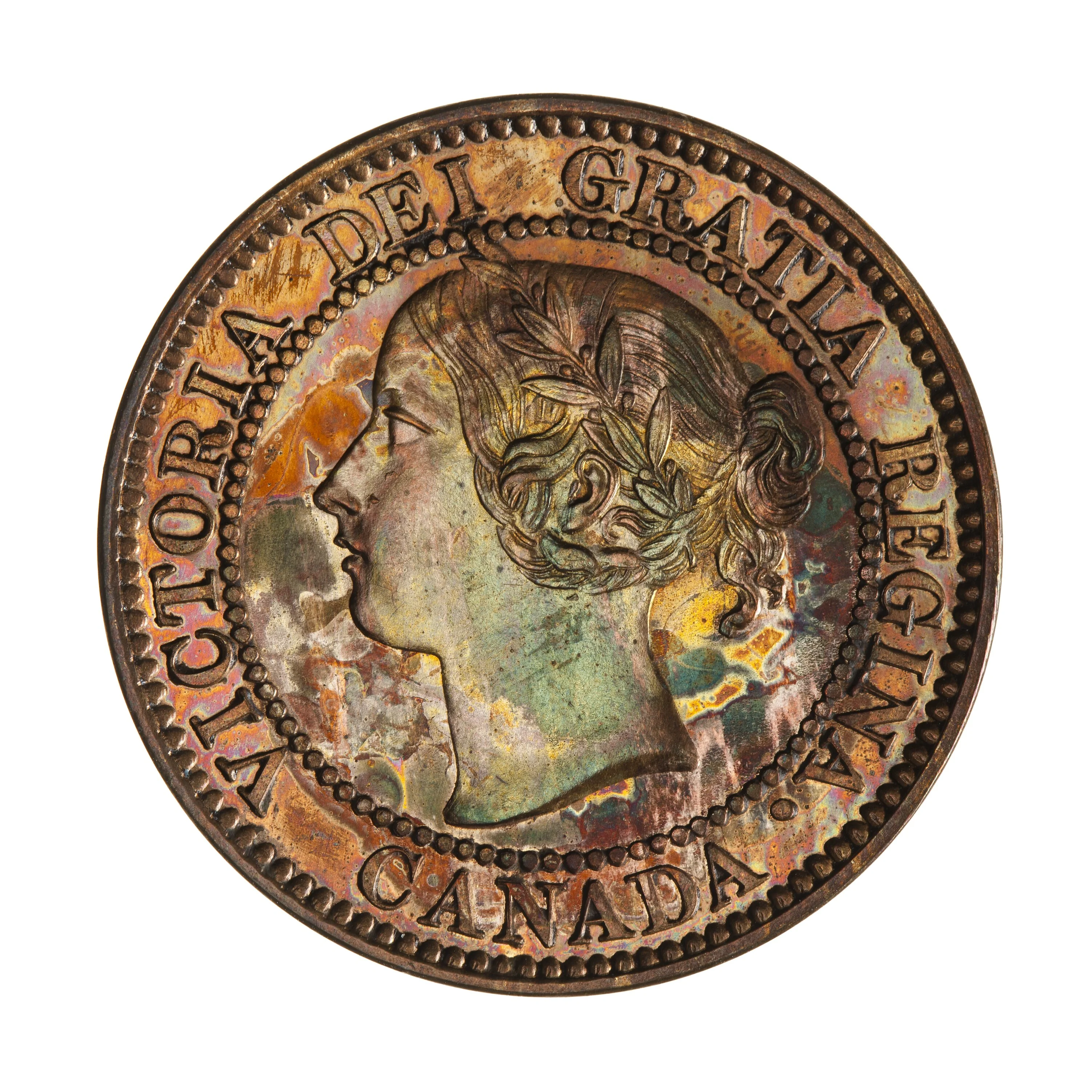
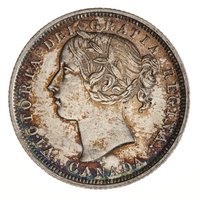
Description:
Young Queen Victoria facing left, wearing a laurel wreath.
Inscription:
VICTORIA DEI GRATIA REGINA.
CANADA
CANADA
Translation:
Victoria by the Grace of God Queen.
Canada
Canada
Script: Latin
Language: Latin
Engraver: Leonard Charles Wyon
Reverse
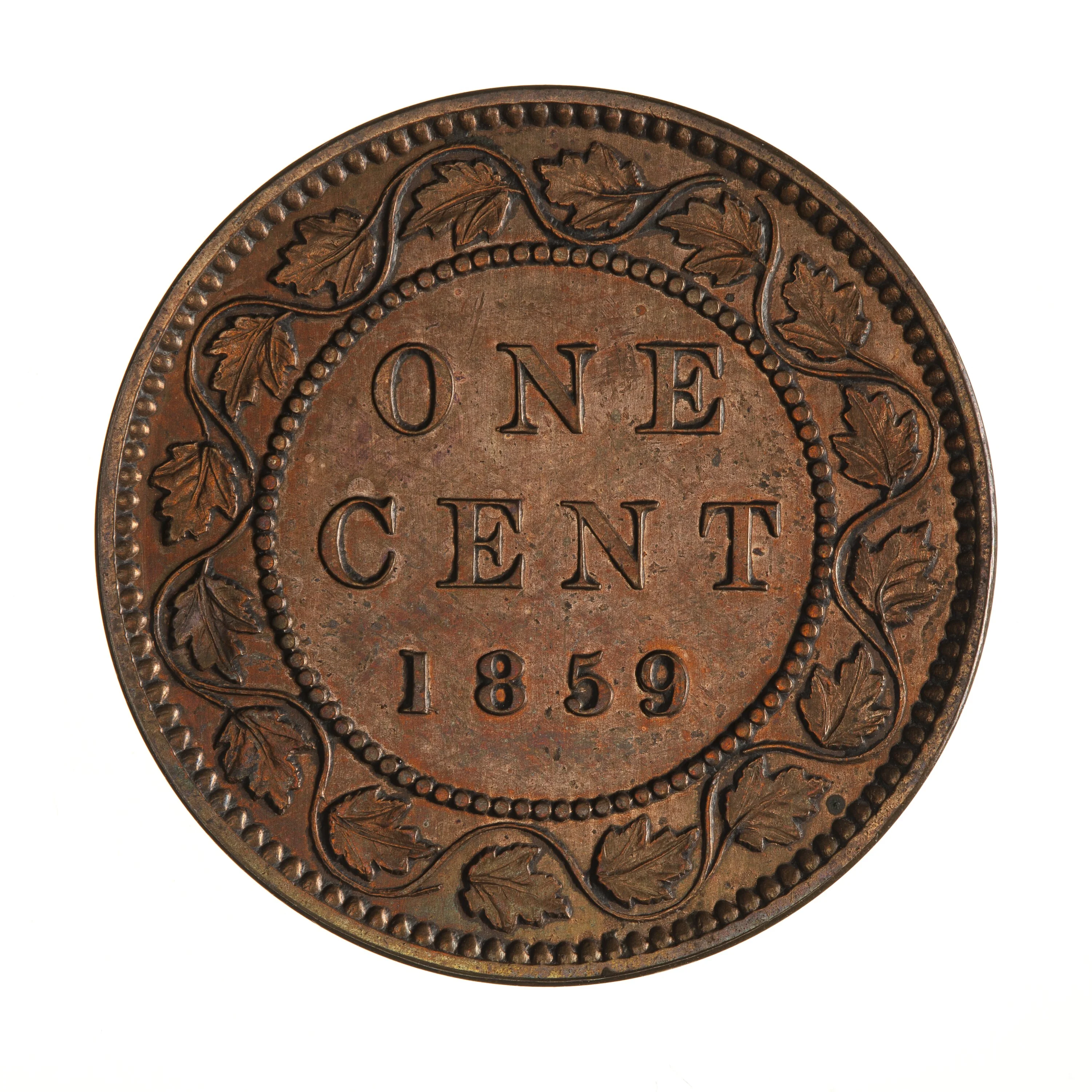
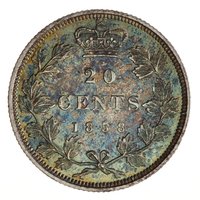
Description:
Face value and date within a wreath of vine branches and sixteen maple leaves.
Inscription:
ONE
CENT
1858
CENT
1858
Script: Latin
Engraver: Leonard Charles Wyon
Edge
Plain
Mints
| Name | Mark |
|---|---|
| Royal Mint (Tower Hill) | — |
Mintings
| Year | Mint Mark | Mintage | Quality | Collection |
|---|---|---|---|---|
| 1858 | — | 421,000 | ||
| 1859 | — | 10,000,000 |
Historical background
In 1858, the United Province of Canada was mired in a complex and debilitating currency crisis. The colony lacked a unified, government-issued paper currency, leading to a chaotic mix of circulating mediums. These included a confusing array of British gold sovereigns, silver coins from various nations, and, most problematically, a flood of often-depreciated paper notes issued by private banks, municipal governments, and even commercial entities. This "free banking" system created widespread uncertainty, as the value of a banknote depended entirely on the perceived solvency of the issuing institution, which could vary dramatically from town to town.
The root of the crisis was twofold: a chronic shortage of British sterling coin (the official standard) and the absence of a central monetary authority. To facilitate larger transactions, the province had adopted a curious unit of account called the "currency pound" or "Halifax rating," which valued the British gold pound sterling at £1.4s.4d local currency. This awkward system, combined with the unreliable paper, severely hampered trade and economic development. The situation reached a breaking point in 1857 when major bank failures in the United States and Britain triggered a transatlantic financial panic, causing a loss of confidence and leading to the suspension of specie payments (the redemption of notes for gold) by many Canadian banks.
The crisis of 1858 acted as the catalyst for decisive action. Later that same year, the provincial government passed the Provincial Notes Act, a landmark piece of legislation. This act authorized the government to issue its own official paper money, backed by gold, to replace the chaotic private issues. While not fully implemented until 1866, this law laid the direct groundwork for a centralized currency and marked the beginning of the end for the unstable, multi-issuer system. It was a critical step toward the financial integration and stability that would be essential for the Confederation of Canada just nine years later.
The root of the crisis was twofold: a chronic shortage of British sterling coin (the official standard) and the absence of a central monetary authority. To facilitate larger transactions, the province had adopted a curious unit of account called the "currency pound" or "Halifax rating," which valued the British gold pound sterling at £1.4s.4d local currency. This awkward system, combined with the unreliable paper, severely hampered trade and economic development. The situation reached a breaking point in 1857 when major bank failures in the United States and Britain triggered a transatlantic financial panic, causing a loss of confidence and leading to the suspension of specie payments (the redemption of notes for gold) by many Canadian banks.
The crisis of 1858 acted as the catalyst for decisive action. Later that same year, the provincial government passed the Provincial Notes Act, a landmark piece of legislation. This act authorized the government to issue its own official paper money, backed by gold, to replace the chaotic private issues. While not fully implemented until 1866, this law laid the direct groundwork for a centralized currency and marked the beginning of the end for the unstable, multi-issuer system. It was a critical step toward the financial integration and stability that would be essential for the Confederation of Canada just nine years later.
🌱 Very Common