

50 Gulden (Liberation) – Netherlands
Non-circulating coins
Commemoration: 50th Anniversary of Liberation
Netherlands
Context
Year: 1995
Issuer: Netherlands 
Ruler: Beatrix
Currency:
(1817—2001)
Demonetized: Yes
Total mintage: 703,500
Material
References
KM: #Click to copy to clipboard219
Numista: #7970
Value
Exchange value: 50 NLG
Bullion value: $65.66
Inflation-adjusted value: 97.37 NLG
Obverse
Description:
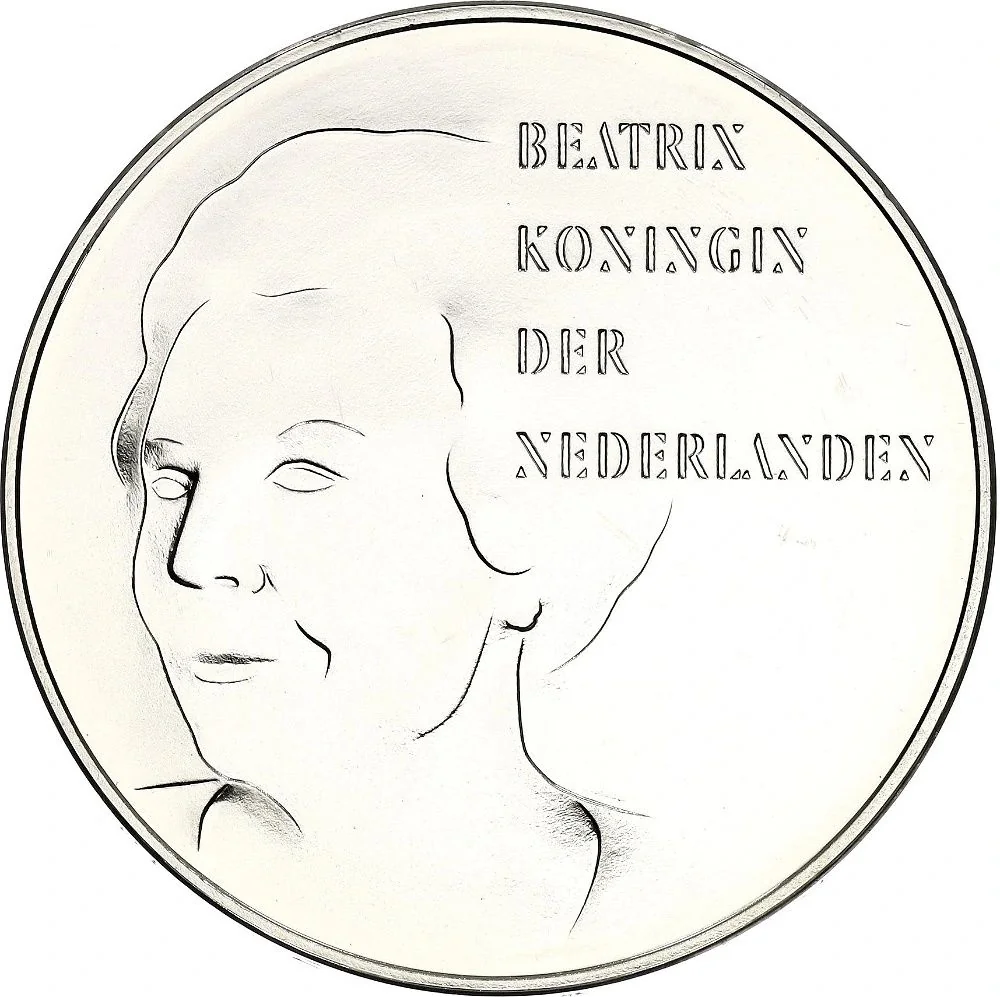
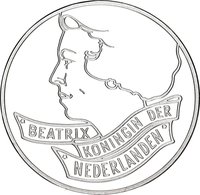
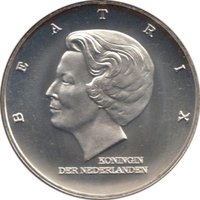
Queen Beatrix facing left.
Inscription:
BEATRIX KONINGIN DER NEDERLANDEN
Translation:
Beatrix Queen of the Netherlands
Script: Latin
Language: Dutch
Engraver: Gerard Unger
Reverse
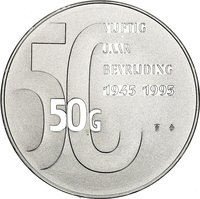
Description:
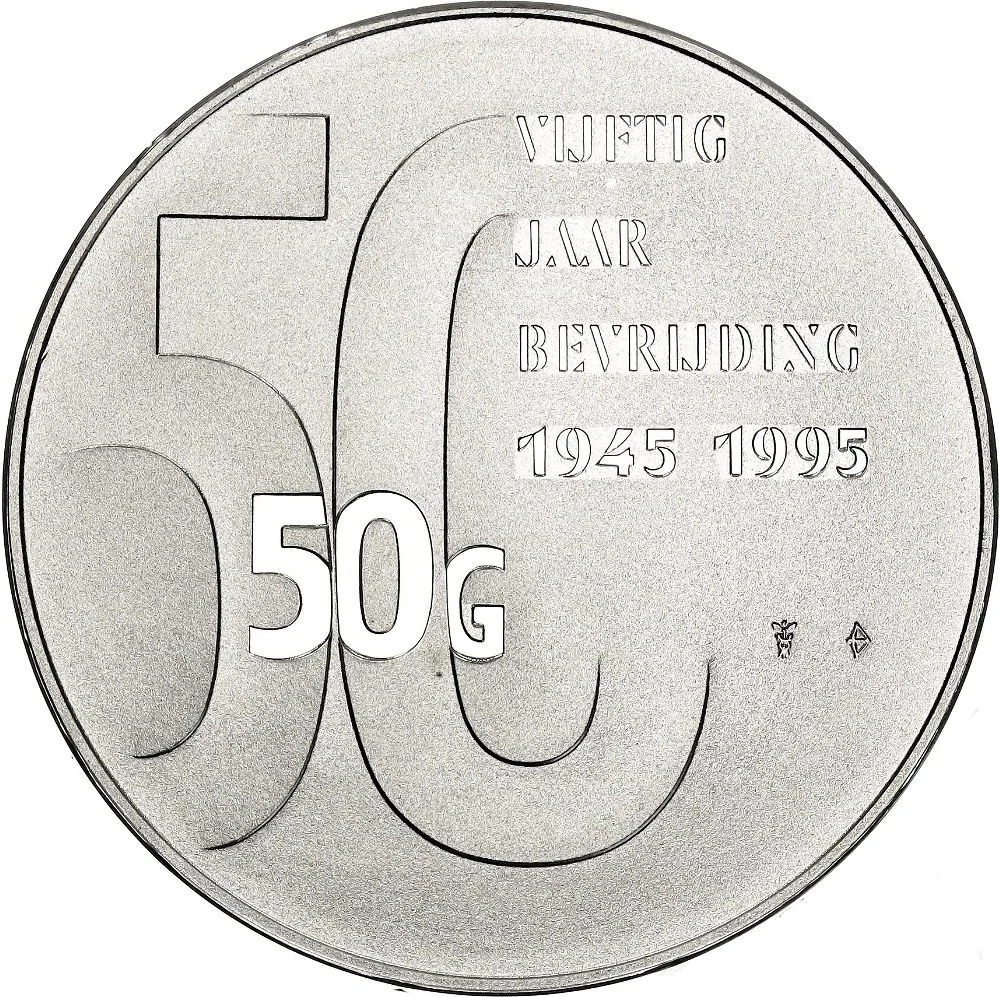
Large number with key
Inscription:
VIJFTIG JAAR BEVRIJDING
1945 1995
50G
1945 1995
50G
Translation:
FIFTY YEARS LIBERATION
1945 1995
50G
1945 1995
50G
Script: Latin
Language: Dutch
Engraver: Gerard Unger
Edge
Mints
| Name | Mark |
|---|---|
| Royal Dutch Mint | — |
Mintings
| Year | Mint Mark | Mintage | Quality | Collection |
|---|---|---|---|---|
| 1995 | — | 677,500 | ||
| 1995 | — | 26,000 | Proof |
Historical background
In 1995, the Netherlands operated within the framework of the European Monetary System (EMS), with the Dutch guilder as its national currency. The guilder was a cornerstone of the system, renowned for its stability and strength, often informally pegged even more tightly to the Deutsche Mark than the official EMS exchange rate mechanism required. This policy, known as the "hard guilder" policy, was a deliberate choice by De Nederlandsche Bank (the Dutch central bank) to import the anti-inflation credibility of the Bundesbank, ensuring low inflation and fostering a stable economic environment for trade and investment.
The year was significant as it fell within the final phase of the Maastricht Treaty's convergence criteria, which set the conditions for adopting a single European currency. The Netherlands comfortably met these strict criteria on inflation, interest rates, and public finances, positioning itself as a core and enthusiastic proponent of Economic and Monetary Union (EMU). Domestically, there was broad political and public consensus in favor of this move, seeing it as a logical extension of the country's deep economic integration with Germany and its foundational role in the European project.
Thus, the currency situation in 1995 was one of stable transition. While the trusted guilder remained in daily use, its future was clearly mapped out. Economic policy was squarely focused on preparing for the irrevocable locking of exchange rates and the eventual introduction of the euro, which would occur on January 1, 1999, for electronic transactions, with euro banknotes and coins following in 2002. The guilder's final years were therefore marked not by crisis, but by meticulous planning for its replacement within the new European framework.
The year was significant as it fell within the final phase of the Maastricht Treaty's convergence criteria, which set the conditions for adopting a single European currency. The Netherlands comfortably met these strict criteria on inflation, interest rates, and public finances, positioning itself as a core and enthusiastic proponent of Economic and Monetary Union (EMU). Domestically, there was broad political and public consensus in favor of this move, seeing it as a logical extension of the country's deep economic integration with Germany and its foundational role in the European project.
Thus, the currency situation in 1995 was one of stable transition. While the trusted guilder remained in daily use, its future was clearly mapped out. Economic policy was squarely focused on preparing for the irrevocable locking of exchange rates and the eventual introduction of the euro, which would occur on January 1, 1999, for electronic transactions, with euro banknotes and coins following in 2002. The guilder's final years were therefore marked not by crisis, but by meticulous planning for its replacement within the new European framework.
🌟 Uncommon