

10 Dollars – Cook Islands
Non-circulating coins
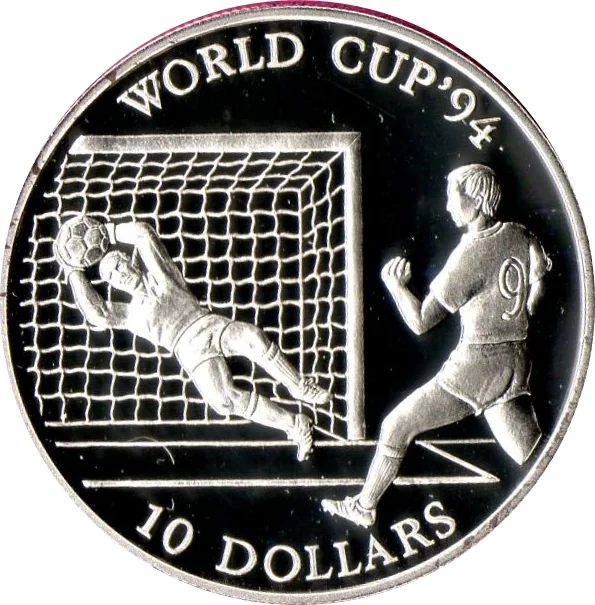
Commemoration: World Cup '94
Context
Material
Diameter: 38.6 mm
Weight: 31.47 g
Silver weight: 29.11 g
Shape: Round
Composition: 92.5% Silver
Standard: Silver ounce
Magnetic: No
Technique: Milled
Alignment: Medal alignment
flip
References
KM: #Click to copy to clipboard254
Numista: #79618
Value
Exchange value: 10 NZD = $5.99
Bullion value: $84.44
Obverse
Description:
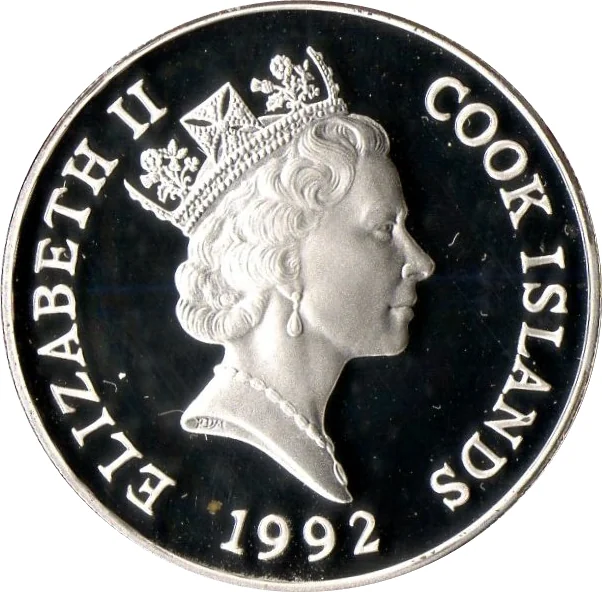
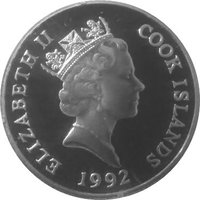
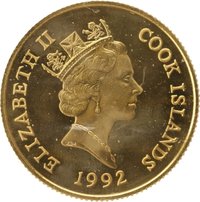
Queen Elizabeth II right-facing effigy, date beneath.
Inscription:
ELIZABETH II COOK ISLANDS
RDM
1992
RDM
1992
Translation:
ELIZABETH II COOK ISLANDS
RDM
1992
RDM
1992
Script: Latin
Language: English
Engraver: Raphael David Maklouf
Reverse
Edge
Reeded
Mintings
| Year | Mint Mark | Mintage | Quality | Collection |
|---|---|---|---|---|
| 1992 | — | — | Proof |
Historical background
In 1992, the currency situation in the Cook Islands was one of transition and national assertion, following a severe economic crisis. The country, a self-governing state in free association with New Zealand, had traditionally used the New Zealand dollar as its official currency. However, a devastating debt crisis in the mid-1990s, triggered by excessive government borrowing and a collapse in the tourism sector, led to a comprehensive restructuring program brokered with New Zealand and other creditors. This period set the immediate stage for a significant monetary change.
As part of broader efforts to stabilize the economy and assert national identity, the Cook Islands government introduced its own decimal currency, the Cook Islands dollar, in 1992. It was pegged at par with the New Zealand dollar, meaning the two currencies were intended to have equal value and could both circulate legally within the islands. The new currency featured distinct banknotes and coins, including the now-famous triangular $3 coin and notes depicting local culture and history, symbolizing a step towards greater economic self-definition.
However, this move was largely symbolic in terms of monetary policy. The New Zealand dollar remained the de facto anchor and preferred currency for major transactions and foreign trade, with the Cook Islands dollar serving primarily for domestic circulation. The 1992 introduction was therefore less about economic independence from New Zealand and more about national prestige and providing a tangible symbol of sovereignty, while remaining securely within the financial orbit of its larger partner to ensure stability during a fragile recovery period.
As part of broader efforts to stabilize the economy and assert national identity, the Cook Islands government introduced its own decimal currency, the Cook Islands dollar, in 1992. It was pegged at par with the New Zealand dollar, meaning the two currencies were intended to have equal value and could both circulate legally within the islands. The new currency featured distinct banknotes and coins, including the now-famous triangular $3 coin and notes depicting local culture and history, symbolizing a step towards greater economic self-definition.
However, this move was largely symbolic in terms of monetary policy. The New Zealand dollar remained the de facto anchor and preferred currency for major transactions and foreign trade, with the Cook Islands dollar serving primarily for domestic circulation. The 1992 introduction was therefore less about economic independence from New Zealand and more about national prestige and providing a tangible symbol of sovereignty, while remaining securely within the financial orbit of its larger partner to ensure stability during a fragile recovery period.
💎 Extremely Rare