

5000 lire (University of Pisa) – Italy
Add to wishlist
Non-circulating coins
Commemoration: 650th Anniversary of the foundation of the University of Pisa - Second issue
Italy
Context
Material
References
KM: #
Numista: #11387
Value
Exchange value: 5000 ITL
Bullion value: $37.51
Inflation-adjusted value: 10385.65 ITL
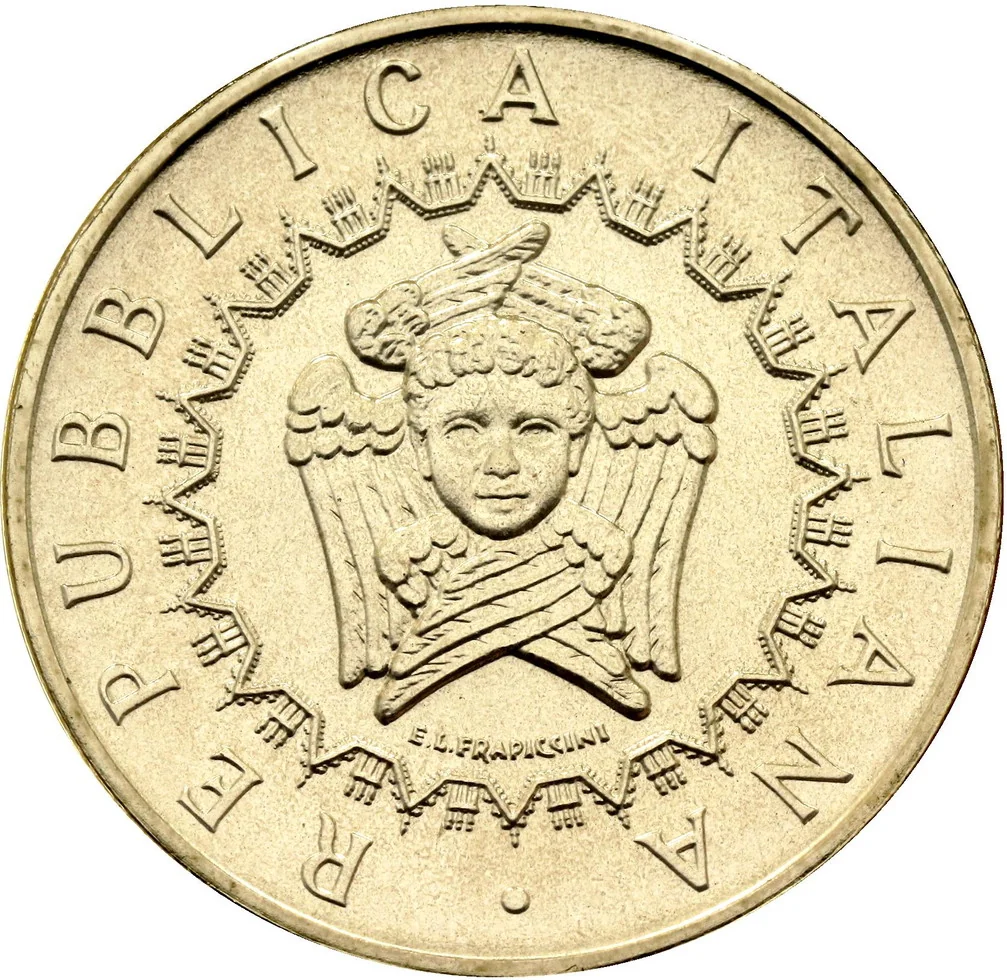
Obverse
Description:
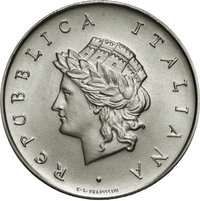
A cherub, emblem of the University of Pisa, above the author's name encircled in a Baptistery motif.
Inscription:
REPUBBLICA ITALIANA
E. L. FRAPICCINI
E. L. FRAPICCINI
Translation:
Italian Republic
E. L. Frapiccini
E. L. Frapiccini
Script: Latin
Language: Italian
Engraver: Ettore Lorenzo Frapiccini
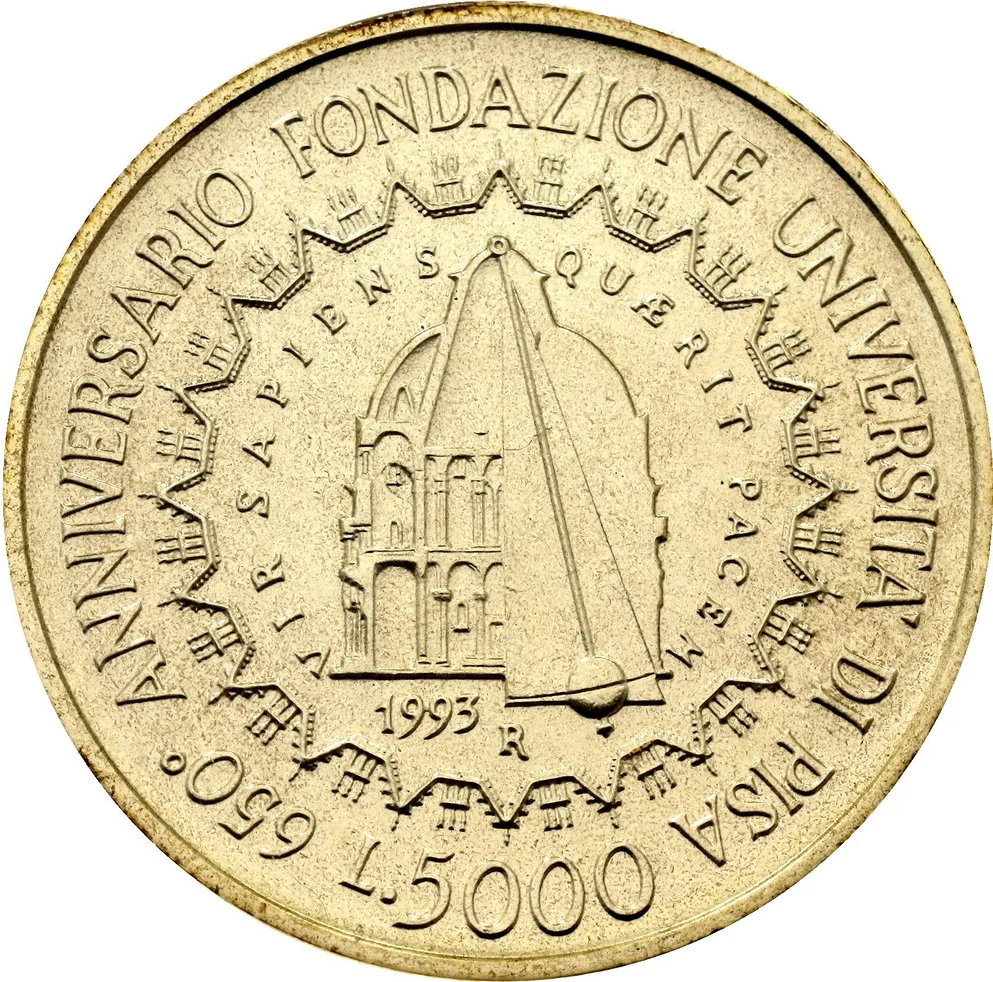
Reverse
Description:
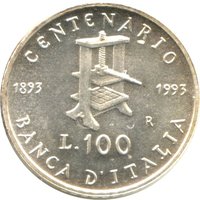
Inside a decorative circle, the Pisa Baptistery’s profile: its left half shows a section of the building, its right half a pendulum. Below are the date and mint mark. A Latin legend surrounds the Baptistery inside the circle; the value is in a second legend outside.
Inscription:
650° ANNIVERSARIO FONDAZIONE UNIVERSITÀ DI PISA | L. 5000
^^^^^^^^^^^^^^^^^^^^^^^^^^^^
"VIR SAPIENS QVÆRIT PACEM"
1993 R
^^^^^^^^^^^^^^^^^^^^^^^^^^^^
"VIR SAPIENS QVÆRIT PACEM"
1993 R
Translation:
650th Anniversary of the Founding of the University of Pisa | L. 5000
A wise man seeks peace.
1993 R
A wise man seeks peace.
1993 R
Script: Latin
Language: Latin
Engraver: Ettore Lorenzo Frapiccini
Edge
"R.I." repeated 3 times between stars and laurel
Legend:
R.I. | R.I. | R.I. |
Categories
| Education |
| Building> Religious building |
Mints
| Name | Mark |
|---|---|
| Rome | R |
Historical background
In 1993, Italy was in the midst of a profound currency crisis, deeply intertwined with a wider political and economic emergency. The lira had been forced out of the European Exchange Rate Mechanism (ERM) in September 1992, following intense speculative attacks. This devaluation, while boosting export competitiveness, was a severe blow to Italy's prestige and its commitment to European monetary integration. The crisis exposed fundamental weaknesses: a massive public debt exceeding 100% of GDP, chronic budget deficits, and a loss of international confidence in the government's ability to manage its finances.
The situation demanded drastic action. The technocratic government of Prime Minister Carlo Azeglio Ciampi, appointed in April 1993, pursued aggressive fiscal consolidation and structural reforms. Key measures included a significant manovra finanziaria (budget package) aimed at reducing the deficit through spending cuts and tax increases, alongside the initiation of privatization programs for state-owned industries. These painful reforms were essential not only for domestic stability but also to realign Italy with the Maastricht Treaty criteria, which set the conditions for joining a future single European currency.
By the end of 1993, the immediate pressure on the lira had eased, but the year was a definitive turning point. The currency crisis had catalyzed a fundamental shift in Italian economic policy, moving away from high inflation and devaluation as tools for competitiveness toward a new paradigm of fiscal discipline and European alignment. This painful transition laid the necessary, albeit difficult, groundwork for Italy's eventual qualification for the Euro a decade later, marking the end of the lira's turbulent final chapter.
The situation demanded drastic action. The technocratic government of Prime Minister Carlo Azeglio Ciampi, appointed in April 1993, pursued aggressive fiscal consolidation and structural reforms. Key measures included a significant manovra finanziaria (budget package) aimed at reducing the deficit through spending cuts and tax increases, alongside the initiation of privatization programs for state-owned industries. These painful reforms were essential not only for domestic stability but also to realign Italy with the Maastricht Treaty criteria, which set the conditions for joining a future single European currency.
By the end of 1993, the immediate pressure on the lira had eased, but the year was a definitive turning point. The currency crisis had catalyzed a fundamental shift in Italian economic policy, moving away from high inflation and devaluation as tools for competitiveness toward a new paradigm of fiscal discipline and European alignment. This painful transition laid the necessary, albeit difficult, groundwork for Italy's eventual qualification for the Euro a decade later, marking the end of the lira's turbulent final chapter.
⭐ Somewhat Rare