

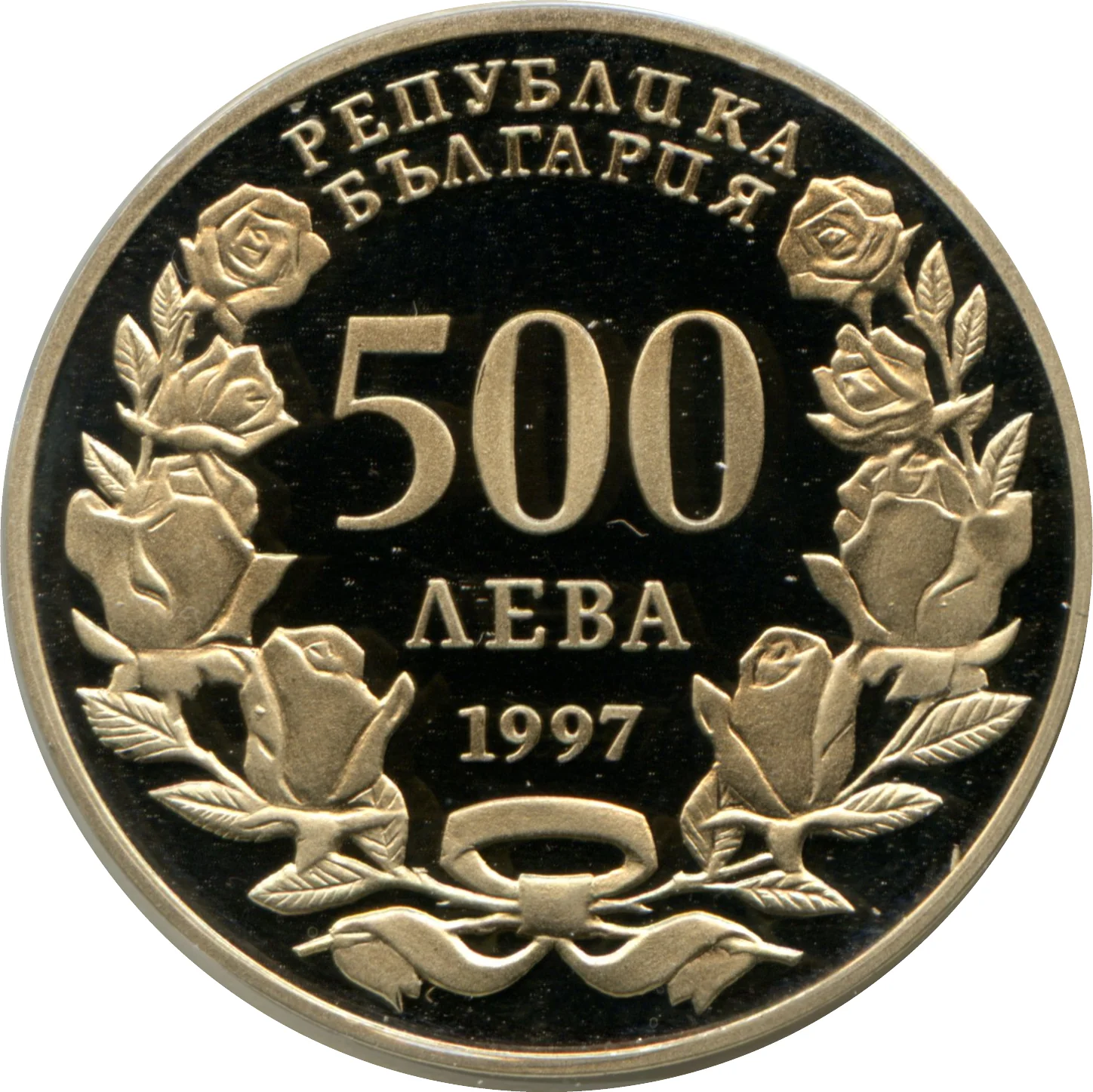
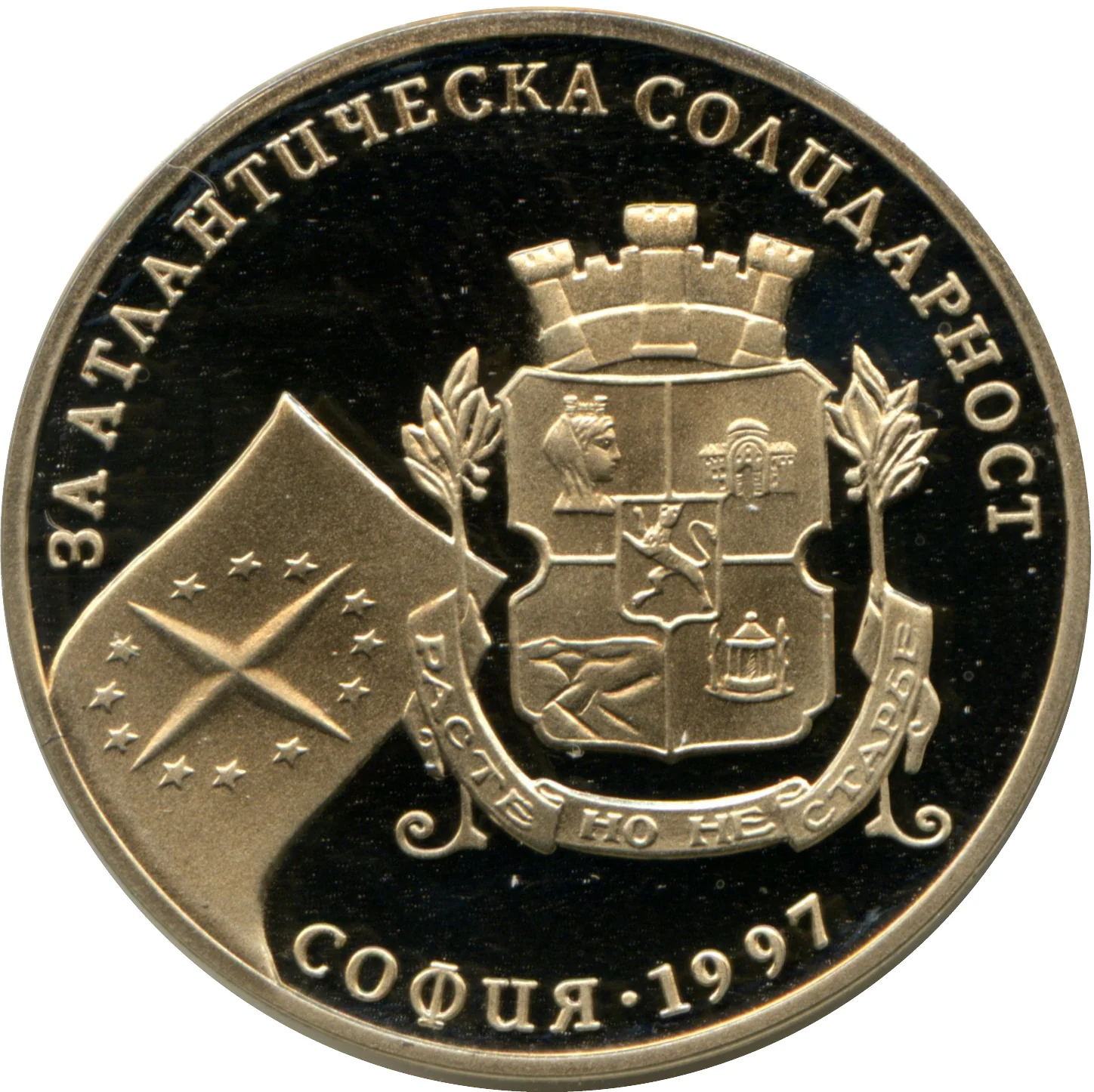
500 leva – Bulgaria
Add to wishlist
Non-circulating coins
Commemoration: NATO
Bulgaria
Context
Material
Diameter: 30 mm
Weight: 11 g
Shape: Round
Composition: Copper-nickel
Technique: Milled
Alignment: Medal alignment
flip
References
KM: #
Numista: #7883
Value
Exchange value: 500 BGL
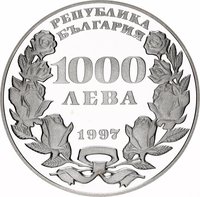
Obverse
Reverse
Edge
Plain
Mints
| Name | Mark |
|---|---|
| Bulgarian Mint | — |
Mintings
| Year | Mint Mark | Mintage | Quality | Collection |
|---|---|---|---|---|
| 1997 | — | 30,000 | Proof |
Historical background
In early 1997, Bulgaria faced a profound economic and political crisis, marking the nadir of its post-communist transition. Hyperinflation, reaching an annual rate of over 300% in February, rendered the national currency, the lev, virtually worthless and wiped out savings. This was the culmination of years of economic mismanagement, including a failed experiment with partial reforms, a massive banking crisis, and a collapse in industrial output. The situation triggered widespread social unrest, with protesters storming parliament, and brought the country to the brink of becoming a failed state.
The crisis forced a radical change in economic policy. In July 1997, a new government, with strong international backing, introduced a Currency Board Arrangement (CBA). This strict monetary regime pegged the Bulgarian lev at a fixed rate of 1,000 old leva (later 1 new lev) to the German Deutsche Mark, effectively outsourcing monetary policy. The central bank was prohibited from financing the government's deficit, and the lev could only be issued if fully backed by foreign reserves. This drastic measure was designed to halt inflation instantly, restore confidence in the currency, and impose fiscal discipline.
The implementation of the Currency Board was a decisive turning point. Inflation plummeted to single digits within months, and economic stability was restored. The CBA provided the crucial foundation for subsequent reforms, including privatization and structural adjustments, setting Bulgaria on a path toward eventual European Union accession. While not without its critics regarding long-term flexibility, the Currency Board is widely credited with ending the hyperinflationary chaos of 1997 and establishing the macroeconomic stability that defined the next two decades.
The crisis forced a radical change in economic policy. In July 1997, a new government, with strong international backing, introduced a Currency Board Arrangement (CBA). This strict monetary regime pegged the Bulgarian lev at a fixed rate of 1,000 old leva (later 1 new lev) to the German Deutsche Mark, effectively outsourcing monetary policy. The central bank was prohibited from financing the government's deficit, and the lev could only be issued if fully backed by foreign reserves. This drastic measure was designed to halt inflation instantly, restore confidence in the currency, and impose fiscal discipline.
The implementation of the Currency Board was a decisive turning point. Inflation plummeted to single digits within months, and economic stability was restored. The CBA provided the crucial foundation for subsequent reforms, including privatization and structural adjustments, setting Bulgaria on a path toward eventual European Union accession. While not without its critics regarding long-term flexibility, the Currency Board is widely credited with ending the hyperinflationary chaos of 1997 and establishing the macroeconomic stability that defined the next two decades.
🌱 Fairly Common