

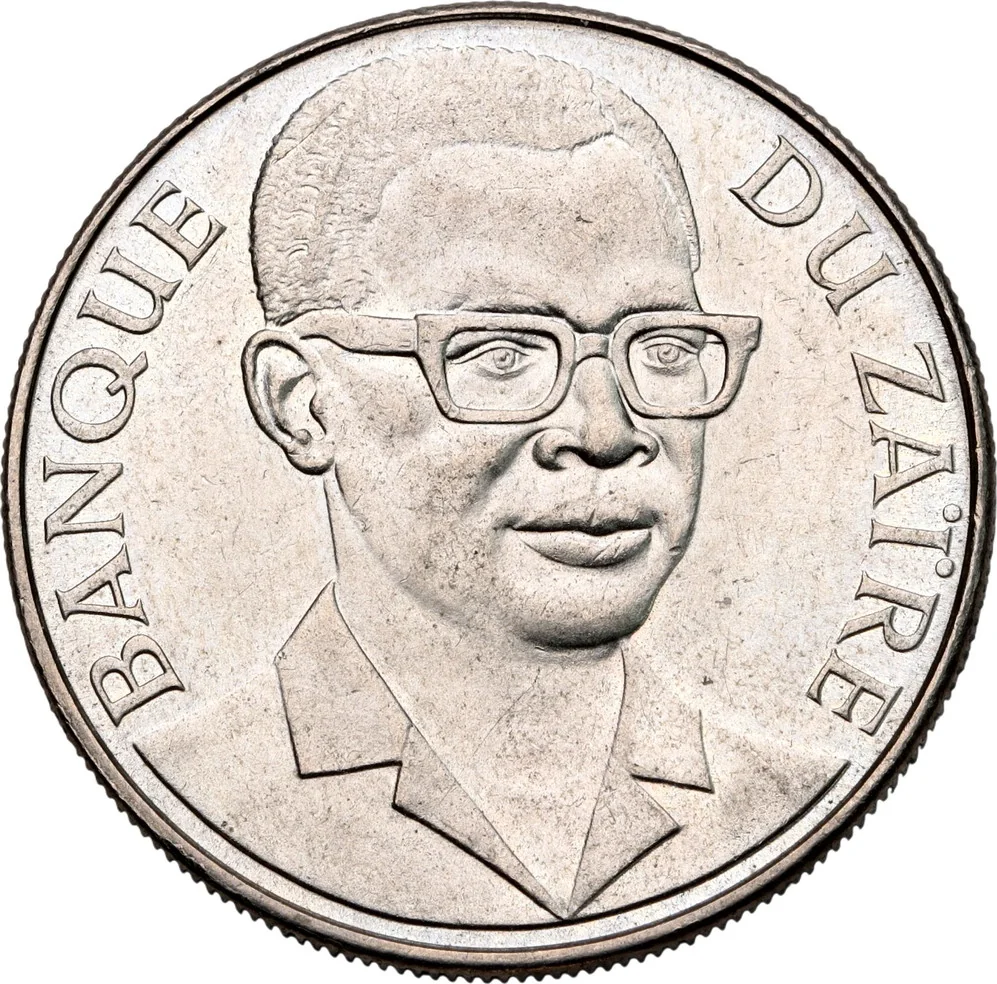
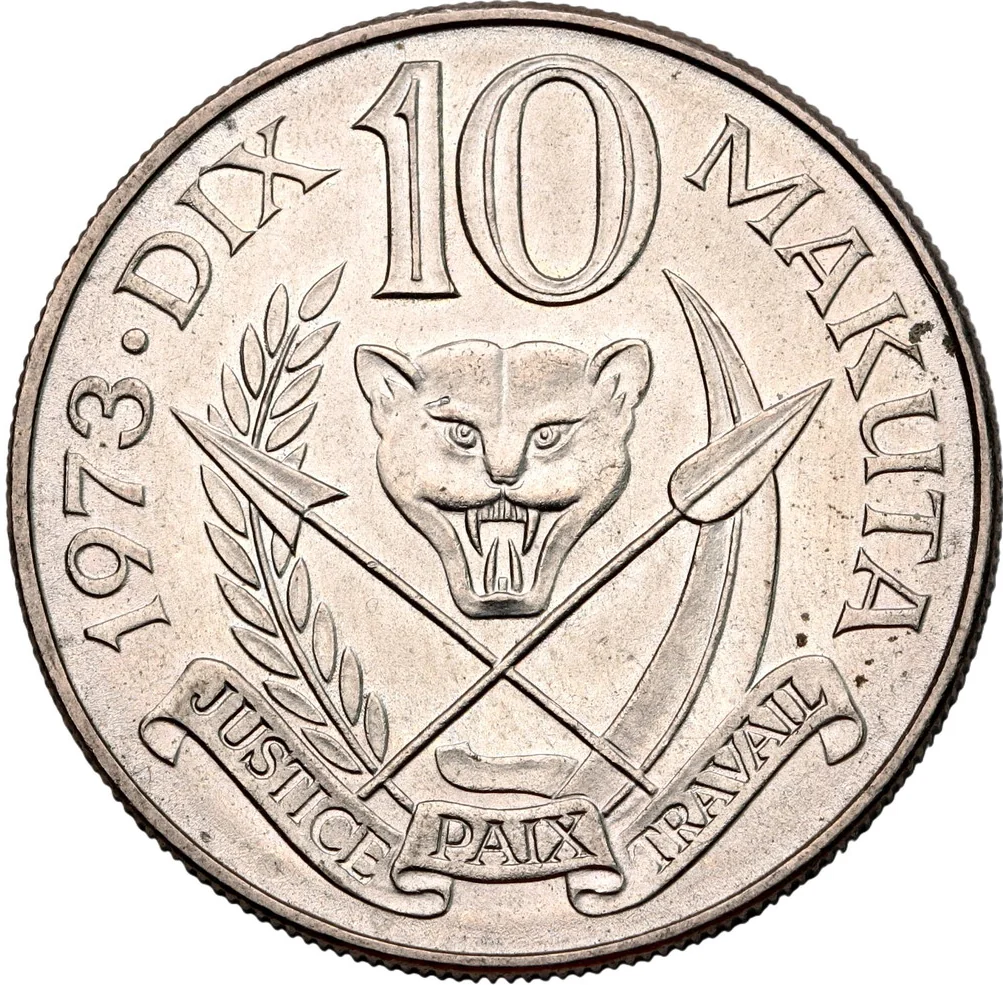
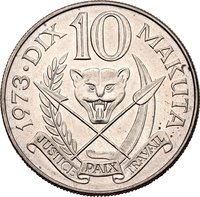
10 Makuta – Zaire
Democratic Republic of the Congo
Context
Years: 1973–1978
Country: Democratic Republic of the Congo 
Issuer: Zaire
Issuing organization: Bank of Zaire
Period:
(1971—1997)
Currency:
(1967—1993)
Demonetized: Yes
Total mintage: 20,000,000
Material
References
KM: #Click to copy to clipboard7
Numista: #7870
Value
Exchange value: 0.10 ZRZ
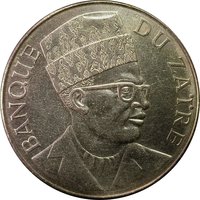
Obverse
Reverse
Edge
Reeded
Categories
| Person> Politician |
| Symbols> Coat of Arms |
Mints
| Name | Mark |
|---|---|
| A. Werner & Söhne | — |
Mintings
| Year | Mint Mark | Mintage | Quality | Collection |
|---|---|---|---|---|
| 1973 | — | 10,000,000 | ||
| 1975 | — | 5,000,000 | ||
| 1976 | — | 5,000,000 | ||
| 1978 | — | — |
Historical background
In 1973, the currency situation in Zaire (now the Democratic Republic of the Congo) was characterized by severe instability and a crisis of confidence, directly stemming from the economic policies of President Mobutu Sese Seko. Following his seizure of power in 1965, Mobutu had initially achieved some economic stability, but by the early 1970s, his regime's rampant corruption, excessive spending on prestige projects, and the disastrous nationalization of foreign-owned businesses (a policy called "Zairianization") led to capital flight, collapsing production, and a massive budget deficit. The government resorted to printing money to finance its operations, triggering rampant inflation that severely eroded the value of the Zairian zaire.
This economic mismanagement culminated in a major currency devaluation in November 1973, a move enforced by the International Monetary Fund (IMF) as a condition for financial assistance. The zaire was devalued by 40% against the US dollar, a drastic measure intended to correct the gross overvaluation of the currency and curb the thriving black market for foreign exchange. However, the devaluation was deeply unpopular and exacerbated the hardship for ordinary citizens, as the cost of imported goods soared and real incomes plummeted.
Ultimately, the 1973 devaluation failed to address the root causes of Zaire's economic woes. The structural problems of corruption, mismanagement, and the collapse of the formal export sector persisted. Instead of restoring stability, the move marked the beginning of a prolonged period of hyperinflation and currency collapse that would plague the country for decades, with the zaire requiring repeated redenominations and eventually becoming virtually worthless. The currency crisis of 1973 was a clear symptom of the deeper decay of the Mobutu state.
This economic mismanagement culminated in a major currency devaluation in November 1973, a move enforced by the International Monetary Fund (IMF) as a condition for financial assistance. The zaire was devalued by 40% against the US dollar, a drastic measure intended to correct the gross overvaluation of the currency and curb the thriving black market for foreign exchange. However, the devaluation was deeply unpopular and exacerbated the hardship for ordinary citizens, as the cost of imported goods soared and real incomes plummeted.
Ultimately, the 1973 devaluation failed to address the root causes of Zaire's economic woes. The structural problems of corruption, mismanagement, and the collapse of the formal export sector persisted. Instead of restoring stability, the move marked the beginning of a prolonged period of hyperinflation and currency collapse that would plague the country for decades, with the zaire requiring repeated redenominations and eventually becoming virtually worthless. The currency crisis of 1973 was a clear symptom of the deeper decay of the Mobutu state.
🌱 Common