

5 bahts (King's Mother) – Thailand
Add to wishlist
Circulating commemorative coins
Commemoration: 80th Anniversary of the King's Mother
Thailand
Context
Year: 1980
Thai Year:: 2523
Issuer: Thailand
Ruler: Bhumibol Adulyadej
Currency:
(since 1897)
Demonetized: Yes
Total mintage: 3,504,000
Material
References
Y: #
Numista: #11366
Value
Exchange value: 5 THB
Obverse
Description:
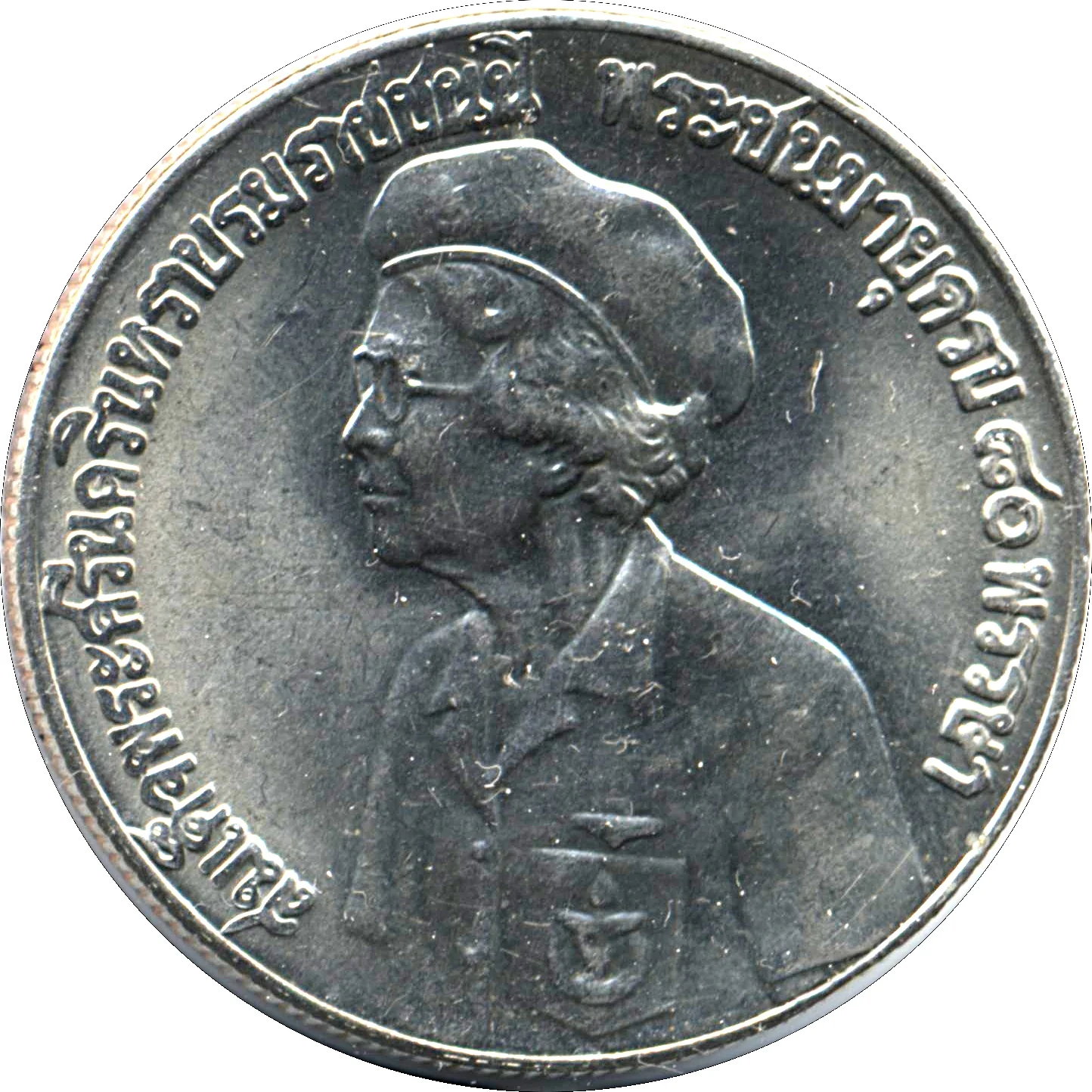
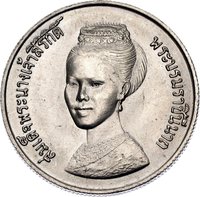
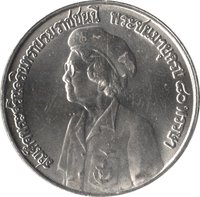
Queen mother's bust
Inscription:
สมเด็จพระศรีนครินทราบรมราชชนนี
พระชนมายุครบ ๘๐ พรรษา
พระชนมายุครบ ๘๐ พรรษา
Translation:
Her Majesty the Queen Mother on the occasion of her 80th birthday.
Language: Thai
Reverse
Inscription:
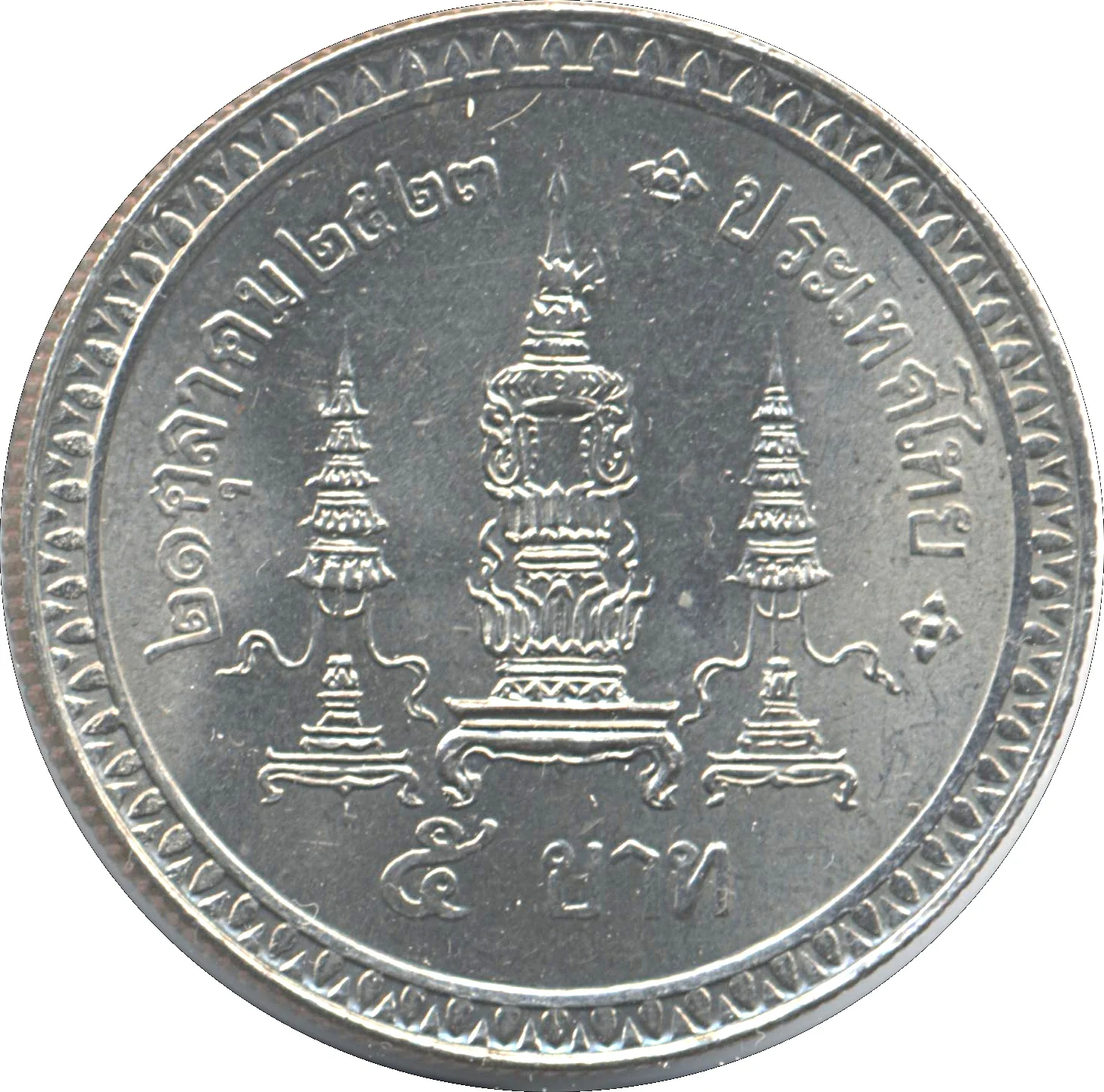
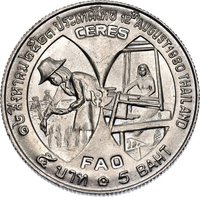
๒๑ ตุลาคม ๒๕๒๓ ประเทศไทย
๕ บาท
๕ บาท
Translation:
21 October 1980 Thailand
5 Baht
5 Baht
Language: Thai
Edge
Mintings
| Year | Mint Mark | Mintage | Quality | Collection |
|---|---|---|---|---|
| 1980 | — | 3,504,000 |
Historical background
In the early 1980s, Thailand's currency situation was characterized by a managed peg to the US dollar, operating within a controlled exchange rate regime set by the Bank of Thailand. The Thai baht was formally pegged to a basket of currencies, though the US dollar was the dominant component, with its value kept stable to foster trade and investment confidence. This period followed the economic turbulence of the 1970s, including oil price shocks, and the peg was seen as a crucial anchor for macroeconomic stability as the country pursued an export-oriented industrialization strategy.
However, this stability came under significant pressure. The early 1980s witnessed a global recession, high international interest rates, and a strong US dollar, which made Thailand's exports less competitive and increased the cost of servicing its foreign debt. Concurrently, the country faced a substantial current account deficit and dwindling foreign exchange reserves. These external imbalances were exacerbated by domestic fiscal pressures, including large public sector deficits from infrastructure spending and subsidies, leading to growing doubts about the sustainability of the baht's fixed parity.
This culminated in a major currency crisis in 1981 and again in 1984. In November 1984, after defending the peg at great cost to its reserves, the Bank of Thailand was forced to implement a decisive 14.8% devaluation of the baht, moving the rate from 23 baht to 27 baht per US dollar. This pivotal move, while initially disruptive, marked a critical shift towards a more flexible and realistic managed float system. It ultimately restored external competitiveness, setting the stage for Thailand's subsequent export-led economic boom in the late 1980s and early 1990s, though it also highlighted the vulnerabilities of fixed exchange rates in the face of global capital flows.
However, this stability came under significant pressure. The early 1980s witnessed a global recession, high international interest rates, and a strong US dollar, which made Thailand's exports less competitive and increased the cost of servicing its foreign debt. Concurrently, the country faced a substantial current account deficit and dwindling foreign exchange reserves. These external imbalances were exacerbated by domestic fiscal pressures, including large public sector deficits from infrastructure spending and subsidies, leading to growing doubts about the sustainability of the baht's fixed parity.
This culminated in a major currency crisis in 1981 and again in 1984. In November 1984, after defending the peg at great cost to its reserves, the Bank of Thailand was forced to implement a decisive 14.8% devaluation of the baht, moving the rate from 23 baht to 27 baht per US dollar. This pivotal move, while initially disruptive, marked a critical shift towards a more flexible and realistic managed float system. It ultimately restored external competitiveness, setting the stage for Thailand's subsequent export-led economic boom in the late 1980s and early 1990s, though it also highlighted the vulnerabilities of fixed exchange rates in the face of global capital flows.
🌱 Fairly Common