

20 pesos – Mexico
Add to wishlist
Circulating commemorative coins
Commemoration: Air Force centennial
Mexico
Context
Material
References
KM: #
Numista: #77833
Value
Exchange value: 20 MXN
Inflation-adjusted value: 31.56 MXN
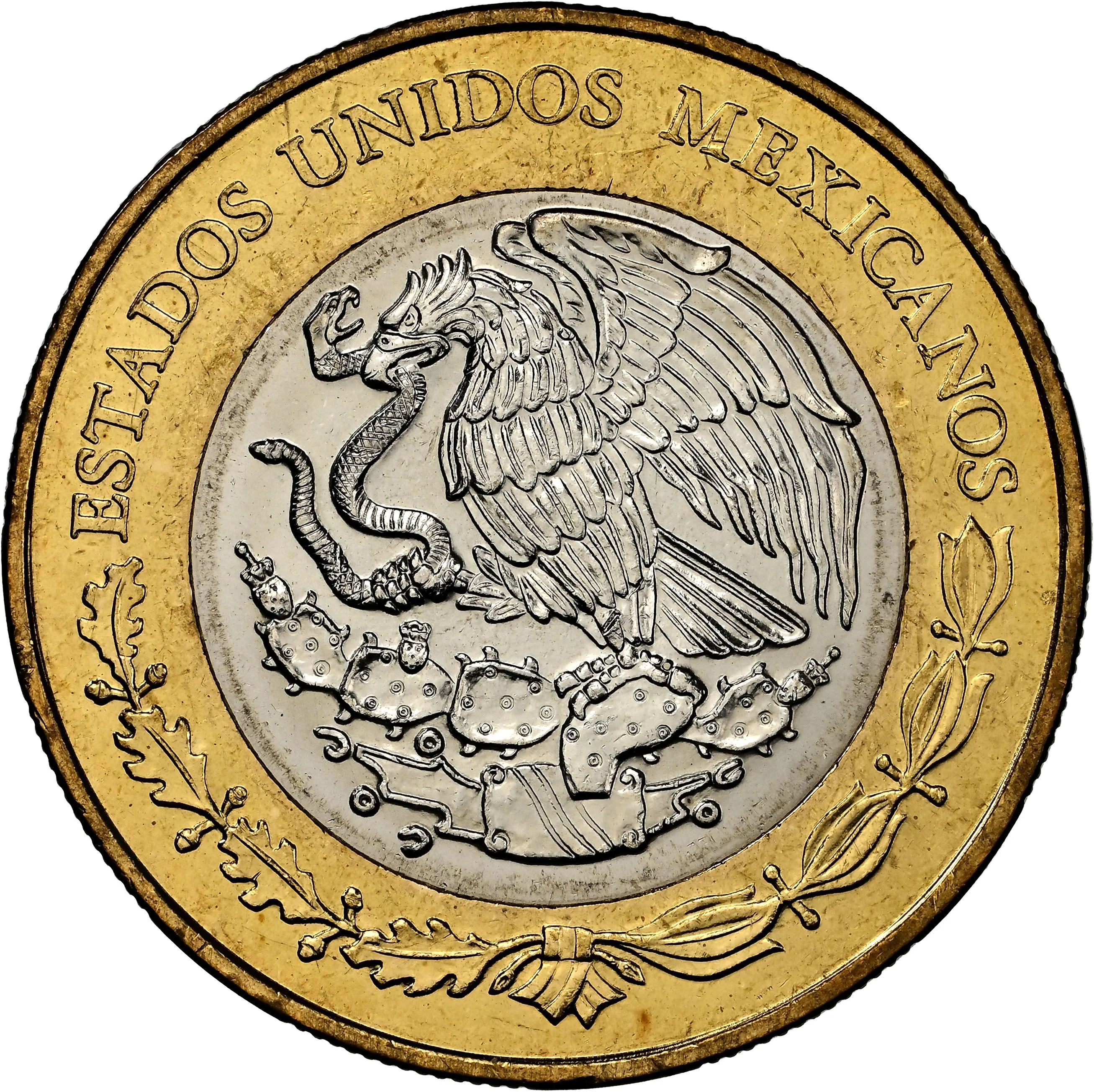
Obverse
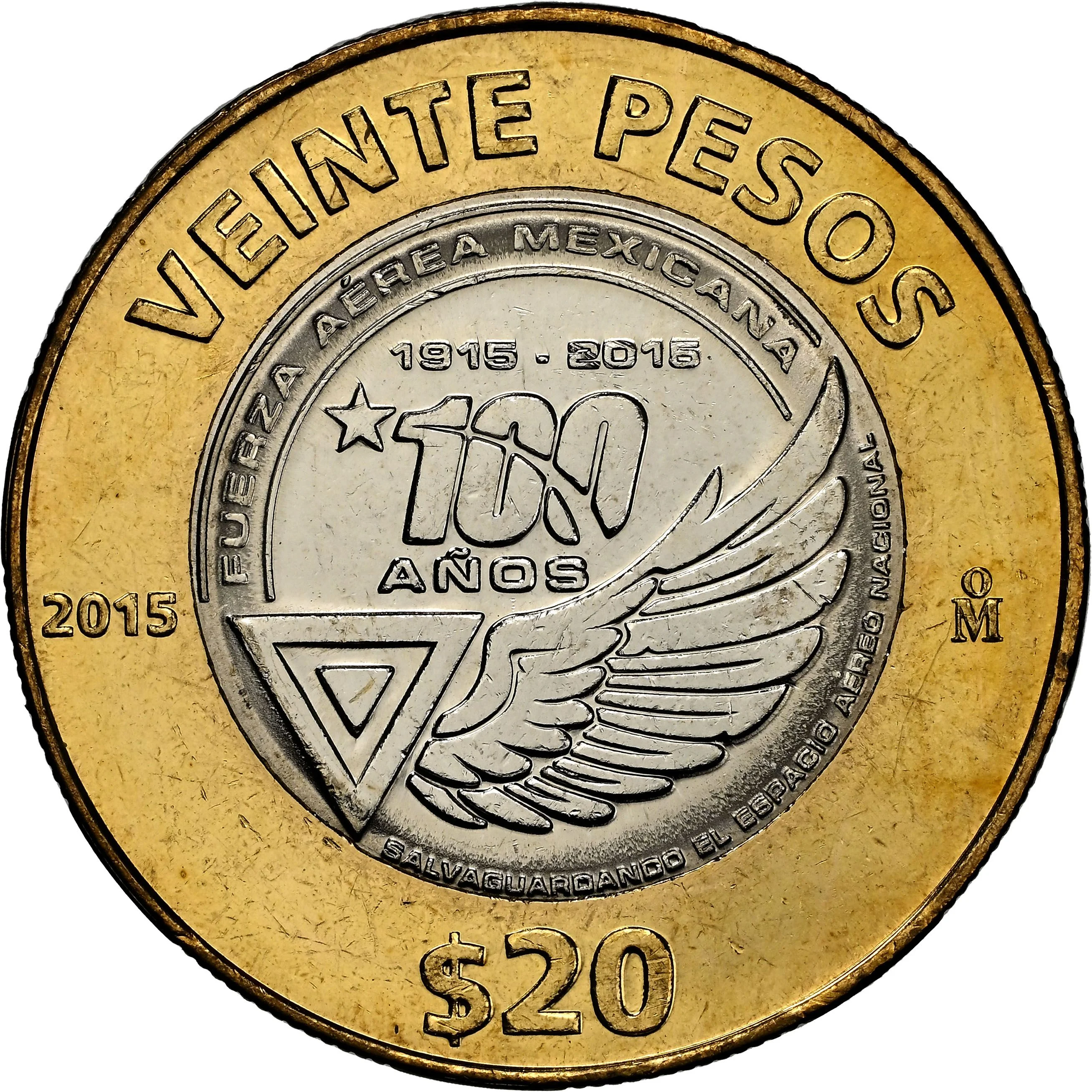
Reverse
Description:
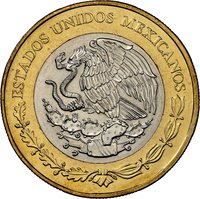
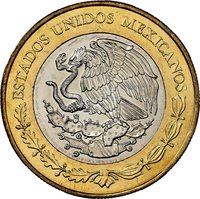
Outer circle: top value in words, left date, right mint, bottom value in numerals. Center: double triangle with right wing. Top legend and anniversary dates. Motto below wing.
Inscription:
VEINTE PESOS
2015 Mo
FUERZA AÉREA MEXICANA
1915 - 2015
100
AÑOS
SALVAGUARDANDO EL ESPACIO AÉREO NACIONAL
$20
2015 Mo
FUERZA AÉREA MEXICANA
1915 - 2015
100
AÑOS
SALVAGUARDANDO EL ESPACIO AÉREO NACIONAL
$20
Translation:
Twenty Pesos
2015 Mo
Mexican Air Force
1915 - 2015
100
Years
Safeguarding the National Airspace
$20
2015 Mo
Mexican Air Force
1915 - 2015
100
Years
Safeguarding the National Airspace
$20
Script: Latin
Language: Spanish
Edge
Segmented reeding
Categories
| Transportation> Aircraft |
Mints
| Name | Mark |
|---|---|
| Mexican Mint | (Mo) |
Mintings
| Year | Mint Mark | Mintage | Quality | Collection |
|---|---|---|---|---|
| 2015 | Mo | 4,953,000 |
Historical background
In 2015, Mexico's currency situation was defined by significant volatility and a sharp depreciation of the peso against the US dollar, driven by a confluence of external and domestic factors. The primary external pressure came from the anticipation of the US Federal Reserve raising interest rates for the first time since the 2008 financial crisis. This "lift-off" spurred capital outflows from emerging markets like Mexico as investors sought higher and safer returns in dollar-denominated assets. Furthermore, a global slump in oil prices throughout 2014-2015 severely impacted Mexico's fiscal revenues and export earnings, as crude oil was a major source of government income, eroding confidence in the economy.
Domestically, the peso's decline was exacerbated by concerns over structural reforms and specific sectoral weaknesses. While President Enrique Peña Nieto's administration had passed ambitious structural reforms in energy, telecommunications, and education, their long-term benefits were not yet felt, and implementation challenges persisted. Notably, a major scandal involving a government contract awarded to a Chinese-led consortium for a high-speed rail project, which was abruptly canceled and later revived under controversy, damaged investor perception of transparency and regulatory stability. These factors combined to push the peso to historic lows, breaching the psychologically significant level of 17 pesos per dollar by December 2015.
In response, Mexico's central bank, Banco de México, faced a complex policy dilemma. To combat inflation pressures from the weak peso and anchor expectations, it maintained a relatively tight monetary stance, keeping its benchmark interest rate at a then-record high of 3.0% for much of the year, even as economic growth slowed. The bank also utilized a unique mechanism established in 2008: daily dollar auctions to provide liquidity and smooth volatility without depleting foreign reserves. This period highlighted Mexico's vulnerability to global financial shifts and commodity cycles, setting the stage for further monetary policy tightening in the years that followed as the central bank prioritized price stability in the face of currency-driven inflationary risks.
Domestically, the peso's decline was exacerbated by concerns over structural reforms and specific sectoral weaknesses. While President Enrique Peña Nieto's administration had passed ambitious structural reforms in energy, telecommunications, and education, their long-term benefits were not yet felt, and implementation challenges persisted. Notably, a major scandal involving a government contract awarded to a Chinese-led consortium for a high-speed rail project, which was abruptly canceled and later revived under controversy, damaged investor perception of transparency and regulatory stability. These factors combined to push the peso to historic lows, breaching the psychologically significant level of 17 pesos per dollar by December 2015.
In response, Mexico's central bank, Banco de México, faced a complex policy dilemma. To combat inflation pressures from the weak peso and anchor expectations, it maintained a relatively tight monetary stance, keeping its benchmark interest rate at a then-record high of 3.0% for much of the year, even as economic growth slowed. The bank also utilized a unique mechanism established in 2008: daily dollar auctions to provide liquidity and smooth volatility without depleting foreign reserves. This period highlighted Mexico's vulnerability to global financial shifts and commodity cycles, setting the stage for further monetary policy tightening in the years that followed as the central bank prioritized price stability in the face of currency-driven inflationary risks.
🌱 Common