

50 Stotinki – Bulgaria
Bulgaria
Context

Material
Diameter: 18.2 mm
Weight: 2.1 g
Thickness: 1.2 mm
Shape: Round
Composition: Aluminium bronze
Magnetic: No
Technique: Milled
Alignment: Coin alignment
flip
References
KM: #Click to copy to clipboard46
Numista: #7777
Obverse
Description:
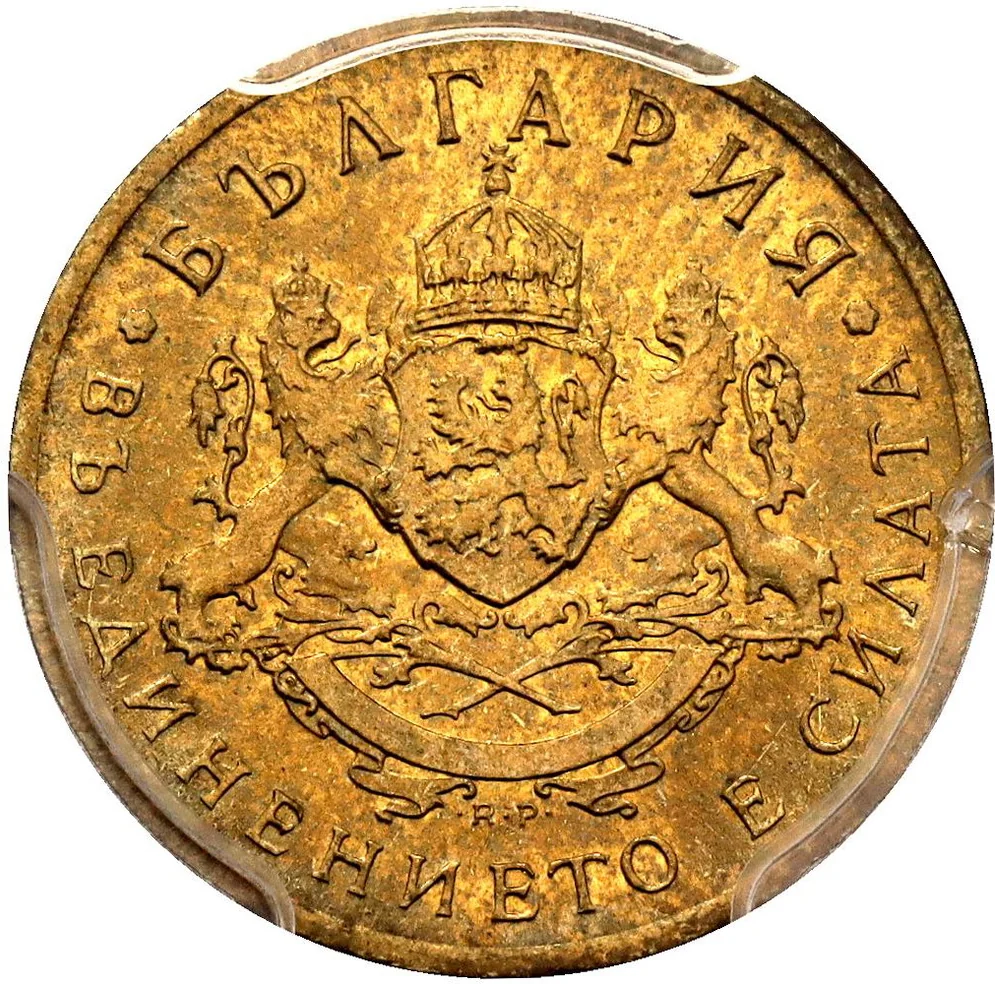
Bulgaria's coat of arms (1927–1946): A crowned rampant lion on a shield, topped with the historical crown and supported by two other crowned rampant lions. Motto: "Unity makes strength."
Inscription:
БЪЛГАРИЯ
· R · P ·
ВЪ ЕДИНЕНИЕТО Е СИЛАТА
· R · P ·
ВЪ ЕДИНЕНИЕТО Е СИЛАТА
Translation:
BULGARIA
R. P.
IN UNITY IS STRENGTH
R. P.
IN UNITY IS STRENGTH
Script: Cyrillic
Language: Bulgarian
Engravers: Rudolf Pribiš, Vasil Zahariev
Reverse
Description:
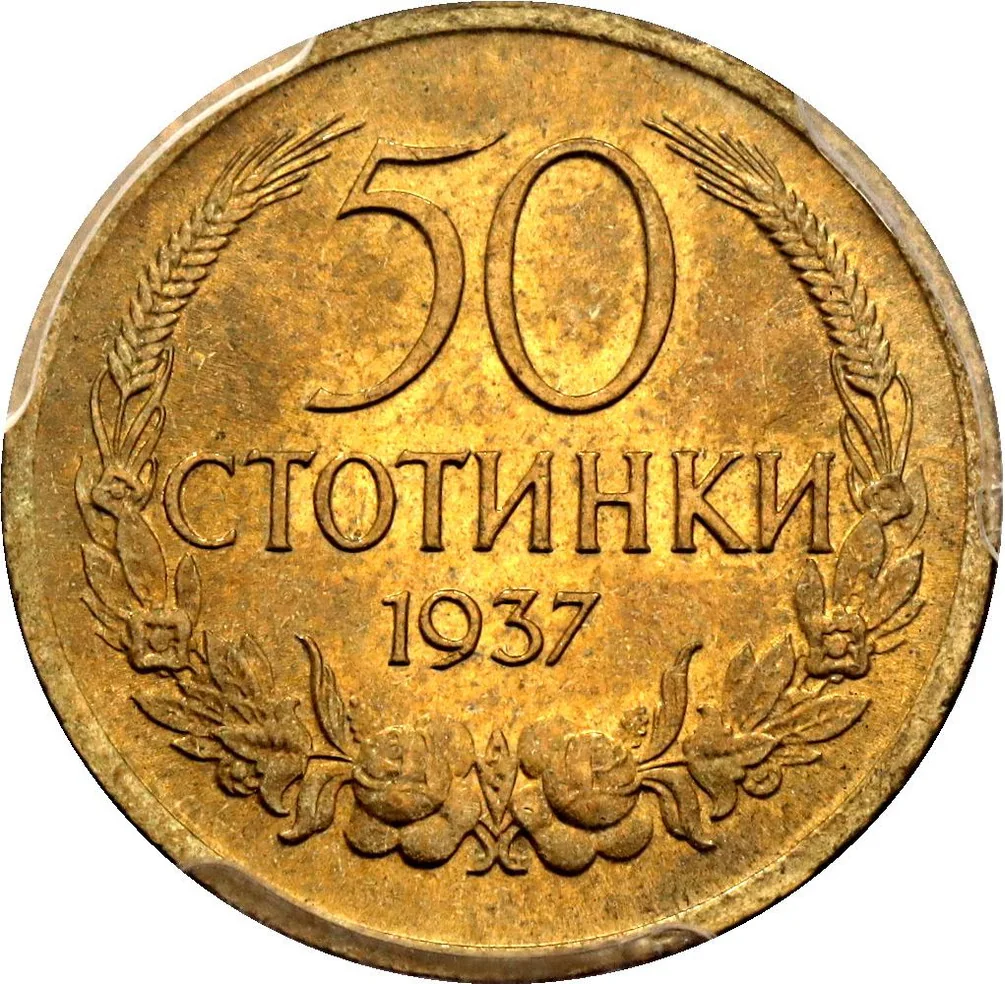
Denomination above date in wreath.
Inscription:
50
СТОТИНКИ
1937
СТОТИНКИ
1937
Translation:
Fifty
Stotinki
1937
Stotinki
1937
Script: Cyrillic
Language: Bulgarian
Engravers: Rudolf Pribiš, Vasil Zahariev
Edge
Plain
Categories
| Symbols> Coat of Arms |
| Symbol> Wreath |
Mints
| Name | Mark |
|---|---|
| Kremnica | — |
| Münze Österreich | — |
Mintings
| Year | Mint Mark | Mintage | Quality | Collection |
|---|---|---|---|---|
| 1937 | — | 60,200,000 |
Historical background
In 1937, Bulgaria's currency situation was defined by the stability of the Bulgarian lev (лев), which was firmly anchored to gold through the Bulgarian National Bank's (BNB) adherence to the gold standard. This stability was a hard-won achievement following a period of severe monetary chaos after World War I, which included a dramatic hyperinflation that peaked in the early 1920s. The subsequent currency reform of 1924–1928, backed by a large international stabilization loan, successfully re-established the gold-backed lev, creating a period of relative monetary confidence that persisted through the 1930s.
Despite this internal stability, the Bulgarian economy and its currency were not immune to the global pressures of the Great Depression. The country's primarily agrarian export sector suffered from collapsing international prices, leading to a significant trade imbalance and a drain on gold reserves. In response, the government and the BNB implemented strict exchange controls and fostered closer economic ties with Nazi Germany through clearing agreements. These bilateral deals allowed for trade without scarce foreign currency or gold, but they also increasingly tied Bulgaria's economic fortunes to the German Reich.
Therefore, while the domestic purchasing power of the lev remained relatively steady for citizens in 1937, the currency's international position was constrained. The gold standard provided a facade of orthodox finance, but in practice, it was managed through protectionist controls and was becoming progressively more integrated into Germany's economic sphere of influence within Southeast Europe. This delicate balance between internal stability and external dependency would be profoundly tested in the coming years as Europe moved toward war.
Despite this internal stability, the Bulgarian economy and its currency were not immune to the global pressures of the Great Depression. The country's primarily agrarian export sector suffered from collapsing international prices, leading to a significant trade imbalance and a drain on gold reserves. In response, the government and the BNB implemented strict exchange controls and fostered closer economic ties with Nazi Germany through clearing agreements. These bilateral deals allowed for trade without scarce foreign currency or gold, but they also increasingly tied Bulgaria's economic fortunes to the German Reich.
Therefore, while the domestic purchasing power of the lev remained relatively steady for citizens in 1937, the currency's international position was constrained. The gold standard provided a facade of orthodox finance, but in practice, it was managed through protectionist controls and was becoming progressively more integrated into Germany's economic sphere of influence within Southeast Europe. This delicate balance between internal stability and external dependency would be profoundly tested in the coming years as Europe moved toward war.
🌱 Very Common