

2 Hryvni – Ukraine
Non-circulating coins
Commemoration: Oleshky Sands
Ukraine
Context
Year: 2015
Issuer: Ukraine 
Issuing organization: National Bank of Ukraine
Period:
(since 1991)
Currency:
(since 1996)
Total mintage: 35,000
Material
Diameter: 31 mm
Weight: 12.8 g
Shape: Round
Composition: Nickel brass
Magnetic: No
Technique: Milled
Alignment: Medal alignment
flip
References
KM: #Click to copy to clipboard758
Numista: #77508
Value
Exchange value: 2 UAH
Obverse
Description:
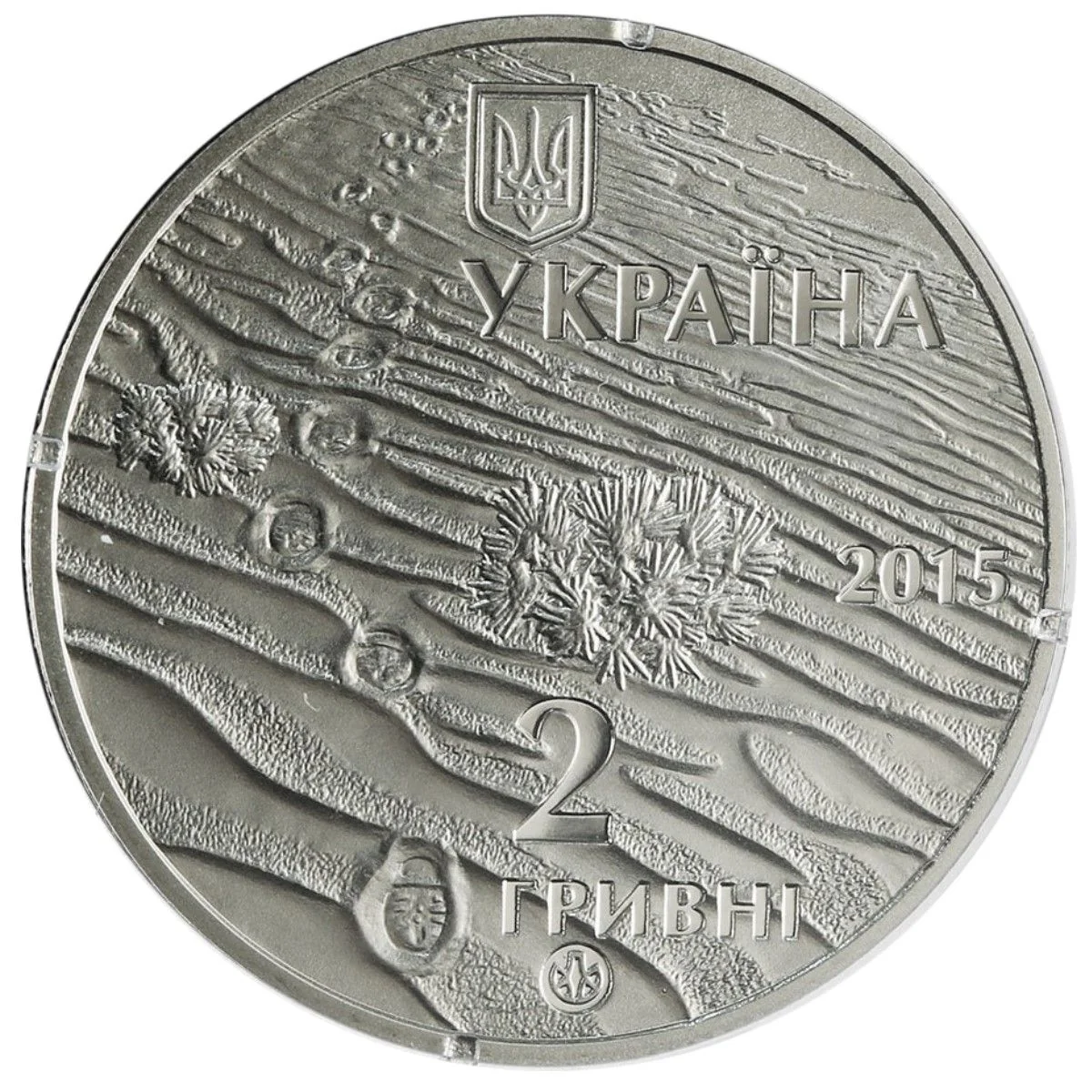
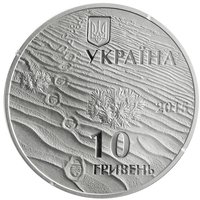
On a desert landscape with footsteps (left), the Small Coat of Arms of Ukraine is above the text "УКРАЇНА." To the right is the year 2015. Below are the face value "2/ГРИВНІ" and the Mint mark.
Inscription:
УКРАЇНА
2015
2
ГРИВНІ
2015
2
ГРИВНІ
Translation:
Ukraine
2015
2
Hryvni
2015
2
Hryvni
Script: Cyrillic
Language: Ukrainian
Designer and engraver: Sviatoslav Ivanenko
Reverse
Description:
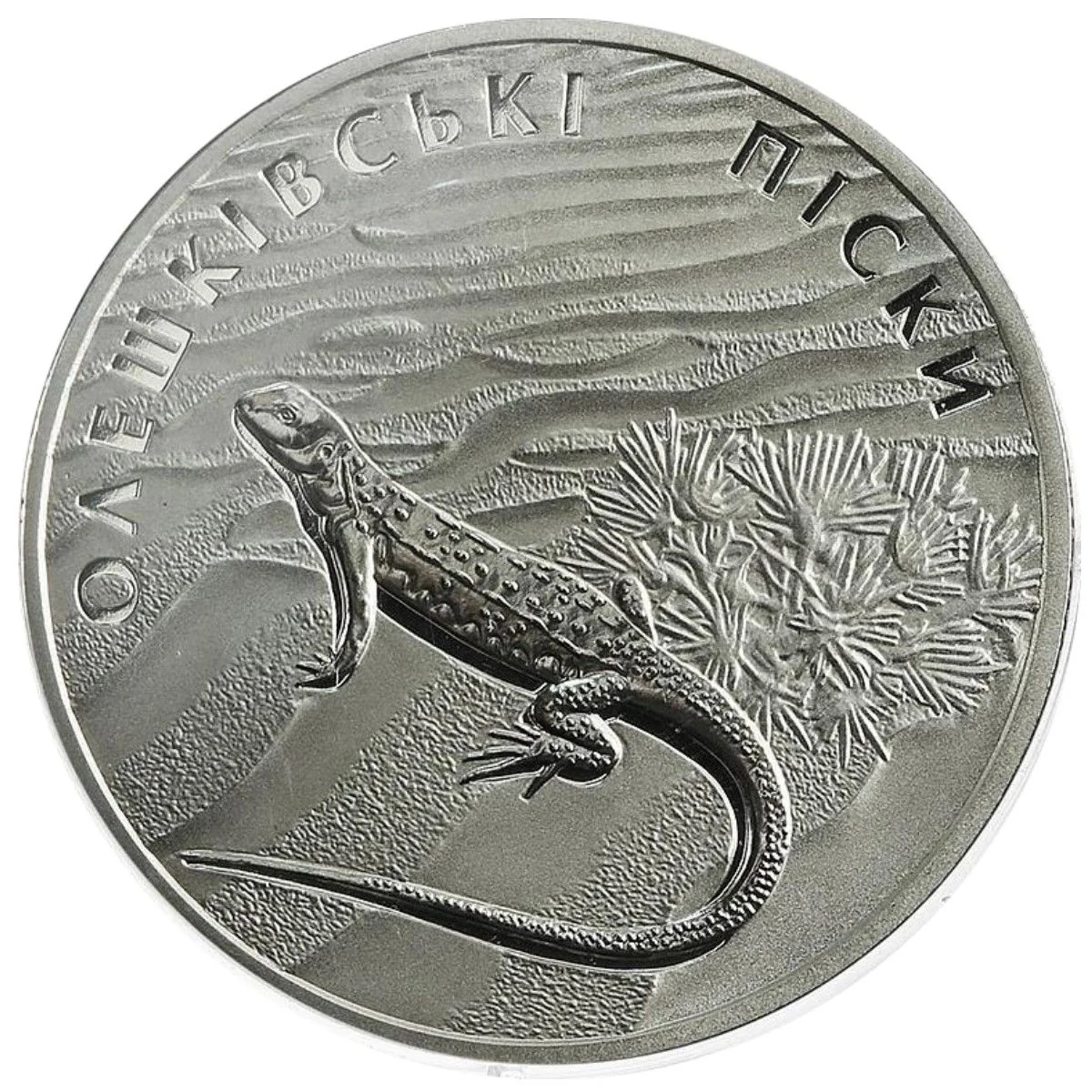
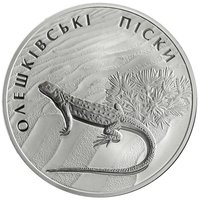
A lizard on a desert landscape.
Inscription:
ОЛЕШКІВСЬКІ ПІСКИ
Translation:
Oleshky Sands
Script: Cyrillic
Language: Ukrainian
Designer and engraver: Sviatoslav Ivanenko
Edge
Reeded
Mints
| Name | Mark |
|---|---|
| National Bank of Ukraine Banknote Printing and Minting Works | — |
Mintings
| Year | Mint Mark | Mintage | Quality | Collection |
|---|---|---|---|---|
| 2015 | — | 10,000 | ||
| 2015 | — | 25,000 | Special Uncirculated |
Historical background
In 2015, Ukraine's currency, the hryvnia (UAH), was in a state of severe crisis, marking one of the most turbulent periods in the country's financial history. The turmoil was a direct consequence of the dual shocks of the 2014 Revolution of Dignity, which led to the annexation of Crimea by Russia and the outbreak of war in the Donbas region. These events triggered massive capital flight, a collapse in foreign investment, and a sharp contraction in industrial production, particularly in the eastern industrial heartland. The National Bank of Ukraine (NBU), having exhausted its reserves in a failed attempt to defend a fixed exchange rate, was forced to abandon the peg in early 2014, setting the stage for a dramatic devaluation throughout 2015.
By February 2015, the hryvnia had lost nearly 70% of its value against the US dollar over the previous year, plummeting to a historic low of approximately UAH 33 to $1. This hyper-depreciation was fueled by a vicious cycle of panic buying of foreign currency, soaring inflation (which reached over 60% annually), and a deepening economic recession with GDP falling by nearly 10% in 2015. The situation was exacerbated by a critical loss of confidence in the banking system and the government's ability to manage the crisis, as the state grappled with war, a collapse in tax revenues, and surging energy import costs.
The currency crisis became the central catalyst for a major international intervention and a sweeping domestic reform program. In March 2015, Ukraine secured a four-year, $17.5 billion Extended Fund Facility from the International Monetary Fund, which was contingent on implementing strict austerity measures and structural reforms. Key policies included the official adoption of a flexible exchange rate, significant interest rate hikes by the NBU to curb inflation, and painful reductions in energy subsidies. While these measures stabilized the currency by late 2015, they came at a high social cost, drastically reducing living standards and deepening poverty for much of the population.
By February 2015, the hryvnia had lost nearly 70% of its value against the US dollar over the previous year, plummeting to a historic low of approximately UAH 33 to $1. This hyper-depreciation was fueled by a vicious cycle of panic buying of foreign currency, soaring inflation (which reached over 60% annually), and a deepening economic recession with GDP falling by nearly 10% in 2015. The situation was exacerbated by a critical loss of confidence in the banking system and the government's ability to manage the crisis, as the state grappled with war, a collapse in tax revenues, and surging energy import costs.
The currency crisis became the central catalyst for a major international intervention and a sweeping domestic reform program. In March 2015, Ukraine secured a four-year, $17.5 billion Extended Fund Facility from the International Monetary Fund, which was contingent on implementing strict austerity measures and structural reforms. Key policies included the official adoption of a flexible exchange rate, significant interest rate hikes by the NBU to curb inflation, and painful reductions in energy subsidies. While these measures stabilized the currency by late 2015, they came at a high social cost, drastically reducing living standards and deepening poverty for much of the population.
🌟 Uncommon