

2 dollars (Independence) – Kiribati
Add to wishlist
Circulating commemorative coins
Commemoration: 10th Anniversary of Independence
Kiribati
Material
Diameter: 28.4 mm
Weight: 15.9 g
Thickness: 3.3 mm
Shape: Round
Composition: Nickel brass
Magnetic: No
Technique: Milled
Alignment: Medal alignment
flip
References
KM: #
Numista: #11346
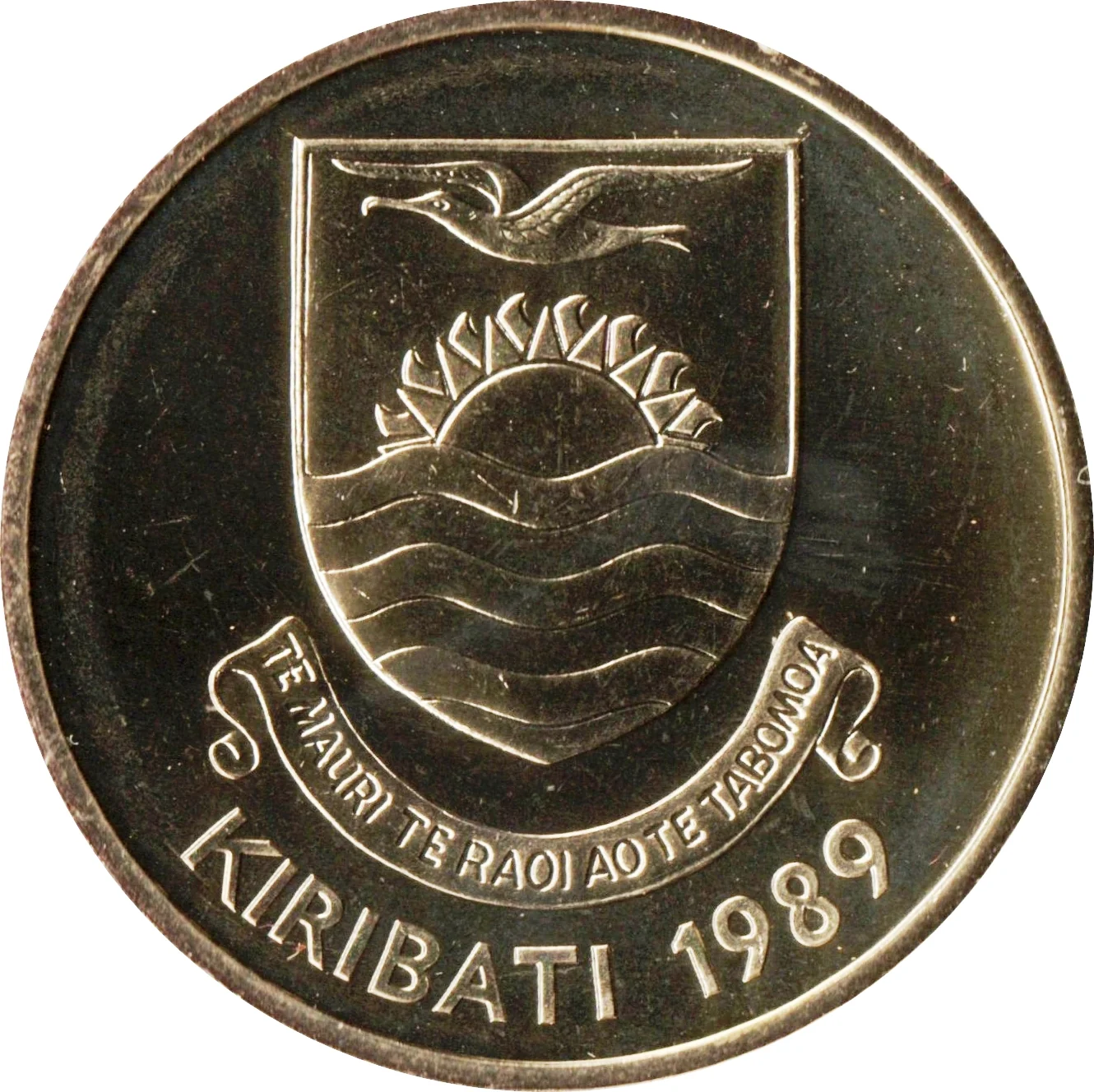
Obverse
Description:
National arms above, message within ribbon.
Inscription:
TE MAURI TE RAOI AO TE TABOMOA
KIRIBATI 1989
KIRIBATI 1989
Translation:
The life, the peace, and the prosperity
Script: Latin
Language: Gilbertese
Engraver: Michael Hibbit
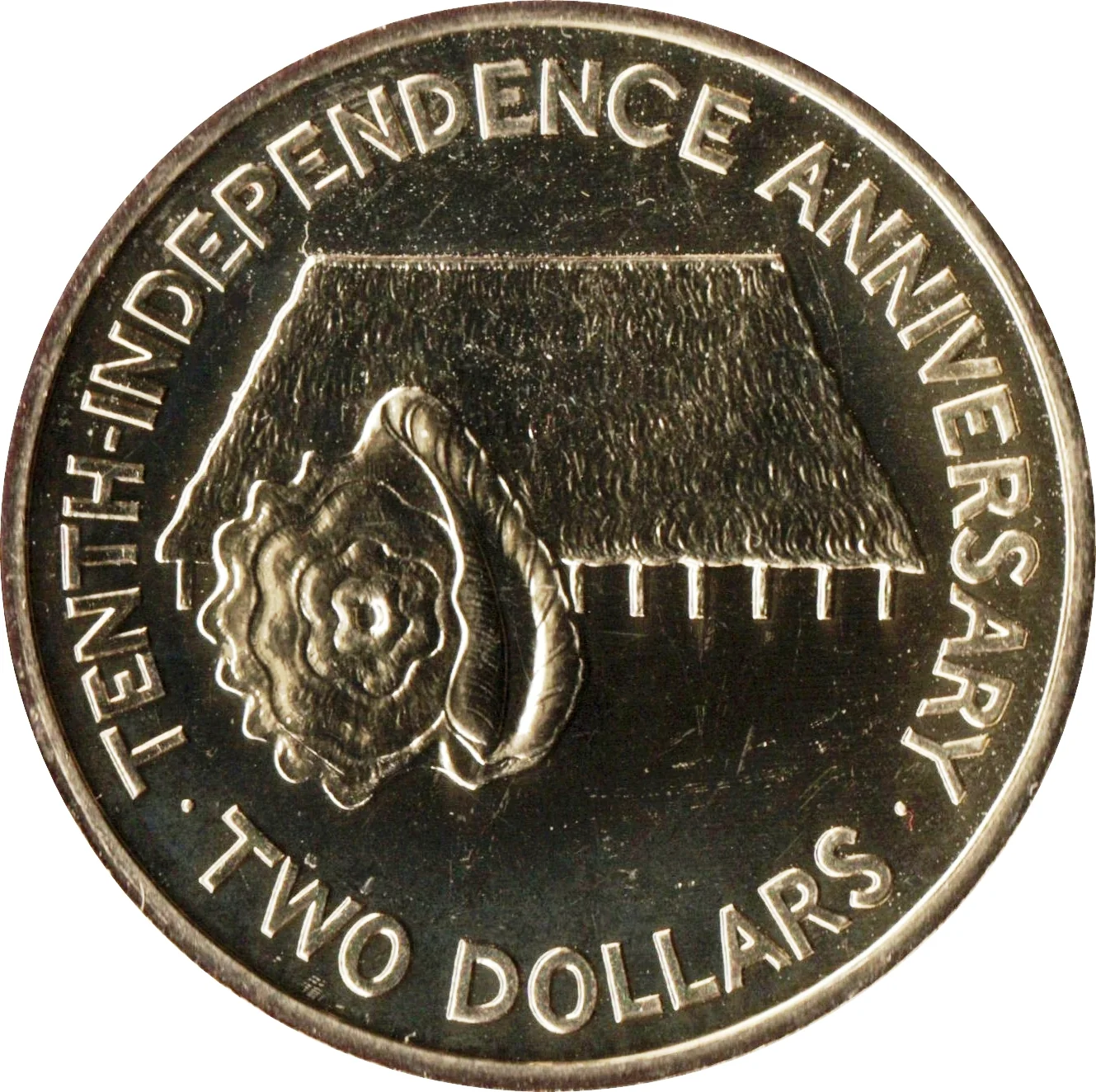
Reverse
Description:
Shell meeting house.
Inscription:
· TENTH-INDEPENDENCE ANNIVERSARY ·
TWO DOLLARS
TWO DOLLARS
Script: Latin
Engraver: Michael Hibbit
Edge
Milled
Mints
| Name | Mark |
|---|---|
| Royal Mint | — |
Mintings
| Year | Mint Mark | Mintage | Quality | Collection |
|---|---|---|---|---|
| 1989 | — | — |
Historical background
In 1989, the currency situation in Kiribati was defined by its continued use of the Australian dollar as the official legal tender, a arrangement established at independence in 1979. This monetary union provided critical stability for the young nation's economy, which relied heavily on external revenue from phosphate mining (nearing exhaustion on Banaba Island), copra exports, and foreign aid. By pegging its currency to the Australian dollar, Kiribati effectively outsourced its monetary policy to the Reserve Bank of Australia, ensuring low inflation and a reliable medium of exchange for its limited domestic market and international trade.
However, this system also highlighted the structural vulnerabilities of Kiribati's economy. The country held very limited foreign reserves of its own, and its fiscal health was almost entirely dependent on the Revenue Equalisation Reserve Fund (RERF), a sovereign wealth fund created from phosphate earnings. The government's ability to manage public finances and fund imports was thus tied to the prudent drawdown of this fund and the performance of the Australian economy, over which it had no control. Any significant economic shocks in Australia would directly transmit to Kiribati through the currency link.
Consequently, 1989 found Kiribati at a financial crossroads, contemplating its monetary future as the phosphate era ended. Discussions occasionally surfaced about the potential for issuing a national currency or exploring other monetary frameworks, but the overwhelming consensus favoured maintaining the status quo. The security and simplicity provided by the Australian dollar were deemed essential for economic continuity, especially as the nation began to explore new economic avenues like fisheries licensing and sought to preserve the RERF for future generations in the face of its unique long-term challenges, including rising sea levels.
However, this system also highlighted the structural vulnerabilities of Kiribati's economy. The country held very limited foreign reserves of its own, and its fiscal health was almost entirely dependent on the Revenue Equalisation Reserve Fund (RERF), a sovereign wealth fund created from phosphate earnings. The government's ability to manage public finances and fund imports was thus tied to the prudent drawdown of this fund and the performance of the Australian economy, over which it had no control. Any significant economic shocks in Australia would directly transmit to Kiribati through the currency link.
Consequently, 1989 found Kiribati at a financial crossroads, contemplating its monetary future as the phosphate era ended. Discussions occasionally surfaced about the potential for issuing a national currency or exploring other monetary frameworks, but the overwhelming consensus favoured maintaining the status quo. The security and simplicity provided by the Australian dollar were deemed essential for economic continuity, especially as the nation began to explore new economic avenues like fisheries licensing and sought to preserve the RERF for future generations in the face of its unique long-term challenges, including rising sea levels.
🌟 Uncommon