

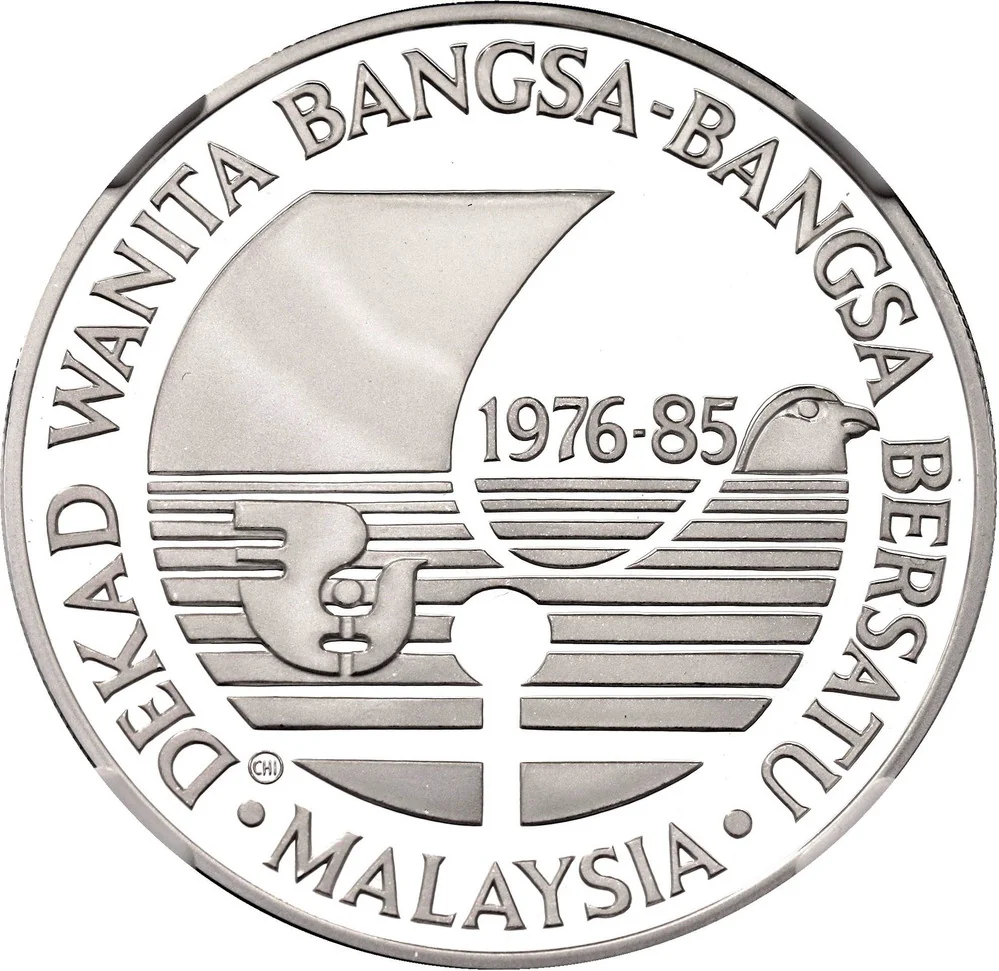
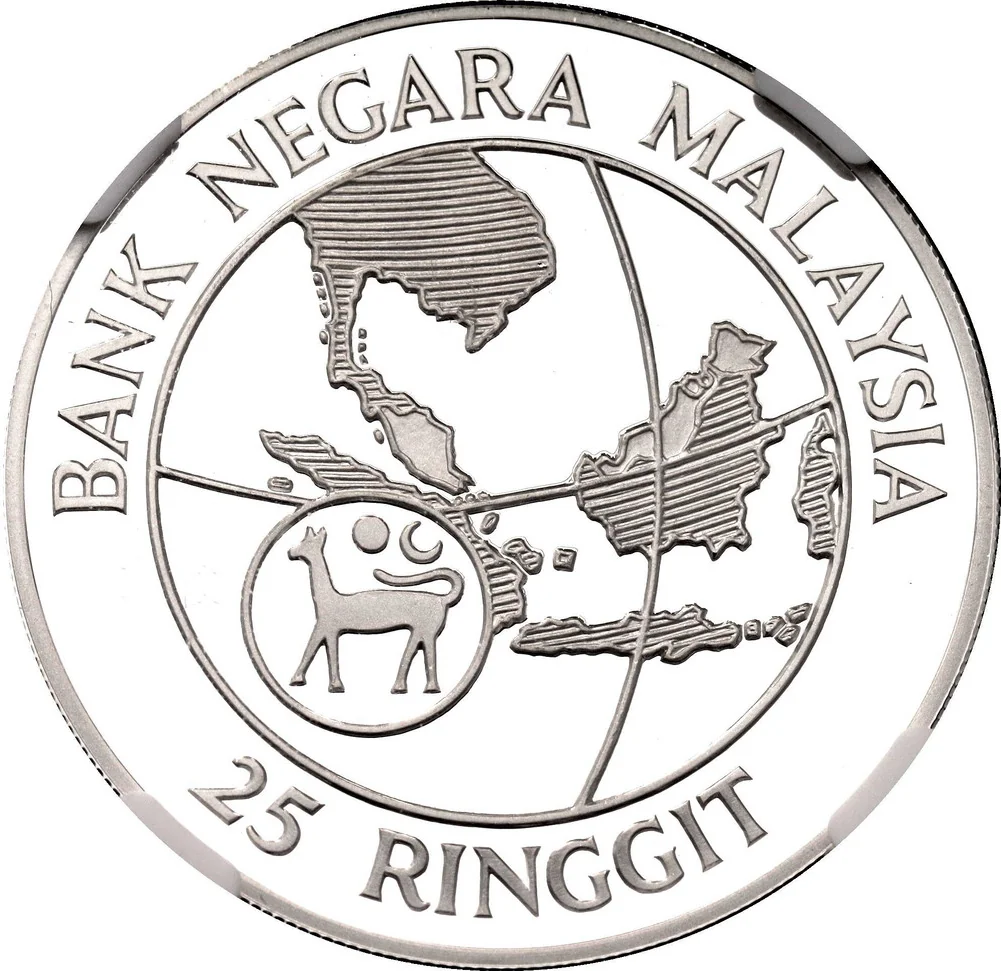
25 ringgit – Malaysia
Add to wishlist
Non-circulating coins
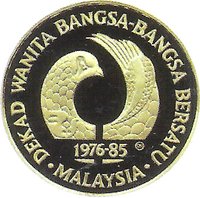
Commemoration: United Nations Decade for Women
Malaysia
Obverse
Reverse
Edge
Mints
| Name | Mark |
|---|---|
| Valcambi | CHI |
Mintings
| Year | Mint Mark | Mintage | Quality | Collection |
|---|---|---|---|---|
| 1986 | CHI | 2,000 | Proof |
Historical background
In 1986, Malaysia was grappling with a severe economic recession, its worst since independence. The downturn was triggered by a combination of external and internal factors, primarily a collapse in global commodity prices. As a major exporter of tin, rubber, and palm oil, Malaysia saw its export earnings plummet, leading to a significant current account deficit and dwindling foreign reserves. This crisis was exacerbated by a slowdown in the global electronics market and rising protectionism, which further stifled growth and investment.
The currency situation was directly impacted by this economic distress. The Malaysian Ringgit (MYR), which was pegged to a trade-weighted basket of currencies, came under substantial pressure. While not experiencing a freefall, the Ringgit depreciated significantly against major currencies like the US Dollar and the Japanese Yen throughout the mid-1980s. This depreciation was a reflection of the weak economic fundamentals, lack of investor confidence, and the outflow of capital. The government's earlier expansive spending and high fiscal deficits in the late 1970s and early 1980s had also left the economy vulnerable to such external shocks.
In response, Prime Minister Mahathir Mohamad's administration implemented a stringent austerity program under the guidance of Finance Minister Daim Zainuddin. The government slashed public expenditure, deferred major projects, and introduced policies to promote foreign investment and export-oriented industrialization. These measures, though painful in the short term, aimed to stabilize the macroeconomy, restore confidence in the Ringgit, and lay the groundwork for recovery. The period thus set the stage for Malaysia's subsequent transformation into an Asian economic tiger by the early 1990s, with a more diversified and resilient economy.
The currency situation was directly impacted by this economic distress. The Malaysian Ringgit (MYR), which was pegged to a trade-weighted basket of currencies, came under substantial pressure. While not experiencing a freefall, the Ringgit depreciated significantly against major currencies like the US Dollar and the Japanese Yen throughout the mid-1980s. This depreciation was a reflection of the weak economic fundamentals, lack of investor confidence, and the outflow of capital. The government's earlier expansive spending and high fiscal deficits in the late 1970s and early 1980s had also left the economy vulnerable to such external shocks.
In response, Prime Minister Mahathir Mohamad's administration implemented a stringent austerity program under the guidance of Finance Minister Daim Zainuddin. The government slashed public expenditure, deferred major projects, and introduced policies to promote foreign investment and export-oriented industrialization. These measures, though painful in the short term, aimed to stabilize the macroeconomy, restore confidence in the Ringgit, and lay the groundwork for recovery. The period thus set the stage for Malaysia's subsequent transformation into an Asian economic tiger by the early 1990s, with a more diversified and resilient economy.

✨ Legendary