

2 leva – Bulgaria
Add to wishlist
Bulgaria
Context
Material
Diameter: 23 mm
Weight: 5 g
Thickness: 1.8 mm
Shape: Round
Composition: Copper-nickel
Technique: Milled
Alignment: Coin alignment
flip
References
KM: #
Numista: #7702
Obverse
Description:
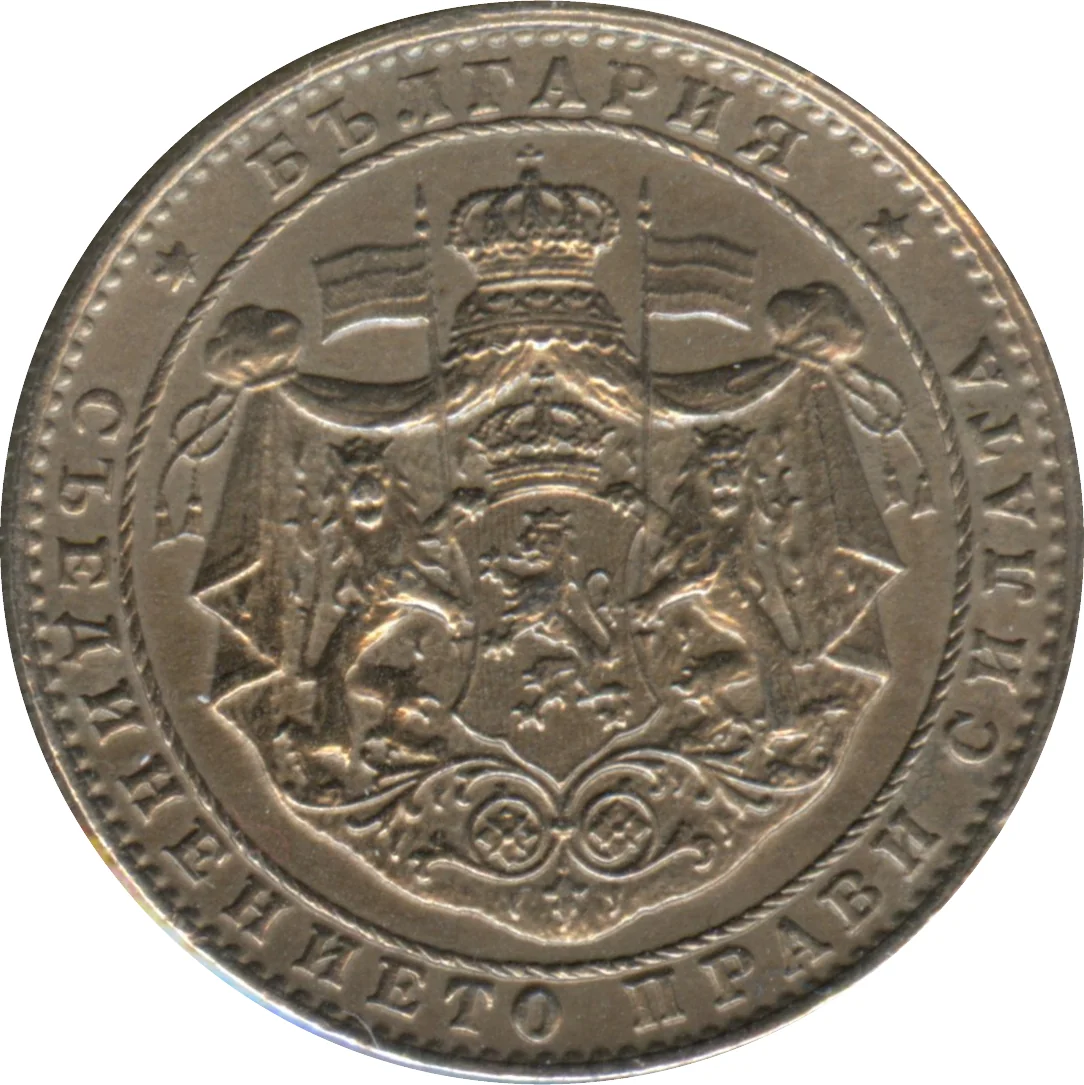
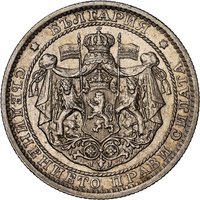
Bulgaria's greater coat of arms (1881–1927): A crowned lion on a shield, topped with the historical crown and flanked by two lion supporters with flags. Motto: "Unity makes strength."
Inscription:
БЪЛГАРИЯ
СЪЕДИНЕНИЕТО ПРАВИ СИЛАТА
СЪЕДИНЕНИЕТО ПРАВИ СИЛАТА
Translation:
BULGARIA
UNITY MAKES STRENGTH
UNITY MAKES STRENGTH
Script: Cyrillic
Language: Bulgarian
Reverse
Edge
Reeded
Categories
| Symbols> Coat of Arms |
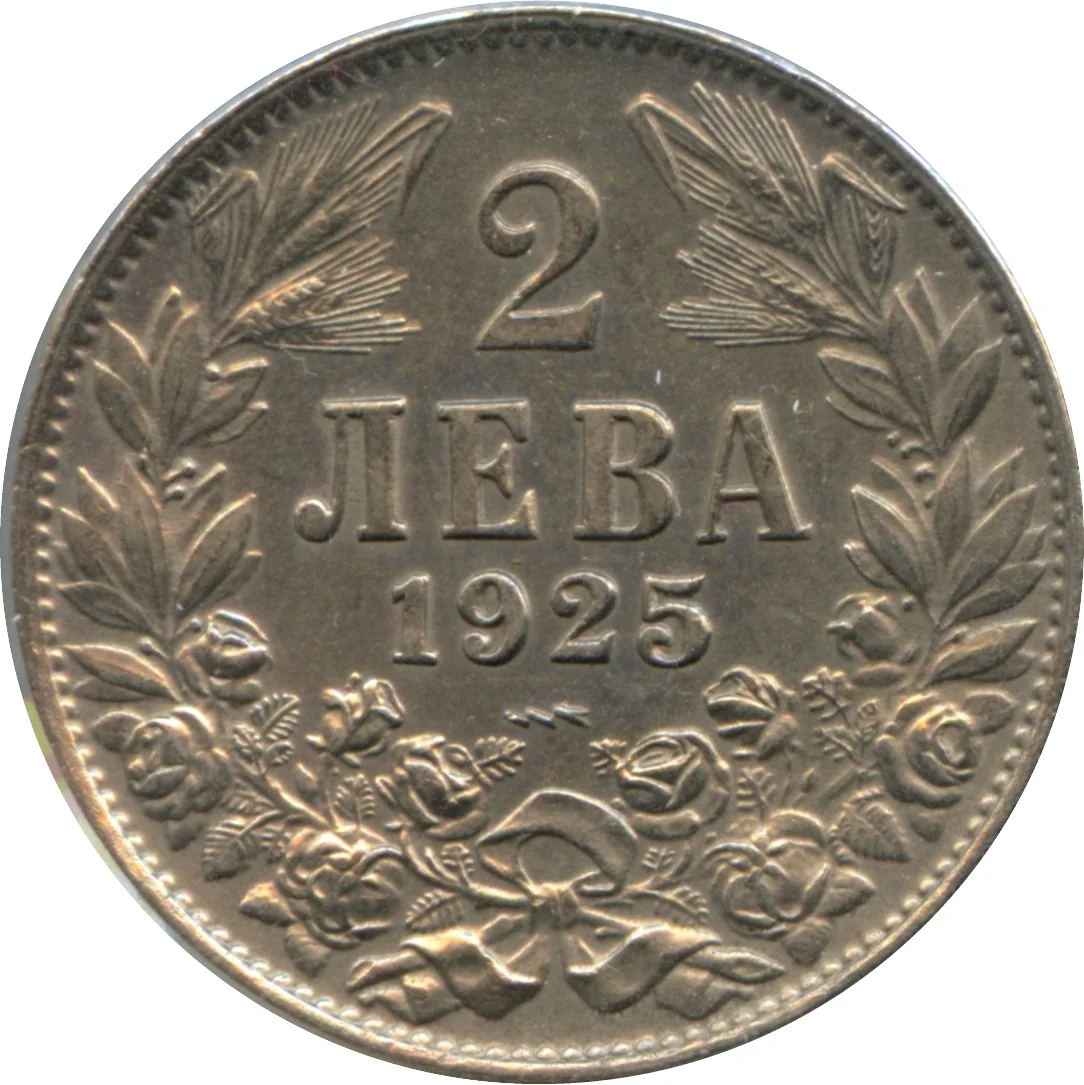
| Symbol> Wreath |
Mints
| Name | Mark |
|---|---|
| Royal Mint of Belgium | — |
| Société Française de Monnayage | — |
Mintings
| Year | Mint Mark | Mintage | Quality | Collection |
|---|---|---|---|---|
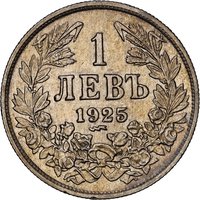
| 1925 | — | 20,000,000 |
Historical background
In 1925, Bulgaria's currency situation was defined by the severe hyperinflation of the Bulgarian lev, a direct consequence of the economic and political turmoil following the First World War. The country, having suffered defeat and significant territorial losses, was burdened with heavy reparations mandated by the 1919 Treaty of Neuilly-sur-Seine. To meet these obligations and finance post-war reconstruction, the government resorted to printing money, which rapidly devalued the currency. By the mid-1920s, the lev had become virtually worthless, with prices doubling in short periods and savings being erased, causing widespread social hardship and economic instability.
This crisis prompted decisive action. In 1924, the government secured a crucial League of Nations loan, known as the "Stabilization Loan," which was finalized and implemented in the period of 1925-1926. The loan, amounting to £2.5 million, was contingent on strict financial reforms and foreign supervision of Bulgaria's finances. These measures included the establishment of the Bulgarian National Bank as an independent central bank in 1925, tasked with controlling the money supply and stabilizing the currency, marking a pivotal shift towards fiscal discipline.
Consequently, 1925 stands as a transitional year, caught between the peak of monetary chaos and the beginning of enforced stability. The hyperinflationary spiral was finally broken with the introduction of a new, gold-backed lev in 1928. Therefore, the currency situation of 1925 is best understood as the painful concluding chapter of a post-war inflationary disaster, immediately followed by the stringent, externally-guided reforms that would ultimately lay the foundation for a decade of relative economic recovery in the late 1920s and 1930s.
This crisis prompted decisive action. In 1924, the government secured a crucial League of Nations loan, known as the "Stabilization Loan," which was finalized and implemented in the period of 1925-1926. The loan, amounting to £2.5 million, was contingent on strict financial reforms and foreign supervision of Bulgaria's finances. These measures included the establishment of the Bulgarian National Bank as an independent central bank in 1925, tasked with controlling the money supply and stabilizing the currency, marking a pivotal shift towards fiscal discipline.
Consequently, 1925 stands as a transitional year, caught between the peak of monetary chaos and the beginning of enforced stability. The hyperinflationary spiral was finally broken with the introduction of a new, gold-backed lev in 1928. Therefore, the currency situation of 1925 is best understood as the painful concluding chapter of a post-war inflationary disaster, immediately followed by the stringent, externally-guided reforms that would ultimately lay the foundation for a decade of relative economic recovery in the late 1920s and 1930s.
🌱 Very Common