

1 Litas – Lithuania
Circulating commemorative coins
Commemoration: Vilnius as European cultural capital
Lithuania
Context

Material
Diameter: 22.3 mm
Weight: 6.25 g
Thickness: 2.2 mm
Shape: Round
Composition: Copper-nickel
Technique: Milled
Alignment: Medal alignment
flip
References
KM: #Click to copy to clipboard162
Numista: #7693
Value
Exchange value: 1 LTL
Inflation-adjusted value: 1.76 LTL
Obverse
Description:
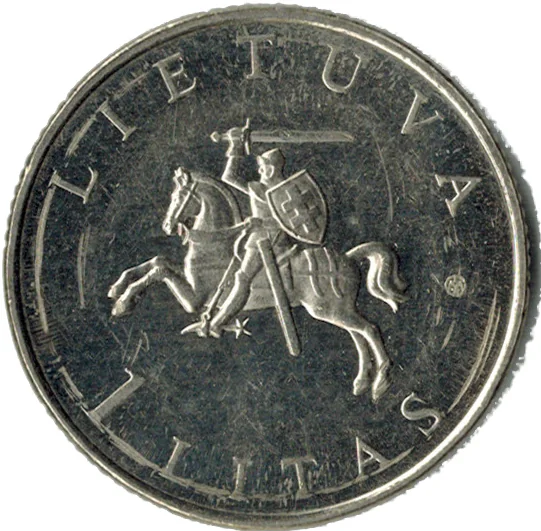
National arms, value below.
Inscription:
LIETUVA
LMK
1 LITAS
LMK
1 LITAS
Translation:
LIETUVA
LMK
1 LITAS
LMK
1 LITAS
Script: Latin
Languages: Lithuanian, English
Engraver: Vytautas Narutis
Reverse
Description:
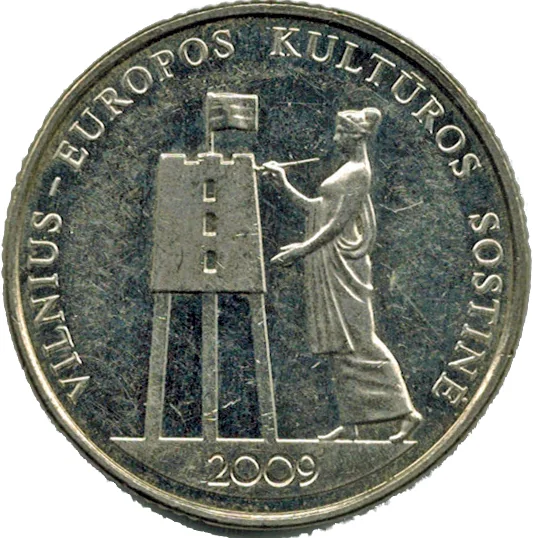
Woman painting at easel.
Inscription:
VILNIUS - EUROPOS KULTŪROS SOSTINÈ
2009
2009
Translation:
VILNIUS - EUROPEAN CAPITAL OF CULTURE
2009
2009
Script: Latin
Language: Lithuanian
Engraver: Vytautas Narutis
Edge
Five sections each of plain and milled alternating
Mints
| Name | Mark |
|---|---|
| Lithuanian Mint | (LMK) |
Mintings
| Year | Mint Mark | Mintage | Quality | Collection |
|---|---|---|---|---|
| 2009 | LMK | 1,000,000 |
Historical background
In 2009, Lithuania faced a severe economic crisis, experiencing the deepest recession in the European Union with GDP contracting by nearly 15%. This turmoil was part of the broader global financial crisis, but was acutely felt due to a preceding credit and real estate bubble. The situation placed immense pressure on the country's currency regime, as Lithuania operated under a Currency Board Arrangement, which had pegged the litas (LTL) rigidly to the euro at a fixed rate since 2002. This peg was a cornerstone of financial stability and a key policy on the path to eventual Eurozone membership.
The crisis tested the currency board's resilience. Speculative pressures emerged, with markets questioning whether Lithuania would be forced to devalue the litas to regain competitiveness, following the path of neighboring Latvia which faced similar strains. Maintaining the peg required severe internal devaluation—a painful process of cutting public sector wages, pensions, and government spending to reduce costs and adjust the economy without changing the exchange rate. The central bank held sufficient foreign reserves to defend the peg, but the social and economic costs were high, leading to significant emigration and public discontent.
Ultimately, the government, supported by international loans from the EU and IMF, remained unequivocally committed to the euro peg. This commitment was driven by a strategic political goal: preserving the path to euro adoption, which was seen as the ultimate guarantee of stability and integration with the West. The successful defense of the currency board in 2009, despite the severe recession, solidified this path and set the stage for Lithuania's eventual adoption of the euro as its official currency on January 1, 2015.
The crisis tested the currency board's resilience. Speculative pressures emerged, with markets questioning whether Lithuania would be forced to devalue the litas to regain competitiveness, following the path of neighboring Latvia which faced similar strains. Maintaining the peg required severe internal devaluation—a painful process of cutting public sector wages, pensions, and government spending to reduce costs and adjust the economy without changing the exchange rate. The central bank held sufficient foreign reserves to defend the peg, but the social and economic costs were high, leading to significant emigration and public discontent.
Ultimately, the government, supported by international loans from the EU and IMF, remained unequivocally committed to the euro peg. This commitment was driven by a strategic political goal: preserving the path to euro adoption, which was seen as the ultimate guarantee of stability and integration with the West. The successful defense of the currency board in 2009, despite the severe recession, solidified this path and set the stage for Lithuania's eventual adoption of the euro as its official currency on January 1, 2015.
🌱 Common