

10 krooni – Estonia
Add to wishlist
Non-circulating coins
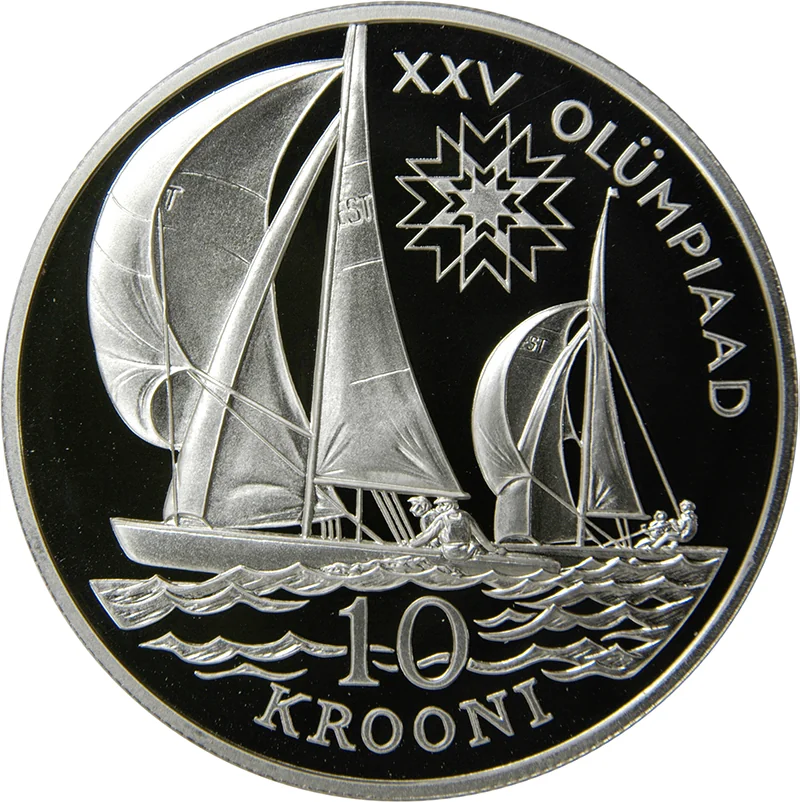
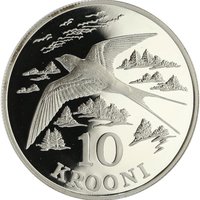
Commemoration: 1992 Barcelona Olympic Games
Estonia
Context
Material
References
KM: #
Numista: #76864
Value
Exchange value: 10 EEK
Bullion value: $66.59
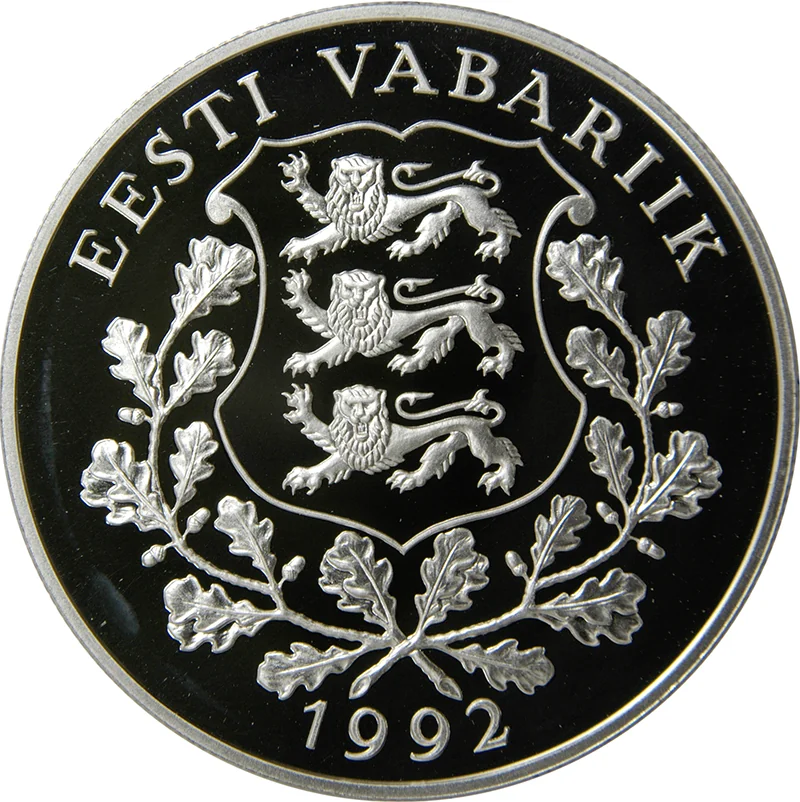
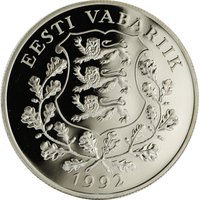
Obverse
Reverse
Edge
Milled
Categories
| Sport> Summer Olympic Games |
| Transportation> Watercraft |
Mintings
| Year | Mint Mark | Mintage | Quality | Collection |
|---|---|---|---|---|
| 1992 | — | 20,000 | Proof |
Historical background
In 1992, Estonia emerged from the collapse of the Soviet Union facing a severe monetary crisis. The country was still using the Soviet ruble, which was experiencing hyperinflation and had become virtually worthless, eroding savings and crippling economic activity. This unstable currency environment, coupled with the need to break decisively from the Soviet economic system, created an urgent imperative for Estonia to establish its own independent monetary system as a cornerstone of national sovereignty and economic reform.
The government, led by Prime Minister Mart Laar and guided by young reformers, took a radical and disciplined approach. Instead of creating a new central bank with the power to print money at will, they established a currency board system, a strict monetary framework that pegged the new Estonian kroon (EEK) at a fixed rate of 8 krooni to 1 Deutsche Mark. This system required full foreign exchange backing for all kroon in circulation, meaning the money supply could only grow if equivalent hard currency reserves increased, thereby eliminating the possibility of discretionary monetary policy and ensuring immediate credibility.
The new kroon was successfully introduced on June 20, 1992, replacing the Soviet ruble in a swift and well-organized operation. The currency board's rigid discipline instantly tamed inflation, stabilized the economy, and attracted foreign investment. This bold move provided the crucial financial stability needed for Estonia's subsequent transition to a market economy, setting the stage for its remarkable growth and eventual accession to the European Union and the Eurozone.
The government, led by Prime Minister Mart Laar and guided by young reformers, took a radical and disciplined approach. Instead of creating a new central bank with the power to print money at will, they established a currency board system, a strict monetary framework that pegged the new Estonian kroon (EEK) at a fixed rate of 8 krooni to 1 Deutsche Mark. This system required full foreign exchange backing for all kroon in circulation, meaning the money supply could only grow if equivalent hard currency reserves increased, thereby eliminating the possibility of discretionary monetary policy and ensuring immediate credibility.
The new kroon was successfully introduced on June 20, 1992, replacing the Soviet ruble in a swift and well-organized operation. The currency board's rigid discipline instantly tamed inflation, stabilized the economy, and attracted foreign investment. This bold move provided the crucial financial stability needed for Estonia's subsequent transition to a market economy, setting the stage for its remarkable growth and eventual accession to the European Union and the Eurozone.
💎 Extremely Rare