

10 Guilders (Independence) – Suriname
Non-circulating coins
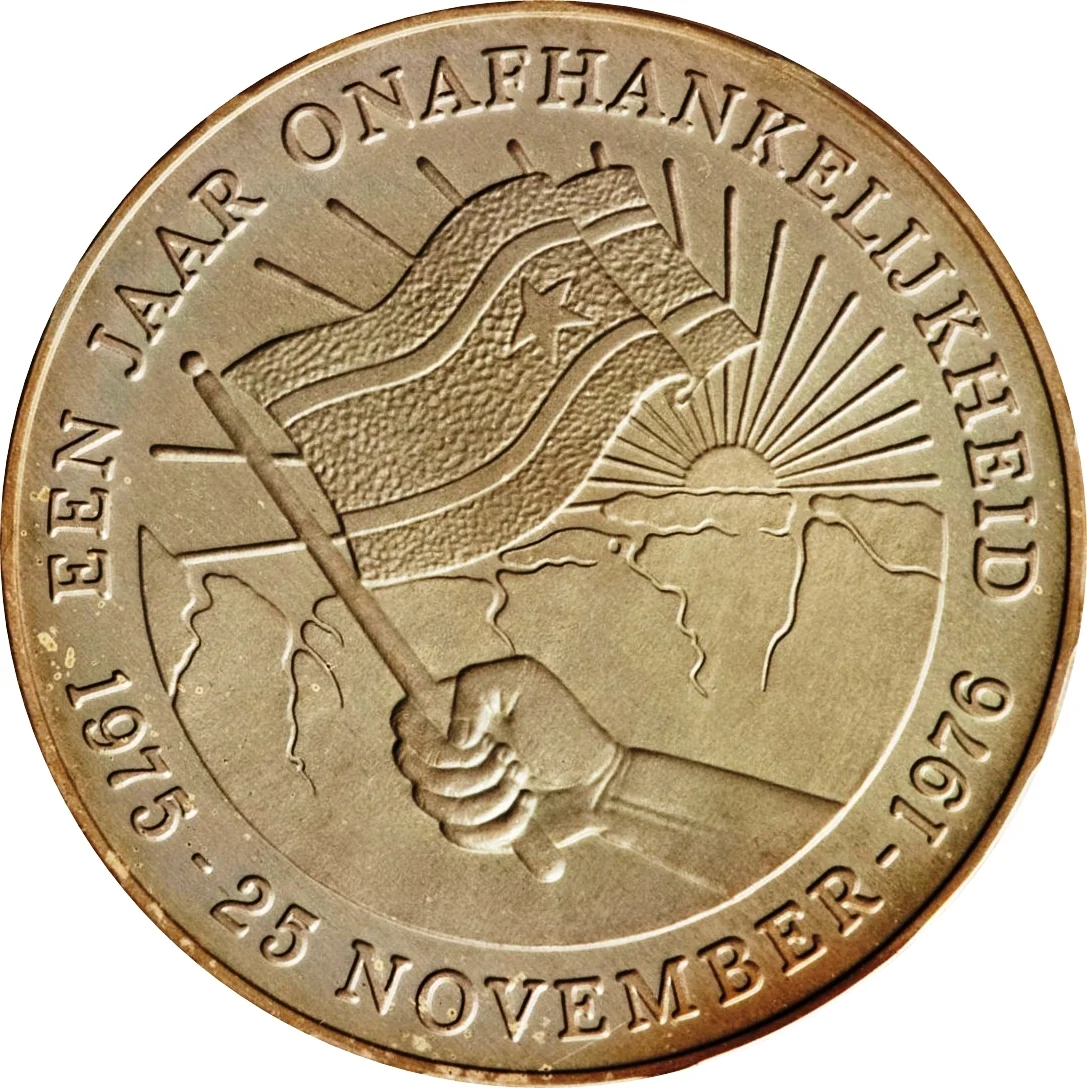
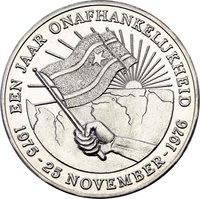
Commemoration: 1st Anniversary of Independence
Suriname
Context
Material
References
KM: #Click to copy to clipboard16
Numista: #7664
Value
Exchange value: 10 SRD
Bullion value: $43.40
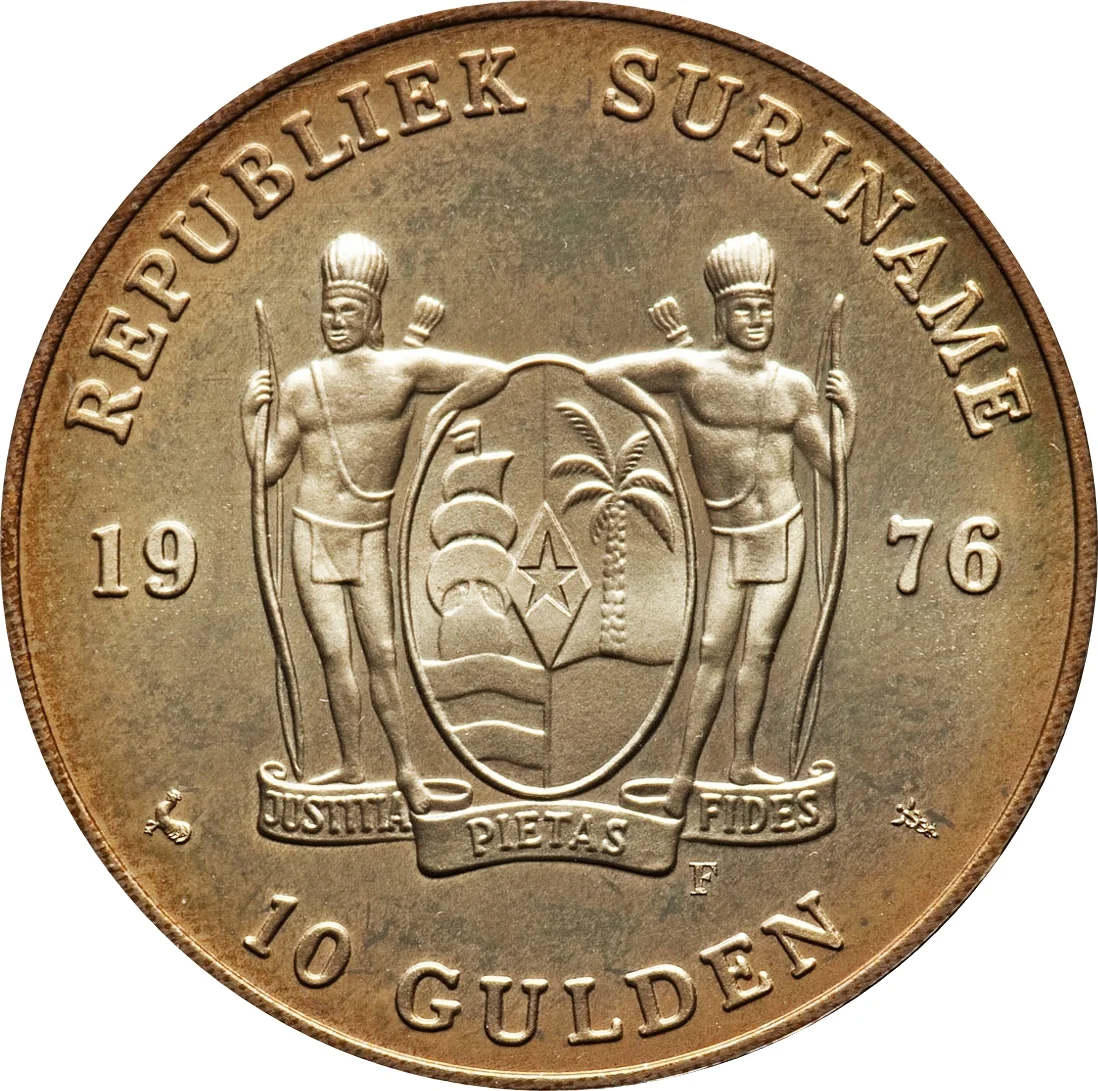
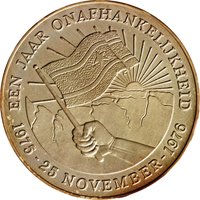
Obverse
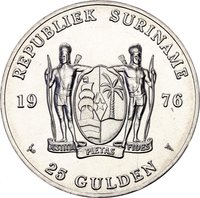
Reverse
Edge
Plain lettered
Legend:
JUSTITIA ★ PIETAS ★ FIDES ★
Translation:
Justice ★ Piety ★ Faith ★
Language: Latin
Categories
| Map |
| Symbols> Coat of Arms |
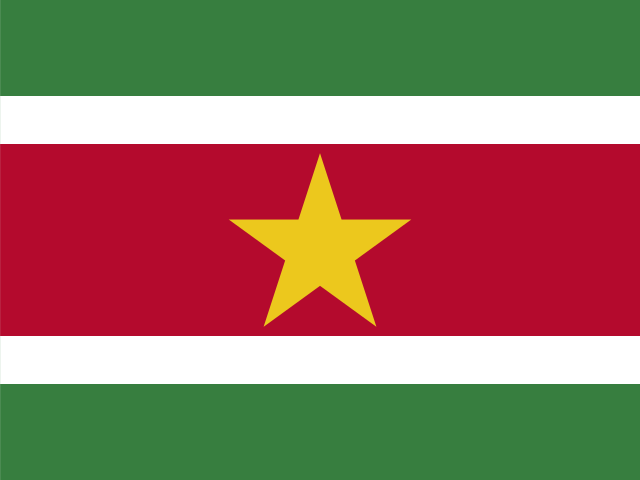
| Symbol> Flag |
Mints
| Name | Mark |
|---|---|
| Royal Dutch Mint | — |
Mintings
| Year | Mint Mark | Mintage | Quality | Collection |
|---|---|---|---|---|
| 1976 | — | 100,000 | ||
| 1976 | F | 5,711 | Proof |
Historical background
In 1976, Suriname's currency situation was characterized by stability and a formal colonial peg, but existed within a context of significant political and economic transition. As an autonomous country within the Kingdom of the Netherlands, the Surinamese guilder (SRG) was firmly fixed to the Netherlands Antillean guilder (ANG) at a 1:1 parity. This, in turn, was pegged to the U.S. dollar, creating an indirect and stable dollar peg. This arrangement provided monetary credibility, controlled inflation, and facilitated trade, largely insulating Suriname from the currency volatility experienced by many nations during the economic turbulence of the 1970s.
However, this stability was underpinned by the Dutch financial support and the structure of the colonial relationship, which was on the verge of a monumental shift. Suriname had just achieved full independence from the Netherlands on November 25, 1975. The immediate post-independence period saw the new nation inherit substantial foreign reserves, part of a 3.5 billion guilder (approximately $1.5 billion USD) development aid package from the Dutch government. This financial cushion was intended to support the fledgling state and its currency in the initial years of sovereignty.
Consequently, while the currency regime itself was not in crisis in 1976, the year was a critical juncture. The country's economic future, and by extension the long-term strength of its guilder, now depended on the management of its substantial aid wealth and the development of a productive, diversified economy to replace the colonial support system. The challenge for the young government was to build a sustainable economic foundation before its reserves dwindled, a test that would ultimately determine the fate of the currency's stability in the decades to follow.
However, this stability was underpinned by the Dutch financial support and the structure of the colonial relationship, which was on the verge of a monumental shift. Suriname had just achieved full independence from the Netherlands on November 25, 1975. The immediate post-independence period saw the new nation inherit substantial foreign reserves, part of a 3.5 billion guilder (approximately $1.5 billion USD) development aid package from the Dutch government. This financial cushion was intended to support the fledgling state and its currency in the initial years of sovereignty.
Consequently, while the currency regime itself was not in crisis in 1976, the year was a critical juncture. The country's economic future, and by extension the long-term strength of its guilder, now depended on the management of its substantial aid wealth and the development of a productive, diversified economy to replace the colonial support system. The challenge for the young government was to build a sustainable economic foundation before its reserves dwindled, a test that would ultimately determine the fate of the currency's stability in the decades to follow.
⭐ Somewhat Rare