

500 rupees (Kumari Jatra) – Nepal
Add to wishlist
Non-circulating coins
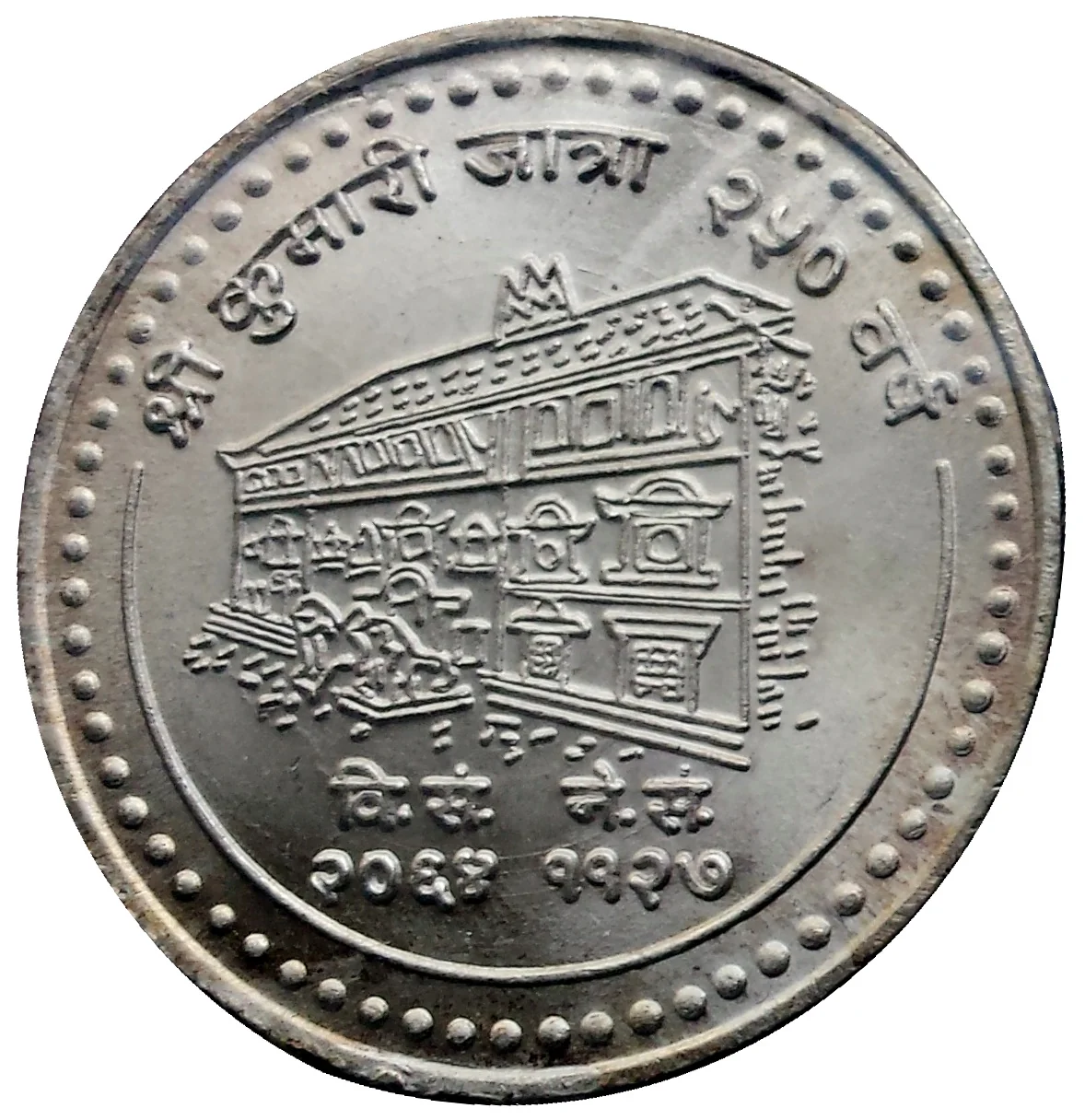
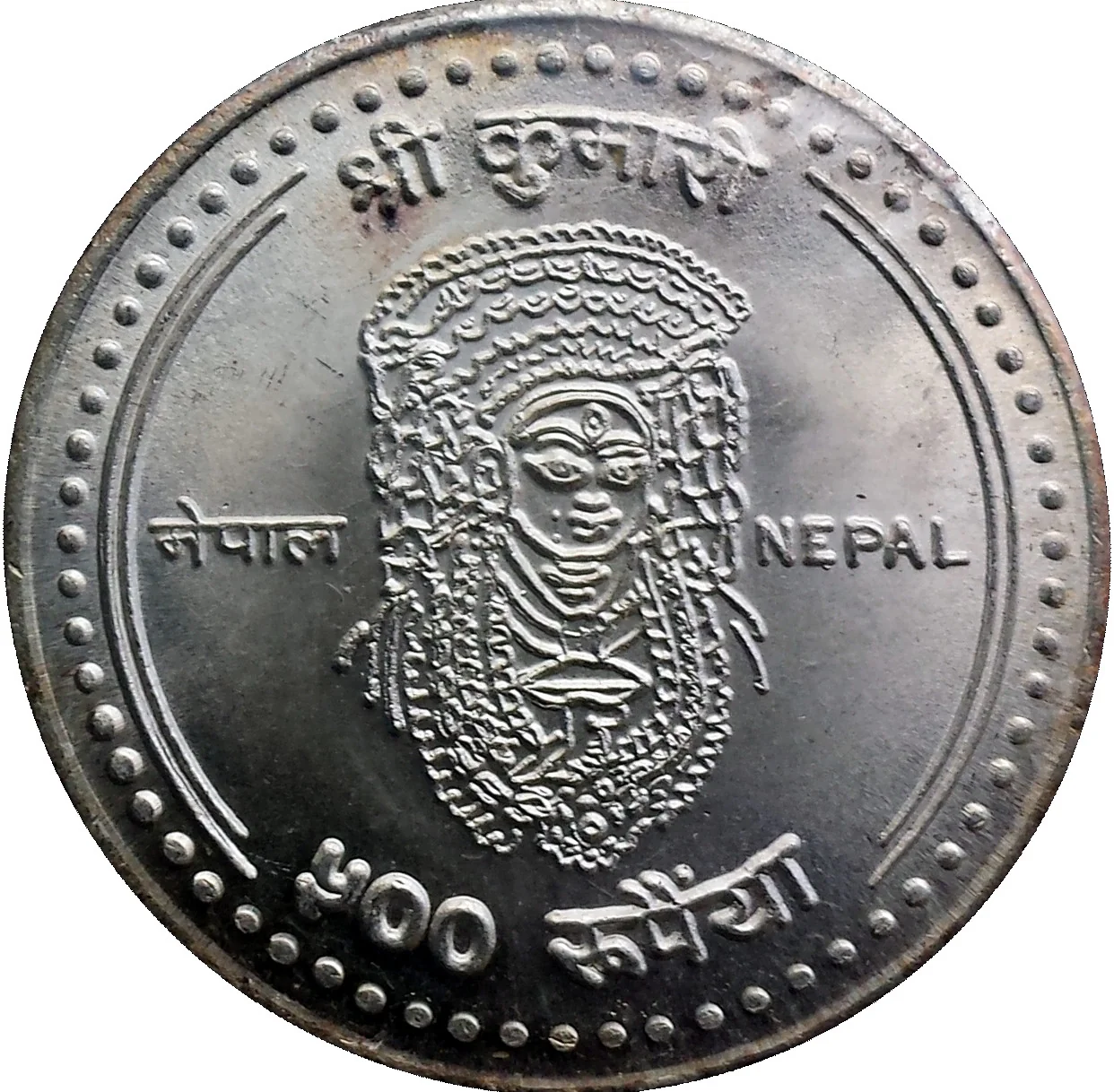
Commemoration: 250th anniversary of Hindu festival "Kumari Jatra"
Nepal
Context
Year: 2007
Vikram Samvat Year:: 2064
Issuer: Nepal
Ruler: Gyanendra Bir Bikram Shah
Currency:
(since 1932)
Material
References
KM: #
Numista: #76600
Value
Exchange value: 500 NPR
Bullion value: $17.52
Obverse
Description:
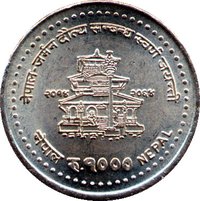
Kumari Temple, Kathmandu's Durbar Square.
Reverse
Description:
Kumari bust, front view.
Edge
Reeded
Mintings
| Year | Mint Mark | Mintage | Quality | Collection |
|---|---|---|---|---|
| 2007 | — | — |
Historical background
In 2007, Nepal's currency situation was characterized by relative stability but underlying pressures, largely managed by a pegged exchange rate regime. The Nepalese Rupee (NPR) was and remains formally pegged to the Indian Rupee (INR) at a fixed rate of 1.6 NPR to 1 INR. This peg, maintained by the Nepal Rastra Bank (NRB), provided crucial stability for trade, given India is Nepal's largest economic partner, accounting for the majority of its imports and a significant portion of its exports and remittance inflows. This linkage helped anchor prices and reduce exchange rate volatility for ordinary citizens and businesses engaged in cross-border transactions.
However, the stability of the peg masked several economic vulnerabilities. The country was in a fragile political state following the Comprehensive Peace Agreement of 2006, which ended a decade-long civil war. While the peace process brought hope, it also created uncertainty, impacting economic planning and investment. Furthermore, Nepal's economy was heavily dependent on remittances (exceeding 15% of GDP) and tourism, both sensitive to external shocks. A growing trade deficit with India, fueled by high imports of petroleum products and manufactured goods, exerted persistent downward pressure on Nepal's foreign exchange reserves, which were essential for defending the currency peg.
Overall, 2007 was a year of cautious management. The Nepal Rastra Bank successfully maintained the peg, ensuring day-to-day monetary stability. Yet, economists and policymakers were acutely aware of the long-term challenges: the need to diversify the economy, boost exports, and build stronger foreign exchange reserves to sustain the peg without restrictive capital controls. The currency's health was intrinsically tied to political progress and the broader task of post-conflict economic reconstruction.
However, the stability of the peg masked several economic vulnerabilities. The country was in a fragile political state following the Comprehensive Peace Agreement of 2006, which ended a decade-long civil war. While the peace process brought hope, it also created uncertainty, impacting economic planning and investment. Furthermore, Nepal's economy was heavily dependent on remittances (exceeding 15% of GDP) and tourism, both sensitive to external shocks. A growing trade deficit with India, fueled by high imports of petroleum products and manufactured goods, exerted persistent downward pressure on Nepal's foreign exchange reserves, which were essential for defending the currency peg.
Overall, 2007 was a year of cautious management. The Nepal Rastra Bank successfully maintained the peg, ensuring day-to-day monetary stability. Yet, economists and policymakers were acutely aware of the long-term challenges: the need to diversify the economy, boost exports, and build stronger foreign exchange reserves to sustain the peg without restrictive capital controls. The currency's health was intrinsically tied to political progress and the broader task of post-conflict economic reconstruction.
💎 Extremely Rare