

1 Polushka – Russian Empire
Russia
Context
Years: 1849–1855
Country: Russia 
Issuer: Russian Empire
Ruler: Nicholas I
Currency:
(1700—1917)
Demonetized: Yes
Material
References
Numista: #76480
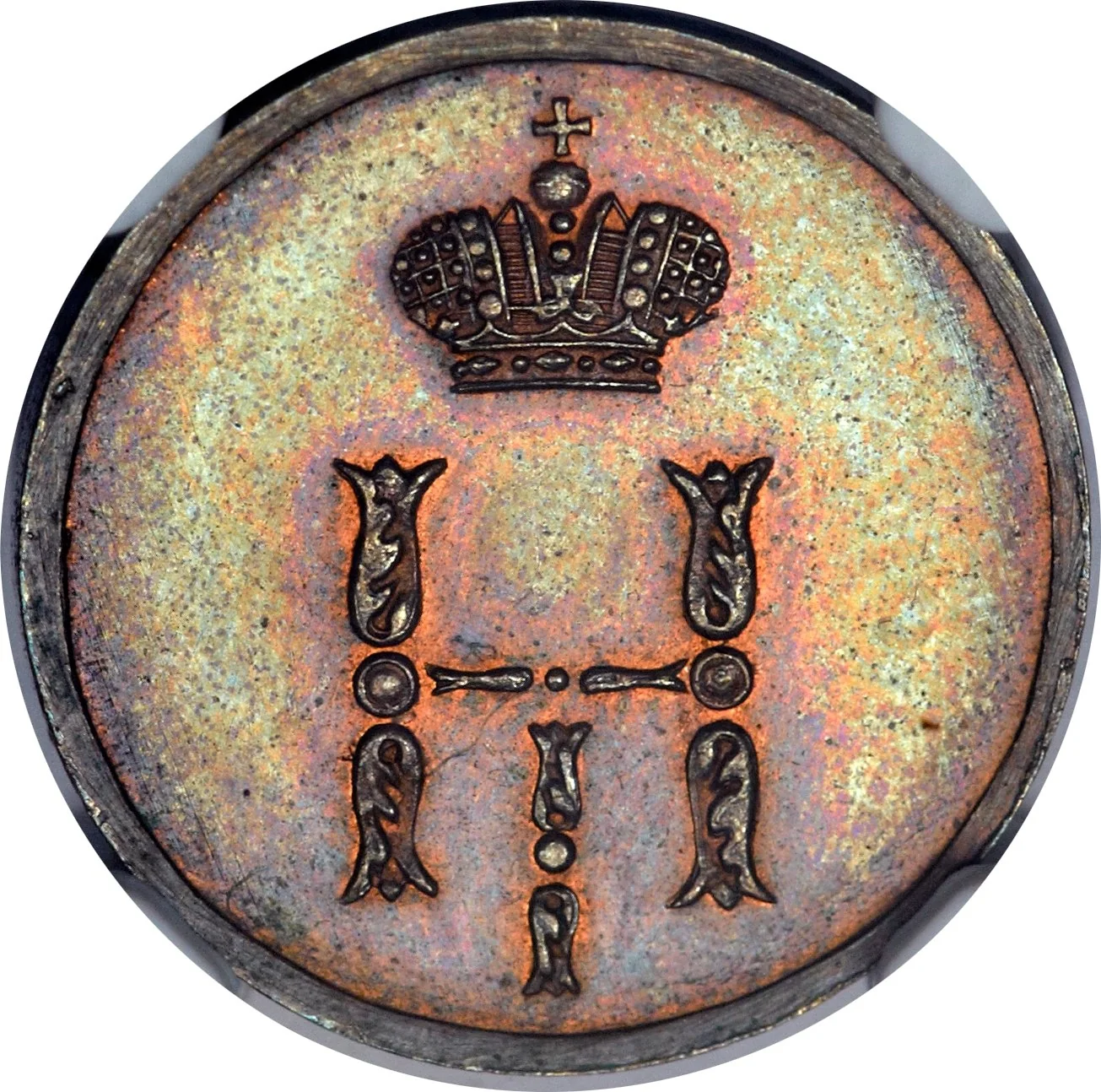
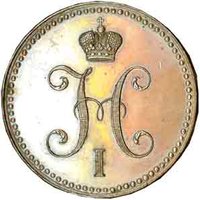
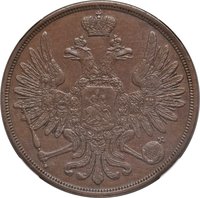
Obverse
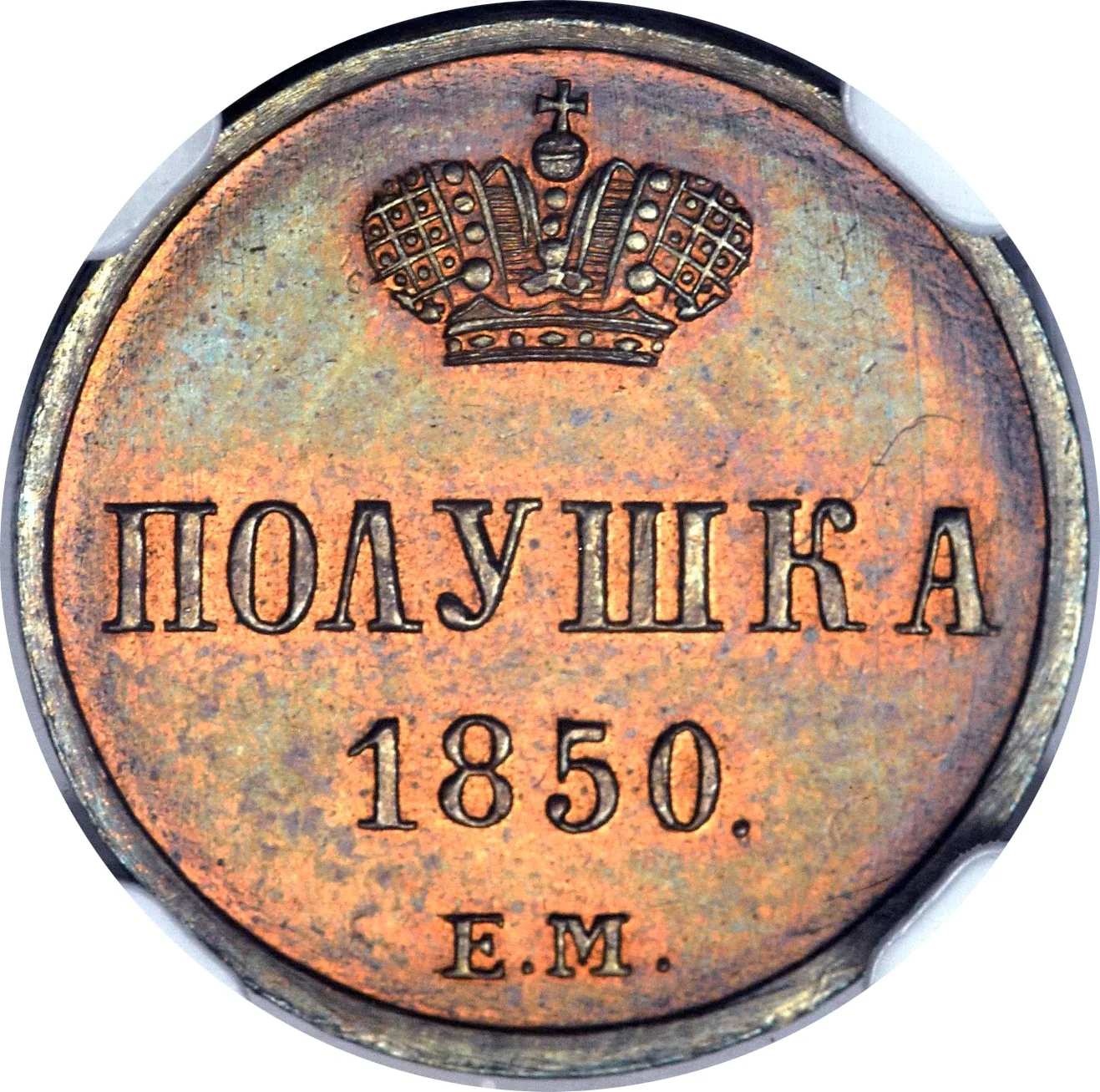
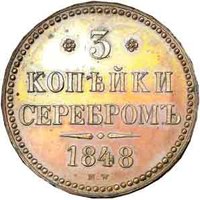
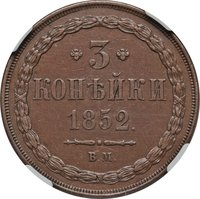
Reverse
Edge
Plain
Mints
| Name | Mark |
|---|---|
| Ekaterinburg Mint | ЕМ |
Mintings
| Year | Mint Mark | Mintage | Quality | Collection |
|---|---|---|---|---|
| 1849 | Е.М. | — | BU | |
| 1850 | Е.М. | — | BU | |
| 1851 | Е.М. | — | BU | |
| 1852 | Е.М. | — | BU | |
| 1853 | Е.М. | — | BU | |
| 1854 | Е.М. | — | BU | |
| 1855 | Е.М. | — | BU |
Historical background
In 1849, the Russian Empire operated under a silver standard, a system formalized by the monetary reform of Count Egor Kankrin in 1839-1843. The primary unit of account was the silver ruble, with the state-assigned paper credit ruble (kreditny biyet) fully convertible to a fixed weight of silver. This reform had successfully stabilized the currency after decades of inflationary paper money used to finance the Napoleonic Wars, establishing a period of relative monetary confidence. The system was backed by a substantial silver reserve, and the State Commercial Bank facilitated the exchange, creating a functional, if somewhat cumbersome, bimetallic circulation that included silver rubles and gold chervonets.
However, the stability of the currency was perpetually under pressure from the fundamental fiscal strains of the empire. The enormous costs of maintaining a vast standing army and a sprawling bureaucracy, coupled with the state's deep involvement in the economy, consistently threatened the treasury. While not at a crisis point in 1849, the state's financial health was still recovering from the expenses of suppressing the Polish Uprising (1830-1831) and was being quietly strained by its role as the "gendarme of Europe," notably through the recent military intervention to crush the Hungarian Revolution (1848-1849), which demanded significant, if not yet disastrous, expenditure.
Consequently, the monetary situation in 1849 was one of surface calm masking underlying vulnerabilities. The silver ruble held its value internationally, and domestic transactions proceeded with a trusted, convertible paper currency—a marked improvement from earlier chaos. Yet, the rigid metallic standard limited the state's financial flexibility, and the persistent budget deficits, often covered by short-term loans from state banks, subtly eroded the full backing of the paper issues. This precarious balance would be shattered a few years later by the immense costs of the Crimean War (1853-1856), leading to the suspension of convertibility and a return to inflationary paper money, exposing the fragility of the system that had seemed so stable in 1849.
However, the stability of the currency was perpetually under pressure from the fundamental fiscal strains of the empire. The enormous costs of maintaining a vast standing army and a sprawling bureaucracy, coupled with the state's deep involvement in the economy, consistently threatened the treasury. While not at a crisis point in 1849, the state's financial health was still recovering from the expenses of suppressing the Polish Uprising (1830-1831) and was being quietly strained by its role as the "gendarme of Europe," notably through the recent military intervention to crush the Hungarian Revolution (1848-1849), which demanded significant, if not yet disastrous, expenditure.
Consequently, the monetary situation in 1849 was one of surface calm masking underlying vulnerabilities. The silver ruble held its value internationally, and domestic transactions proceeded with a trusted, convertible paper currency—a marked improvement from earlier chaos. Yet, the rigid metallic standard limited the state's financial flexibility, and the persistent budget deficits, often covered by short-term loans from state banks, subtly eroded the full backing of the paper issues. This precarious balance would be shattered a few years later by the immense costs of the Crimean War (1853-1856), leading to the suspension of convertibility and a return to inflationary paper money, exposing the fragility of the system that had seemed so stable in 1849.
🌟 Limited