

1000 Pounds – United Kingdom
Non-circulating coins
Commemoration: Queen Elizabeth II Longest Reigning Monarch
United Kingdom
Context

Material
Diameter: 100 mm
Weight: 1005 g
Gold weight: 1004.00 g
Shape: Round
Composition: 99.9% Gold
Standard: Silver kilo
Magnetic: No
Technique: Milled
Alignment: Medal alignment
flip
References
KM: #Click to copy to clipboard1306
Numista: #76443
Value
Exchange value: 1000 GBP = $1354.98
Bullion value: $167396.52
Inflation-adjusted value: 1430.67 GBP
Obverse
Description:
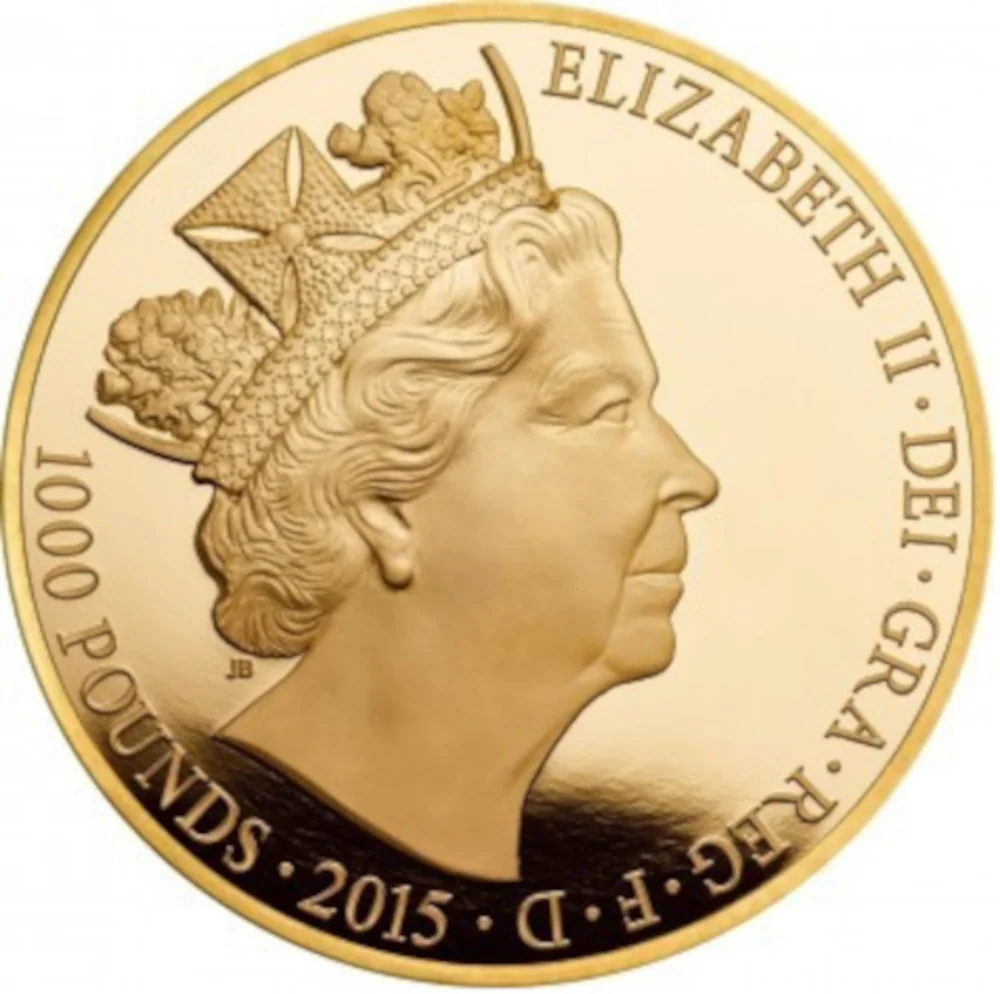
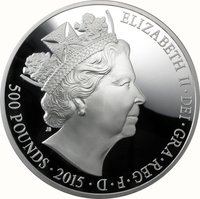
Butler effigy of Elizabeth II, limited release.
Inscription:
ELIZABETH II·DEI·GRA·REG·F·D
JB
1000 POUNDS·2015·
JB
1000 POUNDS·2015·
Translation:
Elizabeth II by the Grace of God Queen Defender of the Faith
1000 Pounds 2015
1000 Pounds 2015
Script: Latin
Engraver: James Butler
Reverse
Description:
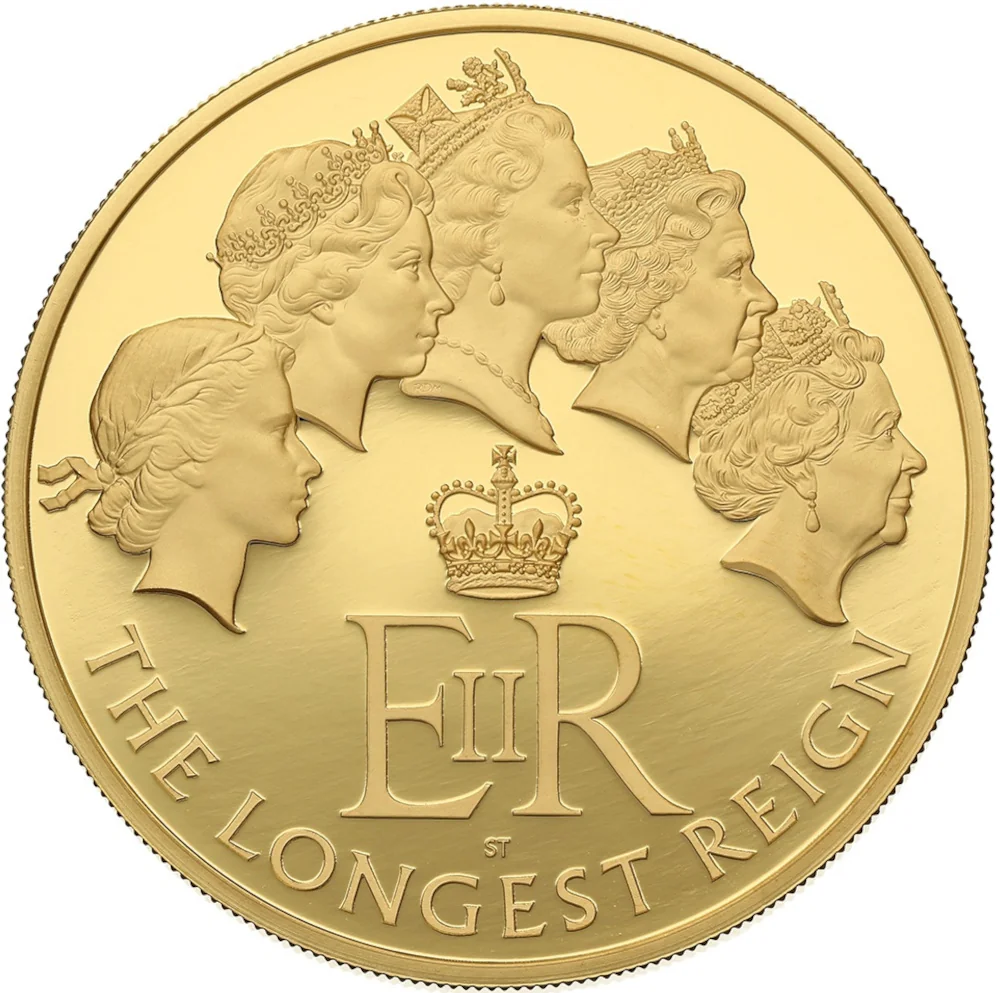
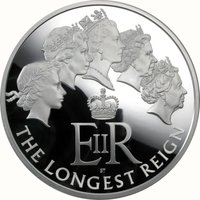
Five definitive portraits of Queen Elizabeth II, shown chronologically with crowned cypher and legend.
Inscription:
E II R
ST
THE LONGEST REIGN
ST
THE LONGEST REIGN
Script: Latin
Engraver: Stephen Taylor
Edge
Reeded
Mints
| Name | Mark |
|---|---|
| Royal Mint | — |
Mintings
| Year | Mint Mark | Mintage | Quality | Collection |
|---|---|---|---|---|
| 2015 | — | 15 | Proof |
Historical background
In 2015, the United Kingdom's currency situation was dominated by two major themes: sustained strength of the British Pound Sterling and mounting political uncertainty. The pound, particularly against the euro, reached multi-year highs, with the GBP/EUR rate approaching €1.40 in the summer. This strength was largely driven by diverging monetary policy expectations; while the European Central Bank embarked on a major quantitative easing programme, the Bank of England was widely anticipated to be the first major central bank to raise interest rates from their historic 0.5% low. A robust domestic recovery and falling unemployment bolstered this view, making sterling an attractive currency for investors.
However, this financial stability existed against a backdrop of growing political risk. The surprise outright victory of the Conservative Party in the May 2015 general election immediately triggered the commitment to hold a referendum on the UK's membership of the European Union. The announcement of this "Brexit" referendum, pledged before the end of 2017, introduced a profound layer of long-term uncertainty. While the pound initially rallied on the election result, which eliminated the prior coalition government's instability, the looming EU vote began to cast a shadow, creating a tension between strong economic data and fears over the UK's future political and trade relationships.
Consequently, the Bank of England faced a complex balancing act. Governor Mark Carney and the Monetary Policy Committee signalled that the timing of any interest rate rise would be "data-dependent," but the inflation environment remained muted due to a sharp fall in global oil prices. This kept Consumer Price Index inflation around zero for much of the year, easing pressure for immediate rate hikes. By the year's end, the narrative had subtly shifted: the certainty of an impending rate rise had diminished, and the sterling's value began to soften as markets increasingly priced in the political risks of the forthcoming EU referendum, setting the stage for the volatility that would define 2016.
However, this financial stability existed against a backdrop of growing political risk. The surprise outright victory of the Conservative Party in the May 2015 general election immediately triggered the commitment to hold a referendum on the UK's membership of the European Union. The announcement of this "Brexit" referendum, pledged before the end of 2017, introduced a profound layer of long-term uncertainty. While the pound initially rallied on the election result, which eliminated the prior coalition government's instability, the looming EU vote began to cast a shadow, creating a tension between strong economic data and fears over the UK's future political and trade relationships.
Consequently, the Bank of England faced a complex balancing act. Governor Mark Carney and the Monetary Policy Committee signalled that the timing of any interest rate rise would be "data-dependent," but the inflation environment remained muted due to a sharp fall in global oil prices. This kept Consumer Price Index inflation around zero for much of the year, easing pressure for immediate rate hikes. By the year's end, the narrative had subtly shifted: the certainty of an impending rate rise had diminished, and the sterling's value began to soften as markets increasingly priced in the political risks of the forthcoming EU referendum, setting the stage for the volatility that would define 2016.
✨ Legendary