

5 Euro – Netherlands
Non-circulating coins
Commemoration: Van Nellefabriek
Netherlands
Context
Year: 2015
Issuer: Netherlands 
Ruler: Willem-Alexander
Currency:
(since 2002)
Total mintage: 226,000
Material
References
KM: #Click to copy to clipboard362
Numista: #76341
Value
Exchange value: 5 EUR = $5.91
Inflation-adjusted value: 6.50 EUR
Obverse
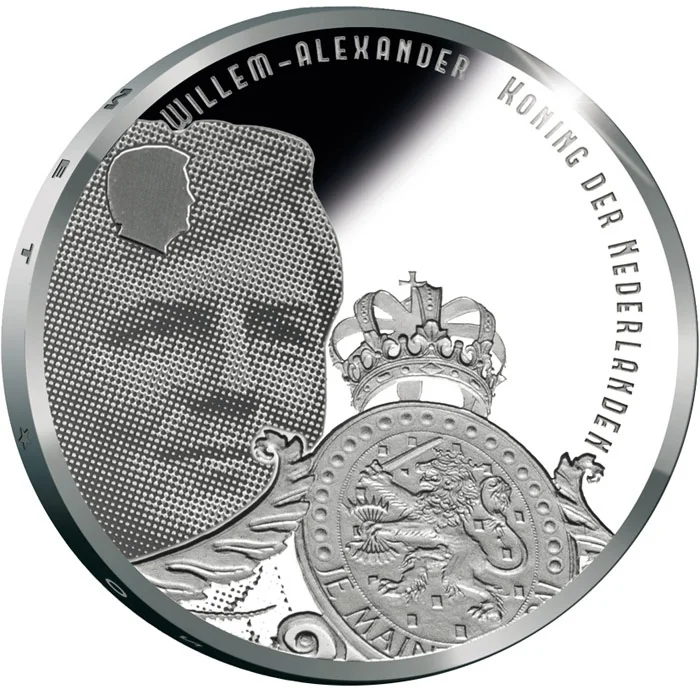
Description:
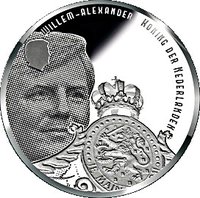
King Willem-Alexander's royal crest.
Inscription:
WILLEM-ALEXANDER KONING DER NEDERLANDEN
JE MAIN
JE MAIN
Translation:
WILLEM-ALEXANDER KING OF THE NETHERLANDS
I MAINTAIN
I MAINTAIN
Script: Latin
Engraver: Kianoosh Motallebi
Reverse
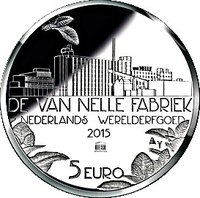
Description:
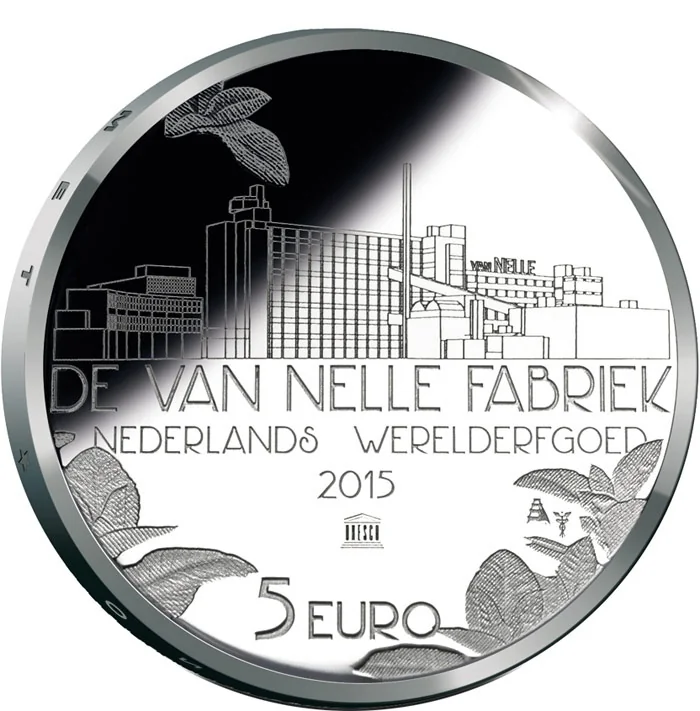
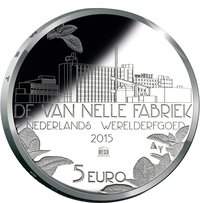
Van Nelle factory UNESCO site.
Inscription:
DE VAN NELLE FABRIEK
NEDERLANDS WERELDERFGOED
2015
5 EURO
NEDERLANDS WERELDERFGOED
2015
5 EURO
Translation:
The Van Nelle Factory
Dutch World Heritage
2015
5 Euro
Dutch World Heritage
2015
5 Euro
Script: Latin
Language: Dutch
Engraver: Kianoosh Motallebi
Edge
Categories
| Organization> UNESCO |
Mints
| Name | Mark |
|---|---|
| Royal Dutch Mint | — |
Mintings
| Year | Mint Mark | Mintage | Quality | Collection |
|---|---|---|---|---|
| 2015 | — | 211,000 | ||
| 2015 | — | 15,000 | BU |
Historical background
In 2015, the Netherlands was a core member of the Eurozone, having adopted the euro as its official currency in 2002, replacing the Dutch guilder. The country's economy was firmly integrated into the European monetary system, with the European Central Bank (ECB) setting its key interest rates and monetary policy. Domestically, the Dutch economy was in a phase of steady recovery from the European debt crisis, with growth strengthening and unemployment falling. The euro's value and stability were therefore of paramount importance to Dutch exporters, financial institutions, and consumers, as the currency facilitated seamless trade within its largest markets.
A significant background issue throughout 2015 was the ECB's expansive quantitative easing (QE) program, announced in January and launched in March. While aimed at combating deflationary risks across the Eurozone, this policy was viewed with some skepticism in the fiscally conservative Netherlands. The Dutch government and central bank (De Nederlandsche Bank) supported the measure as necessary for the currency union's stability, but concerns persisted about the long-term effects of ultra-low interest rates and high liquidity, including potential asset bubbles and reduced incentives for structural reforms in weaker Eurozone economies.
Furthermore, the year was marked by heightened debate about the future of the euro itself, fueled by the ongoing Greek government-debt crisis. As a creditor nation with a strong preference for fiscal discipline, the Netherlands, under Finance Minister Jeroen Dijsselbloem (who also chaired the Eurogroup), took a firm stance in negotiations over Greece's bailout programs. This underscored a persistent tension within the Eurozone: the Netherlands' commitment to the single currency was unwavering, but it insisted on strict adherence to fiscal rules, setting the stage for continued political discussions about deeper integration versus national sovereignty.
A significant background issue throughout 2015 was the ECB's expansive quantitative easing (QE) program, announced in January and launched in March. While aimed at combating deflationary risks across the Eurozone, this policy was viewed with some skepticism in the fiscally conservative Netherlands. The Dutch government and central bank (De Nederlandsche Bank) supported the measure as necessary for the currency union's stability, but concerns persisted about the long-term effects of ultra-low interest rates and high liquidity, including potential asset bubbles and reduced incentives for structural reforms in weaker Eurozone economies.
Furthermore, the year was marked by heightened debate about the future of the euro itself, fueled by the ongoing Greek government-debt crisis. As a creditor nation with a strong preference for fiscal discipline, the Netherlands, under Finance Minister Jeroen Dijsselbloem (who also chaired the Eurogroup), took a firm stance in negotiations over Greece's bailout programs. This underscored a persistent tension within the Eurozone: the Netherlands' commitment to the single currency was unwavering, but it insisted on strict adherence to fiscal rules, setting the stage for continued political discussions about deeper integration versus national sovereignty.
🌟 Uncommon