

10 leva (Unification of Bulgaria) – Bulgaria
Add to wishlist
Non-circulating coins
Commemoration: 130 Years since the Unification of Bulgaria
Bulgaria
Obverse
Description:
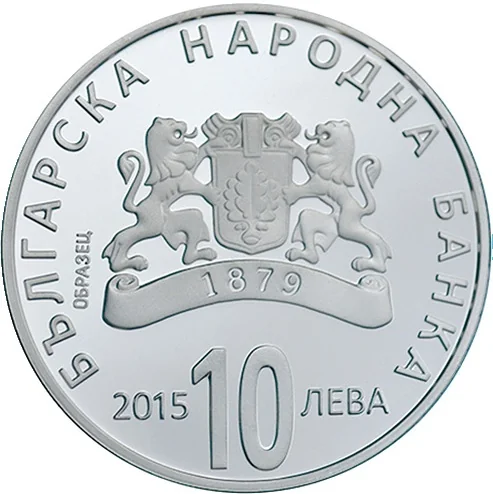
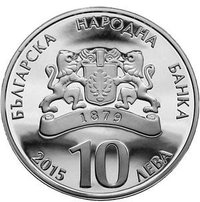
Obverse: BNB logo with '1879' on a strip, surrounded by 'БЪЛГАРСКА НАРОДНА БАНКА', with '10 ЛЕВА' and '2015' below.
Inscription:
БЪЛГАРСКА НАРОДНА БАНКА
2015 10 ЛЕВА
2015 10 ЛЕВА
Translation:
BULGARIAN NATIONAL BANK
2015 10 LEVA
2015 10 LEVA
Script: Cyrillic
Language: Bulgarian
Engravers: Ivan Cholakov, Simeon Krastev
Reverse
Description:
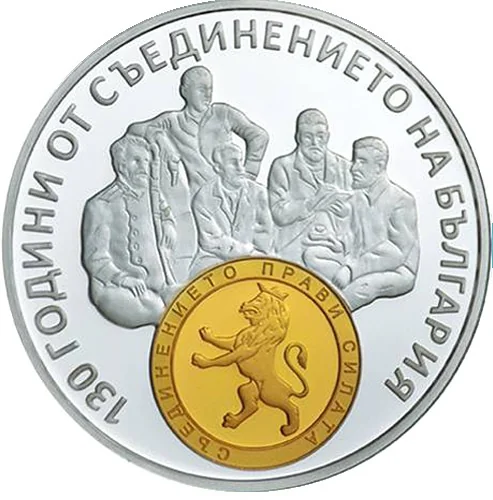
The reverse features members of the Bulgarian Secret Central Revolutionary Committee, a banner lion, and the motto "Unity Yields Strength" within a central circle, surrounded by the inscription "130 Years since Unification of Bulgaria."
Inscription:
130 ГОДИНИ ОТ СЪЕДИНЕНИЕТО НА БЪЛГАРИЯ
СЪЕДИНЕНИЕТО ПРАВИ СИЛАТА
СЪЕДИНЕНИЕТО ПРАВИ СИЛАТА
Translation:
130 YEARS FROM THE UNIFICATION OF BULGARIA
UNIFICATION MAKES THE STRENGTH
UNIFICATION MAKES THE STRENGTH
Script: Cyrillic
Language: Bulgarian
Engravers: Ivan Cholakov, Simeon Krastev
Edge
Plain
Mints
| Name | Mark |
|---|---|
| Bulgarian Mint | — |
Mintings
| Year | Mint Mark | Mintage | Quality | Collection |
|---|---|---|---|---|
| 2015 | — | 3,000 | Proof |
Historical background
In 2015, Bulgaria's currency situation was defined by its unique and stable arrangement within the European Union. The country operated under a Currency Board Arrangement (CBA), which had been in place since 1997 to end a period of hyperinflation and banking crisis. This system pegged the Bulgarian lev (BGN) firmly to the euro at a fixed rate of 1.95583 leva per euro, requiring the Bulgarian National Bank to fully back the monetary base with foreign reserves. This provided exceptional macroeconomic stability, low inflation, and a reliable anchor for the economy.
However, this stability existed alongside the unfulfilled political goal of euro adoption. Bulgaria was not yet a member of the Eurozone, though it was part of the EU's Exchange Rate Mechanism II (ERM II), the "waiting room" for joining the single currency. Entry had been delayed for years, primarily due to failure to meet the inflation criterion and broader concerns about economic convergence and governance. The year 2015 saw continued technical preparations, including discussions on banking union integration, but no decisive move toward setting an adoption date.
The broader economic context was one of cautious recovery. Following a banking crisis in 2014 that required state intervention, 2015 was a year of fiscal consolidation and rebuilding confidence under the CBA's constraints. The fixed exchange rate limited monetary policy tools, making the country reliant on fiscal adjustments and structural reforms to address economic challenges. Thus, the currency situation was a cornerstone of stability but also a reminder of the postponed next step in Bulgaria's European integration.
However, this stability existed alongside the unfulfilled political goal of euro adoption. Bulgaria was not yet a member of the Eurozone, though it was part of the EU's Exchange Rate Mechanism II (ERM II), the "waiting room" for joining the single currency. Entry had been delayed for years, primarily due to failure to meet the inflation criterion and broader concerns about economic convergence and governance. The year 2015 saw continued technical preparations, including discussions on banking union integration, but no decisive move toward setting an adoption date.
The broader economic context was one of cautious recovery. Following a banking crisis in 2014 that required state intervention, 2015 was a year of fiscal consolidation and rebuilding confidence under the CBA's constraints. The fixed exchange rate limited monetary policy tools, making the country reliant on fiscal adjustments and structural reforms to address economic challenges. Thus, the currency situation was a cornerstone of stability but also a reminder of the postponed next step in Bulgaria's European integration.
💎 Extremely Rare