

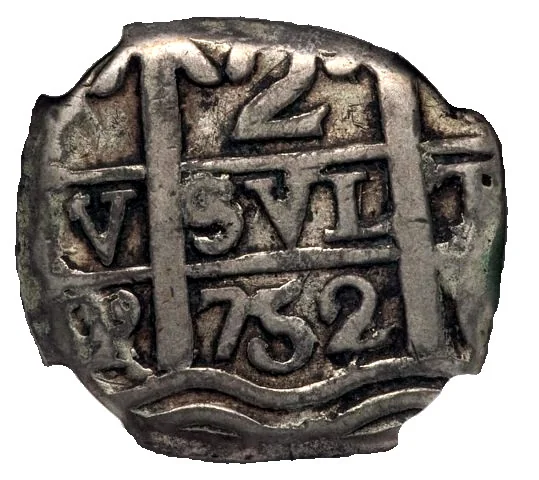
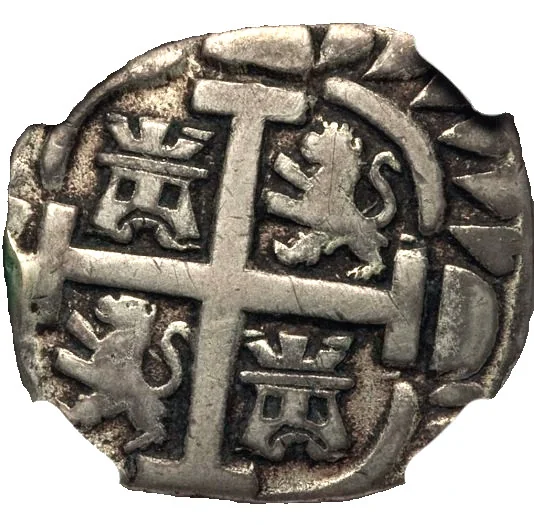
2 Reales – Tucuman
Argentina
Context

Material
Diameter: 22.5 mm
Weight: 5 g
Silver weight: 4.50 g
Shape: Irregular round
Composition: 90% Silver
Magnetic: No
Alignment: Coin alignment
flip
References
Numista: #76202
Value
Bullion value: $13.01
Mintings
| Year | Mint Mark | Mintage | Quality | Collection |
|---|---|---|---|---|
| 1820 | — | — | ||
| 1821 | — | — |
Historical background
In 1820, the currency situation in Tucumán, like much of the newly independent United Provinces of the Río de la Plata, was defined by profound instability and scarcity. The region lacked a unified national monetary system, as the wars of independence had severed ties with the Spanish colonial mint and exhausted both public and private resources. This vacuum was filled by a chaotic mix of surviving Spanish colonial coins (such as pesos fuertes and reales), coins from other nations (especially Peruvian and Bolivian silver), and a flood of low-quality copper coinage minted by various provincial governments to finance their military operations.
The most acute problem for Tucumán was the proliferation of moneda feble (weak currency), particularly copper coins issued in Córdoba and La Rioja, which circulated at a forced value far above their intrinsic metal worth. This led to severe inflation, a collapse in public confidence, and Gresham's Law in action, where "bad money drove out good." Merchants and citizens hoarded silver coins, conducting daily transactions almost exclusively in depreciated copper, which crippled commerce and created a dual-price system. The provincial government, under constant financial strain from supporting the Army of the North, struggled to pay salaries and expenses with a currency that was increasingly rejected in inter-provincial trade.
Attempts to rectify the situation were largely ineffective. Provincial decrees attempted to regulate exchange rates between copper and silver, but these were unenforceable and ignored by the market. The fundamental issue was a lack of centralized political authority and fiscal strength; without a national government to guarantee value, each province's currency was only as strong as its own precarious finances. Consequently, by 1820, Tucumán's economy was monetarily fragmented, suffering from inflationary pressures that eroded living standards and complicated recovery in the post-war period, a microcosm of the broader monetary chaos plaguing the nascent Argentine nation.
The most acute problem for Tucumán was the proliferation of moneda feble (weak currency), particularly copper coins issued in Córdoba and La Rioja, which circulated at a forced value far above their intrinsic metal worth. This led to severe inflation, a collapse in public confidence, and Gresham's Law in action, where "bad money drove out good." Merchants and citizens hoarded silver coins, conducting daily transactions almost exclusively in depreciated copper, which crippled commerce and created a dual-price system. The provincial government, under constant financial strain from supporting the Army of the North, struggled to pay salaries and expenses with a currency that was increasingly rejected in inter-provincial trade.
Attempts to rectify the situation were largely ineffective. Provincial decrees attempted to regulate exchange rates between copper and silver, but these were unenforceable and ignored by the market. The fundamental issue was a lack of centralized political authority and fiscal strength; without a national government to guarantee value, each province's currency was only as strong as its own precarious finances. Consequently, by 1820, Tucumán's economy was monetarily fragmented, suffering from inflationary pressures that eroded living standards and complicated recovery in the post-war period, a microcosm of the broader monetary chaos plaguing the nascent Argentine nation.
💎 Extremely Rare